

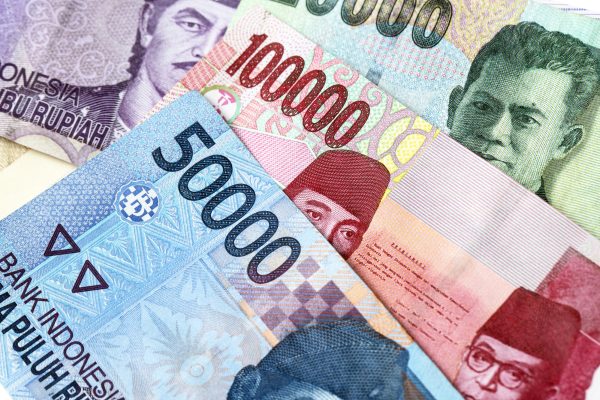
Indonesia’s currency slipped to a new record low yesterday, as the country’s stock index fell and global oil prices jumped to two-week highs.
According to a report by Bloomberg, the rupiah dropped as much as 1.2 percent against the U.S. dollar, briefly touching a record low of 17,670 before recovering somewhat before the close of trading.
The slump came as trading resumed after a four-day holiday weekend. Jakarta’s main stock index also fell more than 4 percent, after global index provider MSCI removed six companies from its Indonesia Index and dropped another 13 companies from its small-cap index list. In January, MSCI threatened to downgrade Indonesia to frontier market status due to a number of transparency concerns, including the high concentration of ownership in certain companies and the limited “free float” of tradeable shares.
Despite the alarming devaluation of the rupiah, Bank Indonesia (BI) remains sanguine about the challenges facing the country’s economy. BI has “increased the dosage of our currency interventions” to support the value of the rupiah, BI Governor Perry Warjiyo told a parliamentary commission yesterday.
He added that despite the country’s foreign exchange reserves dropping by some $10 billion so far this year, the reserve level is “more than adequate” to maintain stability, and that BI expects the rupiah to rebound in July and continue strengthening throughout the second half of 2026.
“In July and August, the rupiah will strengthen again, and it should continue improving through September,” Perry said, as per the Jakarta Globe. “That is why we remain confident.”
But Perry nonetheless said that the central bank would take additional steps to stem the rupiah’s devaluation during BI’s meeting later this week.
Yesterday’s slump extends a long run of devaluation for the rupiah, which has depreciated by more than 14 percent since President Prabowo Subianto took office in October 2024. The currency is now worth less against the U.S. dollar than during the Asian financial crisis of 1997-1998.
As my colleague James Guild noted recently in these pages, this is largely due to the persistent deficit in Indonesia’s current account, which markets have interpreted as an uncertain sign of Indonesia’s “ability to make good on its external liabilities.”
This deficit has been exacerbated by a number of other factors, including the spike in global oil prices, which climbed around 3 percent to a two-week high yesterday, and the Prabowo administration’s expensive social programs.
In addition to MSCI’s warning about transparency in the Indonesian stock market, which prompted a sell-off of stocks in late January, Moody’s and Fitch also recently downgraded Indonesia, with the latter citing “increasing policy uncertainty and erosion of Indonesia’s policy mix consistency and credibility amid growing centralization of policymaking authority.”
President Prabowo, whose administration has taken a much more cavalier approach toward financial management than its predecessors, has downplayed concerns about the state of the rupiah. During a visit to East Java province on Saturday, the Indonesian leader said that villagers were not affected much by depreciation because they do not transact in U.S. dollars.
“However many thousands of rupiah the exchange rate to the dollar is, you folks in villages do not use the dollar anyway,” he said, according to a Reuters report. “Believe that our economy is strong, our fundamentals are strong. Whatever people say, Indonesia is strong.”