

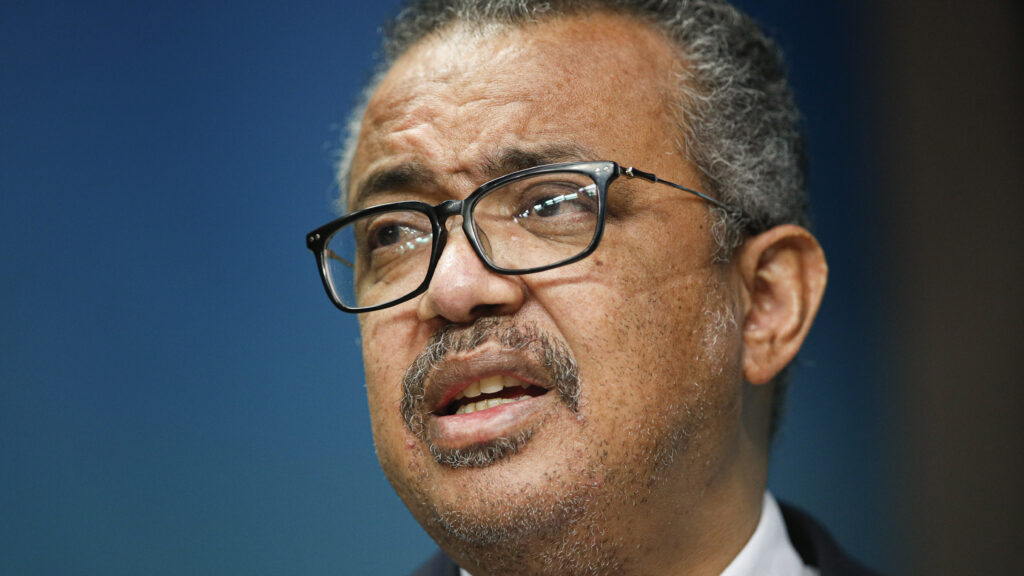
World Health Organization officials on Wednesday mounted a defense of their response to the new and worrisome Ebola outbreak centered in the Democratic Republic of the Congo, after U.S. Secretary of State Marco Rubio said the agency was “a little late” in identifying infections.
WHO authorities stressed that their role is to offer technical and operational help to national health agencies, which have primary responsibility for detecting the spread of diseases under international rules.
“We don’t replace the country’s work,” Tedros Adhanom Ghebreyesus, WHO’s director-general, said at a press breifing. “We only support them.”
Tedros said what Rubio said “could be from lack of understanding of how IHR works, and the responsibilities of WHO and other entities,” referring to the International Health Regulations, which set out countries’ obligations during health emergencies.
Rubio’s remarks, made Tuesday, were just the latest criticism from the Trump administration and its allies of the global health agency. President Trump has also pulled the U.S. out of WHO, forcing it to make major budget cuts.
WHO experts have said that the size of the outbreak — with nearly 600 suspected cases and 139 suspected deaths and signs that many infections have gone uncounted — indicates the virus has been spreading for months, even though it was only declared on Friday by African health officials.
Rubio’s critique of the WHO clearly struck a nerve with the agency. When a reporter asked about the statement, four different WHO officials, including the director-general, took turns chiming in. Often during WHO press conferences, one or two officials will address each question based on the subject and their expertise.
“Surveillance starts within communities, and starts with the health authorities within every single country,” said Anaïs Legand, an expert on viral hemorrhagic fevers at WHO.
The WHO has previously said it was alerted to a possible outbreak of Ebola on May 5 and quickly sent a team to Ituri province to support national health officials. Yet initial tests came back negative, likely because the infections are being driven by a rare Ebola strain called Bundibugyo, which has only caused two documented outbreaks previously. The tests in the area were designed to test for the more common Ebola Zaire virus.
Samples instead had to be sent to a lab in the capital Kinshasa — some 1,700 kilometers away — for more advanced diagnostic tests. The Bundibugyo virus was identified as the culprit on May 14.
While defending their work, WHO officials were careful not to criticize the DRC directly, noting the multiple challenges that have complicated identifying and responding to this epidemic.
Beyond the fact that it’s a Bundibugyo outbreak, it’s occurring in a remote stretch of eastern DRC with lots of migration and that has been home to a years-long conflict that has only escalated in the past few months, further limiting access to health care. WHO experts also said that early symptoms of Ebola are similar to those from a number of other infections — from malaria to typhoid — that health care workers are much more likely to encounter in the region, meaning they might not immediately think Ebola when treating a patient.
“In remote or insecure areas, it can take time for cases to be recognized” and samples to be transported, said Mohamed Yakub Janabi, the WHO’s regional director for Africa, describing the situation as “inherently challenging.”
Tedros said the outbreak “is more complex” than past Ebola outbreaks the DRC has responded to. “That’s what we should understand, the secretary or others,” he added, referring to Rubio.
While experts are still investigating when and where the outbreak started, and are working to identify all transmission chains, DRC officials have said that the first known death occurred on April 20, said the WHO’s Abdirahman Mahamud, who works on health emergencies. There was then some days later a suspected super-spreader event, either at a funeral or health care facility. In early May, health officials then saw social media posts about deaths in the community, Mahamud said.