

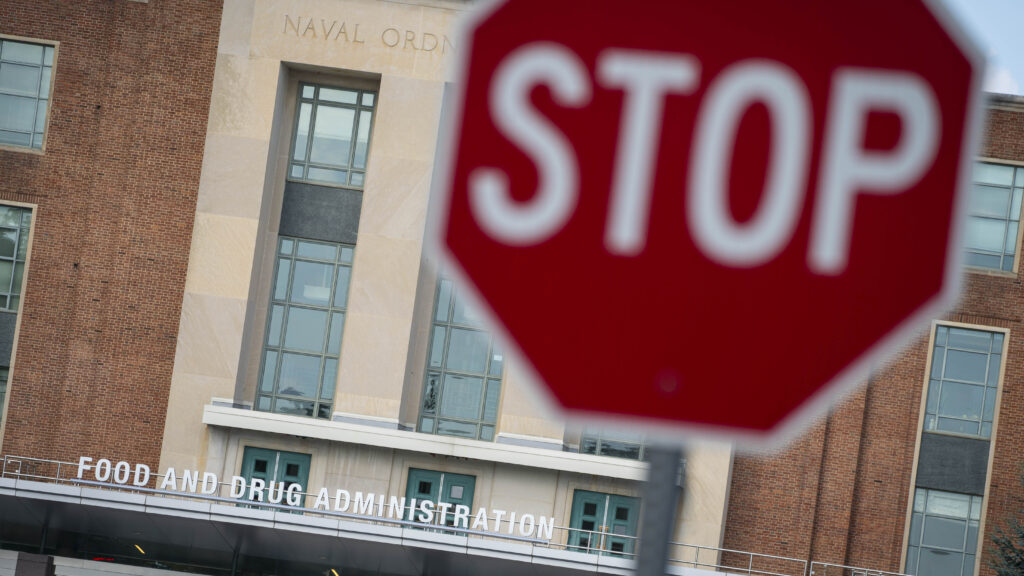
Two years ago, the Food and Drug Administration gave itself a deadline. The agency would eventually decide whether to ban electrical shock devices that have been used for decades to manage self-injurious behavior in people with intellectual disabilities and autism.
The deadline, pegged to the end of May, has now passed without a verdict, leaving disability rights activists and former recipients of these shocks worried that they will continue. The practice — dubbed a form of “torture” by United Nations officials and “punishing” by the American Academy of Pediatrics — has mostly fallen out of favor in the United States in recent decades but is still used at one institution: the Judge Rotenberg Center in Massachusetts.
Disability advocates have been trying to shut down JRC for decades, especially after a video of a resident being shocked for seven hours was shown in court in 2012. The institution offers schooling in addition to therapy, but it is mostly seen as a last resort and sought after for its use of behavioral treatments for kids and adults who have not responded to other types of therapy.
The shock therapy treatment has faced legal challenges for years. The FDA started the process to ban it in 2013 and tried to outlaw it in 2020 before a federal appeals court judge overruled the agency’s decision. The institution has 347 residents, with 54 residents receiving some shock treatments, according to a JRC spokesperson.
Aleyda Martinez vividly remembers her first day at the institution, in 2002, when officials ripped a ring off her finger, a treasured gift from her best friend. The 14-year-old had spent her childhood bouncing around being “beaten and abused” at foster homes and hoped that JRC would be different. Three years in the institution dashed those hopes. Martinez was routinely shocked for speaking out against any mistreatment, including anytime she spoke Spanish, her first language.
“I still get PTSD with certain sounds, like if I get my nails done or get a tattoo, it’s like certain sounds of that [device],” said Martinez, now 38 and living in Alexandria, Va.
Robyn Linscott first learned about the treatments in 2011 while working as a special education teacher in New York City. One of her students had spent time in JRC and described his experience with the shocks.
“It felt dystopian, that this could actually be happening in a place that said that their mission was to help folks with disabilities,” said Linscott, director of education and family policy at The Arc, a disability nonprofit serving people with intellectual and developmental disabilities.
It’s unclear whether the past experiences of Martinez and Linscott’s student are accurate to the current conditions at the institution. JRC Executive Director Glenda Crookes said that the center has to get approval from a person’s family and from a judge to use the device on a resident. She acknowledged that a “two-second shock” is “painful,” but that it is worth it for stopping certain behaviors, and the results are “amazing” and “miraculous.”
“[Someone] had been here for seven years. He was restrained all the time. … Imagine as a mom not being able to hug your child for seven years because they were too dangerous. And she came in and she said, ‘We want to try the treatment. We’ll give you 30 days.’ Within 30 days, he was medication free. He was restraint free. He was attending his sister’s bat mitzvah,” Crookes recently said on a podcast.
Martinez disagrees with Crookes’ assertion that the device’s benefits outweigh its cons.
“They say that people’s behavior changes, but it’s because if they’re on [a graduated electronic decelerator], they get shocked and it’s like they’re living in fear, walking on eggshells, like they didn’t really change,” said Martinez.
It’s unclear how the FDA will rule on the issue, and a federal health spokesperson did not respond to a request for comment on the agency’s plans. The federal appeals court overruled their 2020 ban by saying the agency didn’t have the proper authority to make that decision. Congress included a provision in its 2022 omnibus bill that gave the FDA the authority it was previously lacking to enact the ban. When the FDA posted the initial rule in 2024, the vast majority of comments were in favor of reinstating a ban.
Linscott wants the shocks to end to protect people like her brother, who is autistic and has had many periods in his life where he’s had aggressive and self-injurious behavior.
“We’ve come so close, so many times,” said Linscott. If the FDA were to not ban it, “it would almost feel like salt in the wound.”
STAT’s coverage of disability issues is supported by grants from Robert Wood Johnson Foundation and The Commonwealth Fund. Our financial supporters are not involved in any decisions about our journalism.