

Let’s just be honest: modern-day Nike sucks.
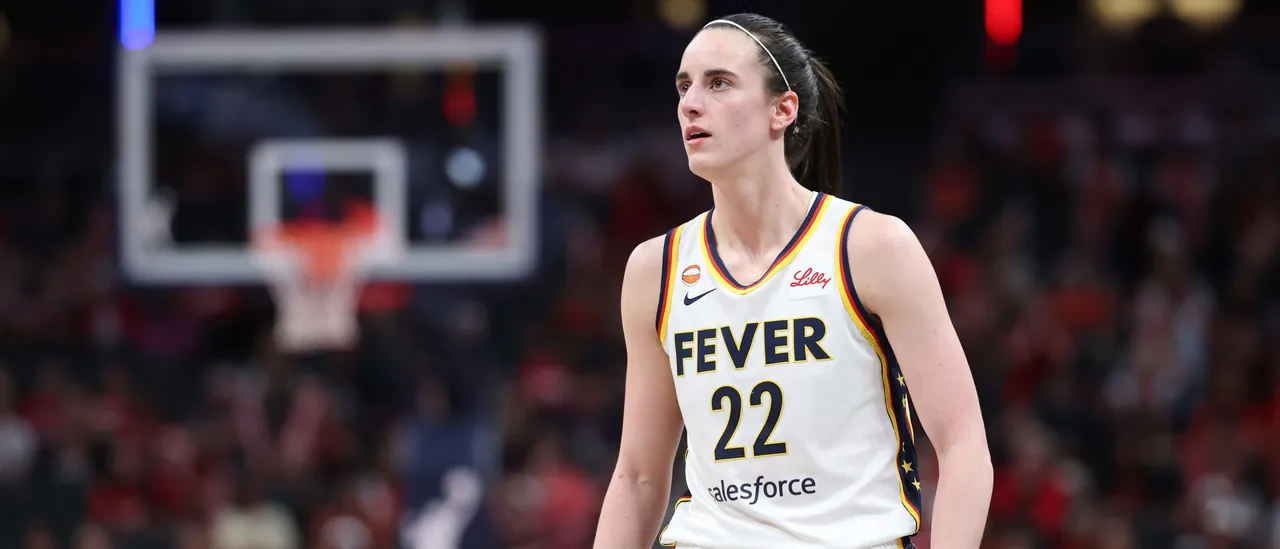
When Wednesday arrived, Nike dropped the first pictures of the signature sneaker from Indiana Fever phenom Caitlin Clark. The name of the show is the Caitlin 1, and it has a color scheme that is sharp blue with “new performance technology designed to reduce drag and enhance movement efficiency.”
Clark’s sneakers, as well as her 18-piece apparel line, will be available to buy Oct. 1. Thursday could see Clark wear the shoes for the first time during a Fever contest.
It’s the official beginning of a high-profile product and marketing push being centered on the third-year superstar, and it’s meant to increase sales and revitalize Nike, while in the process, shooting up the stardom for Clark even higher.
With all that being said though, ESPN Senior Writer Dan Wetzel had a great question in a recent piece about this whole thing: “What the heck took so long?” (RELATED: Conor McGregor Inks Deal With Tucker Carlson-Founded ALP To Become Global Brand Partner)
“Nike first signed Clark to a name, image and likeness deal in October 2022 — before her junior season at the University of Iowa. The two agreed to a fresh eight-year, $28 million contract in April 2024, as Clark entered the WNBA,” wrote Wetzel.
“For more than 3½ years, though, Nike has mostly kept Clark on the shelf, even as she developed into one of the most popular and marketable athletes in the country.”
Wetzel also pointed out that Nike featured Clark in just one commercial throughout that timespan, and on social media, she was only included in three posts in 2026 before the sneaker release. Two of the posts were on Twitter, while the other was on TikTok.
“It is one of the biggest failures I’ve ever seen,” legendary sneaker executive Sonny Vaccaro said in the Wetzel piece.
Caitlin Clark’s signature shoe arrives in October, nearly four years (and five seasons) after Nike first signed her.
Why, even as its stock and revenue cratered, did Nike sit out the Clark phenomenon for so long?
“It is one of the biggest failures I’ve ever seen.”…
— Dan Wetzel (@DanWetzel) June 17, 2026
“She was bigger [than Jordan] in some ways because she was a known commodity when she entered the WNBA. The public had grabbed onto her like no one else. She is more than just a basketball player. It makes no sense.”
Vaccaro is most famous for signing basketball icon Michael Jordan to Nike in a 1984 deal.
Later in the piece, Wetzel dug deep into the economic side, even noting how the shoe giant’s “stock is down over 70% since 2021.”
“It made even less sense considering the extended and significant struggle of Nike, whose stock is down over 70% since 2021, a loss of about $200 billion in valuation. Its price is off nearly 50% since Nike first signed Clark, trading at a price available way back in 2014,” Wetzel wrote.
“While Nike remains the world’s largest athletic apparel company, revenue fell $5.1 billion, or nearly 10%, in fiscal year 2025. (No. 2 Adidas was up 13.3%.) The company has laid off about 2,000 employees since January alone.”
Wetzel put a spotlight on, when it comes to retail, Clark selling a lot of merchandise from Panini America trading cards and memorabilia, Wilson Sporting Goods signature balls, Gatorade water bottles and towels, and Stanley flip-straw tumblers.
“It’s what makes the lack of Nike efforts such a strange, if revealing, development,” wrote Wetzel.
“The Caitlin 1 will reach consumers nearly four years, and five competitive seasons, after she first partnered with Nike. Even as its stock cratered, the company mostly ignored someone who proved capable of pitching everything from boat insurance to grocery stores,” Wetzel said.
“To be clear, Nike’s problems are far greater than how it leverages one signature athlete, but the lack of focus, urgency and leadership that have allowed it are seemingly indicative of Wall Street’s concerns.”