

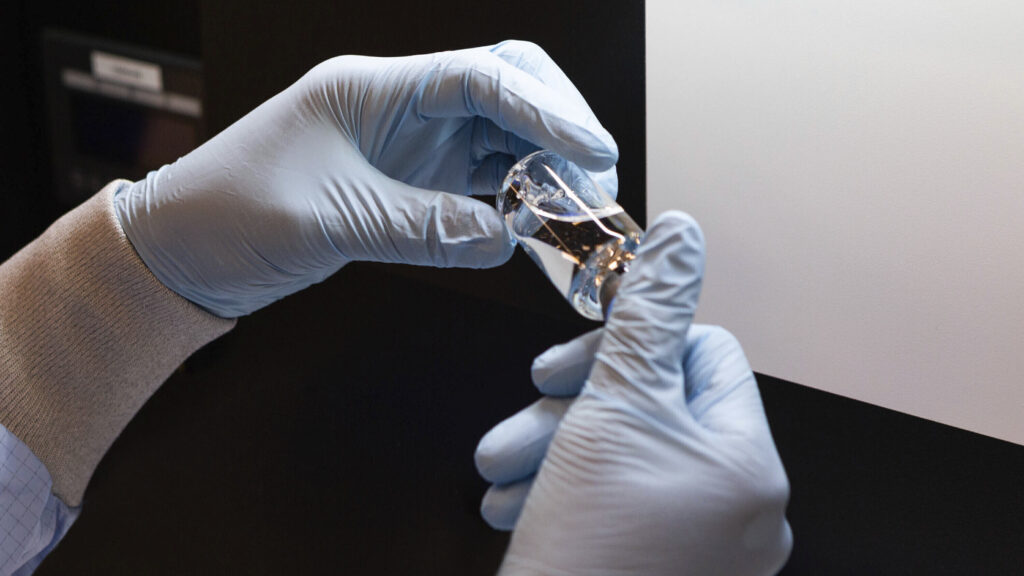
A clinical trial testing two drugs against the Bundibugyo ebolavirus, which is driving a fast-moving outbreak in Central Africa, is set to begin next week, World Health Organization officials said Wednesday.
The clinical trial — which will test both Gilead Sciences’ antiviral drug remdesivir and MappBio’s monoclonal antibody MBP-134 — will be conducted in the Democratic Republic of the Congo. The trial is designed to test whether either of the therapies is effective against this form of Ebola, and whether using the two in combination would be a more effective way to combat the disease.
The current outbreak, the third largest on record, is growing at an alarming rate in the DRC. The outbreak is centered in the northeastern part of the country, an area with prolonged political instability, large numbers of displaced people, and food shortages. As of earlier this week, nearly 1,100 cases have been confirmed in the DRC, with over 275 deaths. Neighboring Uganda, which has seen several imported cases — and limited local spread from them — has recorded 20 confirmed cases so far, with two deaths.
The United States government has supplied doses of MBP-134 for the clinical trial. Through the Biomedical Advanced Research and Development Authority, or BARDA, the U.S. has funded research on the monoclonal and it owns the doses MappBio has produced.
Though it is believed that MBP-134 could be used both as a therapy to treat people who have developed Ebola, and as a prophylaxis to prevent disease in people exposed to the virus, only the former usage is going to be tested at this time.
Gilead has supplied doses of remdesivir for the trial.
There are no drugs or vaccines that have been proven effective against the Bundibugyo species of Ebola, which has been a challenge in this outbreak. This is only the third known outbreak involving the species, which was first detected in 2007.
Another challenge is it appears that the Bundibugyo species of Ebola appears to trigger less severe disease in some cases. Studies in primates have shown that some animals survive the disease on their own when exposed to what would be a lethal dose of one of the other types of Ebola.
Because of the possible lower case fatality rate associated with this Ebola species, it’s anticipated that the clinical trial will need to be larger than might otherwise have been necessary, said Vasee Moorthy, acting lead of WHO’s R&D Blueprint group.
“It means that we are looking at around 1,000 [participants] that would need to be enrolled in the trial before we expect that there will be an answer about the safety and efficacy of any of these options,’’ Moorthy said.
A variety of the nongovernmental organizations operating Ebola treatment units in the outbreak zone — including ALIMA, Doctors Without Borders, and the religious charity Samaritan’s Purse — will be enrolling participants in the trial, he said.
The trial is being conducted by a consortium of entities, including DRC’s National Institute of Biomedical Research, ALIMA, the University of Oxford, and the WHO.