

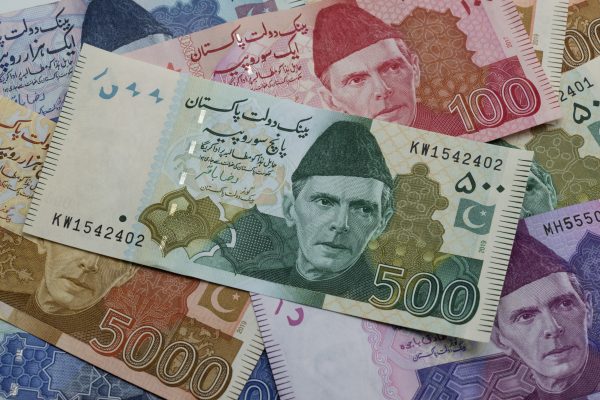
Pakistan’s federal budget for Fiscal Year 2026-27, with a total outlay of approximately $67 billion, has been officially passed by parliament following committee-level amendments. The budget seeks to maintain fiscal discipline while supporting growth in an economy that has been trying to stabilize after facing a severe balance-of-payments crisis in 2023.
The newly passed Finance Bill 2026 will officially come into effect from July 1, 2026, marking the start of the new fiscal year. This means that all financial proposals, new tax measures, duties, and federal spending priorities will be implemented from that date.
The government has asserted that the financial plans for FY27 are prioritized to lay the foundation for “accelerating sustainable growth.”
“The fundamental goal of our government and this budget is export-led growth, which should be sustainable and inclusive, which should increase productivity and create jobs,” Finance Minister Muhammad Aurangzeb told the National Assembly during the budget debate.
Several key macroeconomic indicators suggest that this upcoming fiscal year’s budget framework is explicitly pivoting toward expansion and growth. However, whether this growth-oriented framework that the government is pushing will actually work under tight fiscal constraints remains to be seen.
One encouraging indicator is that the government has sought to shift the focus of fiscal policy toward expanding the tax base rather than imposing additional burdens on existing taxpayers, particularly the salaried class. According to the government, the budget aims to provide relief to salaried workers, exporters, industries, and small businesses while improving tax compliance and enforcement. The compliance and reform measures are mainly being implemented within the Federal Board of Revenue (FBR) through a new operating model aimed at increasing digitization, reducing discretionary powers, and improving transparency in tax administration. The FBR reforms proposed for the next fiscal year’s budget are ambitious, and their feasibility remains open to question. A recent report by the Auditor General of Pakistan revealed that the FBR failed to recover a staggering $2.84 billion in revenue due for the year 2025-26.
The government is signaling confidence. The outgoing year’s 6.6 percent growth in the large-scale manufacturing sector was the highest in the past four years. Keeping this in view, the government has abolished the Super Tax completely in the new budget for businesses with an annual income of up to $1.8 million. This was a heavily criticized tax in the past as it penalized growing industries. Moreover, for major industrial corporations earning above the $1.8 million threshold, the top-tier Super Tax rate has been reduced from 10 percent to 8 percent.
The government also seems confident, as the country’s external account is now stable. The current account recorded a surplus in the first 11 months of the current fiscal year. This means that the government expects the external account to remain stable in FY27, particularly via extended tax incentives for the Information Technology (IT) sector, a rise in exports, and workers’ remittances.
Pakistan’s tech exports rose 20 percent year-on-year to $4.2 billion in the first 11 months of fiscal year 2026. While they are expected to exceed $4.5 billion during the outgoing year, the government hopes this momentum will accelerate further under the new budget’s expanded tax incentives.
Moreover, in the government’s budgetary calculations, remittances remain a critical lifeline. Despite concerns stemming from the Iran-U.S. war and potential disruptions for Pakistani workers in the Gulf, May recorded an impressive $4.25 billion inflow. Data from the Bureau of Emigration shows that 278,536 Pakistanis traveled overseas for employment by May 2026, with a majority heading to Saudi Arabia and the UAE.
The government hopes to meet its $41 billion target for FY26 and is optimistic that thousands of new workers could go abroad in the coming months, potentially pushing remittances beyond $45 billion. This would provide vital support for the balance of payments for the next year.
To sustain its projected 4.0 percent economic growth target for the next fiscal year, the government has situated CPEC 2.0 as an important part of its industrial and development agenda in the new budget. For instance, unlike the transport and energy-heavy first phase of the corridor, the FY27 budget aims to prioritize joint ventures in arguably high-yield sectors like manufacturing, mining and Information Technology. In a way, key to this effort is the planned acceleration of Special Economic Zones (SEZs), which the budget aims to support through strategic tax and tariff relief designed to lower the cost of doing business.
Apparently, the government is trying to integrate this vision directly into modern technology and green mobility through the newly formulated 2026-31 Auto Policy. While the budget tightens the tax net on premium luxury vehicles, it tries to balance this by maintaining zero federal excise duties on more accessible imported electric cars valued below $75,000. This specific fiscal policy is arguably aimed at directly accommodating Chinese supply chains and key incoming players like BYD and their local partners from Pakistan. The policy seems to be aimed at pairing import concessions with long-term completely knocked-down (CKD) kit incentives to encourage localized component manufacturing, which can be exported to other countries in the medium to long run. It is pertinent to mention that Chinese electric automotive giant BYD plans a $150 million assembly plant near Karachi with a 25,000-unit capacity to target local EV and PHEV production from mid-2026.
The government has set a GDP growth target of around 4.0–4.2 percent for FY27, along with efforts to contain inflation that grew amid the Iran-U.S. war. However, as with previous budgets, success will largely hinge on implementation.
While the government’s budgetary plans demonstrate confidence, these efforts will largely be operating in a challenging external environment. It is important to note that amid geopolitical uncertainties, including the aftermath of the Iran-U.S. conflict, global commodity prices, and the need for a supportive international financial climate, will be important as far as Pakistan’s next fiscal year plans are concerned. Pakistan’s economic performance, which depends on remittances, international financial flows, and imports, cannot remain isolated from broader regional stability and access to capital markets.
The government is seemingly basing its performance on an internal push to increase exports that will need to be supported by a suitable external environment. If the government succeeds in implementing these reforms effectively while navigating geopolitical risks and securing continued international support, the budget could mark a meaningful step toward sustainable economic recovery.