

• Home
  • Politics
  • Health
  • World
  • Business
  • Finance
  • Tech
  • More
    • Sports
    • Entertainment
    • Lifestyle
What's Hot

The AI Trade Is Rotating From Chips to Infrastructure. 2 Stocks Riding the Shift.

July 11, 2026

Progressives say they’re done re-litigating old posts. Are their opponents?

July 11, 2026

Nobel Prize-Winning Chemist Leaves U.S. to Join Chinese AI Project

July 11, 2026
Facebook Twitter Instagram
  • Contact
  • Privacy Policy
  • Terms & Conditions
Saturday, July 11
Patriot Now NewsPatriot Now News
  • Home
  • Politics

    Progressives say they’re done re-litigating old posts. Are their opponents?

    July 11, 2026

    New Footage Allegedly Shows Senator Mitch McConnell Loaded Into Ambulance

    July 11, 2026

    Trump Bucks Congress By Refusing To Sign Housing Bill Over SAVE America Act

    July 11, 2026

    EXCLUSIVE: Can MAHA Propel Unlikely Republican Nominee To Key Midterm Win?

    July 11, 2026

    Former DHS Secretary Kristi Noem To Divorce Bimbo Obsessed Cross Dressing Husband

    July 11, 2026
  • Health

    Kylian Mbappé Injury Update Before France’s World Cup Semi Vs. Spain

    July 11, 2026

    The Biggest AI Risk Isn’t Hallucinations. It’s Skill Decay.

    July 11, 2026

    Where Have You Gone, Health Equity?

    July 11, 2026

    ACA Premium Hikes Raise Questions On Affordability And `Death Spiral’

    July 11, 2026

    What’s Behind Erling Haaland’s 6,000-Calorie Per Day ‘Ancestral’ Diet

    July 10, 2026
  • World

    ‘Super Typhoon’ Threatens China and Taiwan

    July 11, 2026

    World Cup’s Embrace Of Technology Backfires On FIFA

    July 11, 2026

    Report Claims Lebanon Open to Talks with Israel over Hezbollah Conflict

    July 11, 2026

    ‘There’s Still Fear’: The Enduring Trauma Of The ICE Surge In Minneapolis

    July 11, 2026

    Mexico’s Top Diplomat Announces Legal Actions Against ICE, Detention Centers Over Migrant Deaths

    July 11, 2026
  • Business

    ATF Rule Could Cause Classic Showdown Between Mom And Pop Shops Versus Online Retailers

    July 10, 2026

    Costco Shows That You Can Build A Thriving Business With One Simple Trick (Pay Your Workers)

    July 9, 2026

    The Agency Elizabeth Warren Built Now Advances Trump’s Agenda

    July 9, 2026

    Meta To Shell Out Billions For New AI Data Center Outside US

    July 9, 2026

    How Big Banks Are Scheming To Jack Up Your Fees

    July 8, 2026
  • Finance

    The AI Trade Is Rotating From Chips to Infrastructure. 2 Stocks Riding the Shift.

    July 11, 2026

    Mag 7 and software could boost portfolio in second half: ETF Action

    July 11, 2026

    The S&P 500 Could Jump 18% Over the Next 1 Year. Here Are My Top Growth Stocks to Buy Before That Happens

    July 11, 2026

    CoreWeave Stock Sank 11% After Mark Zuckerberg’s Meta Unveiled a Cloud Business Plan

    July 11, 2026

    Up to 4.10% APY return

    July 11, 2026
  • Tech

    Nobel Prize-Winning Chemist Leaves U.S. to Join Chinese AI Project

    July 11, 2026

    European Commission Finds Meta Violated Digital Services Act with Addictive Design Features

    July 11, 2026

    Microsoft Xbox CEO Asha Sharma Appointed to Federal Reserve Jobs Advisory Role After Mass Layoffs

    July 10, 2026

    OpenAI and Google Provide AI Services to Pentagon-Blacklisted Chinese Tech Giants

    July 10, 2026

    Oregon Utility Raises AI Data Center Electricity Rates by 30%, Reduces Residential Costs

    July 10, 2026
  • More
    • Sports
    • Entertainment
    • Lifestyle
Patriot Now NewsPatriot Now News
Home»Health»The Biggest AI Risk Isn’t Hallucinations. It’s Skill Decay.
Health

The Biggest AI Risk Isn’t Hallucinations. It’s Skill Decay.

July 11, 2026No Comments5 Mins Read
Facebook Twitter Pinterest LinkedIn Tumblr Email
The Biggest AI Risk Isn’t Hallucinations. It’s Skill Decay.
Share
Facebook Twitter LinkedIn Pinterest Email

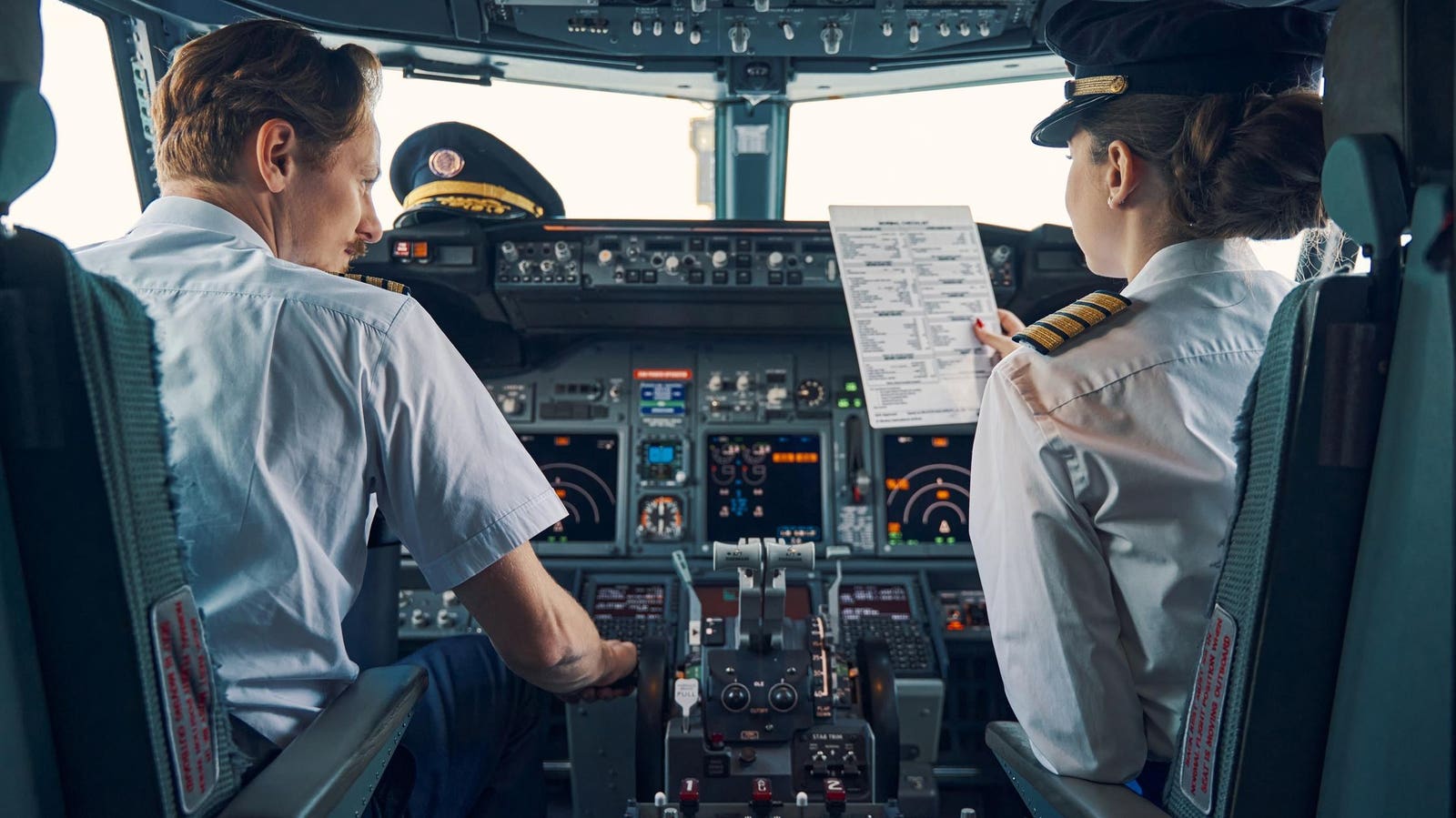
Pilots conducting pre-flight procedures

getty

An ambient AI scribe, a program that listens to a patient-clinician conversation and generates a clinical note, documented that a medicine had been prescribed to treat post-traumatic stress disorder. However, neither the medicine nor the diagnosis were discussed – this was a complete hallucination.

The note never reached the patient because it was caught before it left the clinic.

Child and adolescent psychiatrist Dr. Jennifer Shannon, Co-Founder and Chief Medical Officer of Glacis, reviewed the transcript directly and concluded there was nothing in the visit that could reasonably have produced the statement.

“Imagine managing 20 patients a day, each with pages of generated notes,” she told me. “Defaulting to human-in-the-loop as your protection is not enough. Humans are fallible, busy, and often overtired.”

Documentation burden is real. Nobody seriously argues that clinicians should spend their evenings clicking boxes and typing notes. But implementation changes roles in ways that are easy to miss. A clinician who once distilled their understanding from notes taken during a visit is increasingly reviewing machine-generated summaries and structure derived from that same encounter. Responsibility hasn’t changed, but the nature of the work has.

I don’t picture attentive reviewers sitting quietly examining every sentence. I picture Tuesday afternoon. Somebody running behind. An inbox with thirty messages. A kid needs to get picked up. A patient waiting in room three.

Reality is messy.

Expertise Is Part Of The Safety System

Dr. Richard Rieck is both a practicing neuroradiologist and pilot; he is used to operating in multiple high-risk environments.

Pilots spend enormous amounts of time in simulators where multiple failures are intentionally layered on top of one another. Automated systems fail. Engines fail. Weather changes. The goal isn’t realism; the goal is to sharpen skills and build instincts before any of those situations occur in real life.

As Dr. Rieck put it, “After enough simulator training, flying the actual airplane almost feels like a relief because everything just works. You train the failures so that when something unexpected happens, you don’t have to invent a response.”

In aviation, all of these training and skill protocols exist because modern aircraft and their automated systems are extraordinarily reliable. Nobody boards an airplane expecting the pilot to disappear. Maintaining expertise isn’t evidence that the automation isn’t good; maintaining expertise is itself part of the safety architecture.

Automation Changes The Work More Than The Accountability

Dr. Richard Rieck thinks about AI in radiology in similar terms. Just as pilots understand both their own failure modes and the limitations of automation, radiologists increasingly need to understand where they are likely to make mistakes and where AI systems are likely to make mistakes.

Neither is perfect. The safety comes from understanding where each is most likely to fail.

I keep returning to this because “human-in-the-loop” has become one of AI’s favorite safety concepts. The idea is straightforward: before AI-generated work reaches a patient or customer, a person reviews it and catches anything that shouldn’t be there. Too often, though, we describe that person as little more than a backup. The machine does the work and the human corrects it when something breaks.

That doesn’t really describe what I see.

The people aren’t there simply to rescue the machine when something goes wrong. Their experience, instincts, and judgment are part of the system itself. As automation improves, those capabilities become more valuable, not less.

The Most Overlooked Safety Layer? Patients.

High-risk industries rarely rely on a single safety layer. Healthcare doesn’t either. Clinicians aren’t the only people whose expertise helps keep the system safe. Patients have quietly developed expertise about their own care for years.

Long before ambient documentation arrived, patients were already reconciling medication lists, catching referral failures, correcting demographic mistakes, and trying to make sense of conflicting recommendations from different specialists. They weren’t simply participating in care—they were identifying failures inside a system they could only partially see.

Patient advocate Hugo Campos, who alongside Liz Salmi has written about critical AI health literacy, frames this through a distinction between institutional AI and patient-directed AI.

“We’ve got to stop the system from being the gatekeeper, and we have to allow for people to help themselves,” he told me.

His point resonates because AI shouldn’t diminish patient expertise; it should strengthen it. As clinicians adapt to automation while managing overflowing inboxes, documentation burdens, and constant time pressure, patients become an increasingly important source of resilience within the system—not because responsibility has shifted to them, but because their perspective catches failures that no one else can fully see.

Professionals Deserve A Playbook

Most conversations around AI risk focus on whether the machines will fail. I increasingly wonder whether another question deserves more attention.

What happens to humans after years of successful automation?

Pilots train failures before they experience them. Sports teams rehearse situations they hope never happen. Trauma teams rehearse codes. The goal isn’t to eliminate surprises; it’s to avoid asking professionals to invent solutions under pressure.

Honestly, some of these systems still leave me shaking my head. They’re astonishing. Which is exactly why I worry about what happens to human expertise when they work correctly most of the time.

AI systems are getting very good. That’s exactly why I find myself thinking about skill decay more than catastrophic failure.

Nobody wants to discover skill decay in the middle of an emergency.

And no professional should have to invent a response when the stakes are highest.

Now is the moment to be intentional about the skills we continue to practice. Because once expertise is gone, we won’t miss it until the day we need it most.

See also  Biden drug czar to summon naloxone makers for price roundtable
Biggest Decay Hallucinations Isnt risk Skill
Share. Facebook Twitter Pinterest LinkedIn Tumblr Email

Related Posts

Kylian Mbappé Injury Update Before France’s World Cup Semi Vs. Spain

July 11, 2026

Where Have You Gone, Health Equity?

July 11, 2026

ACA Premium Hikes Raise Questions On Affordability And `Death Spiral’

July 11, 2026

What’s Behind Erling Haaland’s 6,000-Calorie Per Day ‘Ancestral’ Diet

July 10, 2026
Add A Comment

Leave A Reply Cancel Reply

Top Posts

Date, time, where to watch, live stream details and more

August 18, 2023

Vida Blue Was a Baseball Comet

May 9, 2023

India Just Signed Its Most Consequential Chip Deal. The Hard Part Starts Now.

May 20, 2026

Rand Paul abruptly leaves committee meeting when Dem chair plays ‘legislative prank on the American public’

March 21, 2023
Don't Miss

The AI Trade Is Rotating From Chips to Infrastructure. 2 Stocks Riding the Shift.

Finance July 11, 2026

For two years, the easiest way to invest in artificial intelligence (AI) was to buy…

Progressives say they’re done re-litigating old posts. Are their opponents?

July 11, 2026

Nobel Prize-Winning Chemist Leaves U.S. to Join Chinese AI Project

July 11, 2026

Dodgers’ Kiké Hernández Refusing to Join Team for White House Visit

July 11, 2026
About
About

This is your World, Tech, Health, Entertainment and Sports website. We provide the latest breaking news straight from the News industry.

We're social. Connect with us:

Facebook Twitter Instagram Pinterest
Categories
  • Business (4,399)
  • Entertainment (5,616)
  • Finance (4,147)
  • Health (2,453)
  • Lifestyle (1,897)
  • Politics (3,855)
  • Sports (4,844)
  • Tech (2,368)
  • Uncategorized (4)
  • World (5,586)
Our Picks

Afghan Migrant Convicted of Grooming and Raping Two Teenage Girls

July 7, 2026

Morning Bid: Aussie rate decision, Asian markets on a roll

September 5, 2023

Trump Threatens To Tank The Midterm For Republicans If They Won’t Pass The SAVE Act

June 24, 2026
Popular Posts

The AI Trade Is Rotating From Chips to Infrastructure. 2 Stocks Riding the Shift.

July 11, 2026

Progressives say they’re done re-litigating old posts. Are their opponents?

July 11, 2026

Nobel Prize-Winning Chemist Leaves U.S. to Join Chinese AI Project

July 11, 2026
© 2026 Patriotnownews.com - All rights reserved.
  • Contact
  • Privacy Policy
  • Terms & Conditions

Type above and press Enter to search. Press Esc to cancel.