

Last week, Pakistan and Chinese companies signed agreements worth $850 million at the Pakistan-China Pharmaceutical and Healthcare B2B Investment Conference in Islamabad.
Held on July 17 and 18, the event focused on vaccine production, active pharmaceutical ingredients (API), medical devices, clinical trials, and related pharmaceutical subsectors. It brought together 146 Chinese companies with around 220 delegates and more than 200 Pakistani firms, marking one of the largest China-Pakistan business engagements in the pharmaceutical, healthcare, and biotechnology sectors.
Federal Health Minister Mustafa Kamal announced on July 18 that 16 contracts and 80 memoranda of understanding had been finalized during the event. He termed the development a key economic milestone for cooperation between China and Pakistan in the pharmaceutical sector. The deals signed and the scope of the expected cooperation mark a clear shift toward industrial collaboration between the two countries, beyond the limited trade exchanges of earlier years.
Notably, Pakistan’s dependence on imported vaccines and pharmaceutical inputs remains critical. For instance, the country administers 13 vaccines under its national immunization program, and all these vaccines are imported. Moreover, while Pakistan manufactures about 85 percent of its finished medicines locally, it imports around 95 percent of the API required to produce them. The country’s dependency also extends to imports for essential vaccines and specialized medicines. This essentially means that Pakistan’s healthcare system is vulnerable to global shipping delays, currency shifts, cuts in foreign aid, and changes in donors’ priorities.
For its 240 million people, the consequences of vaccine import dependency are huge.
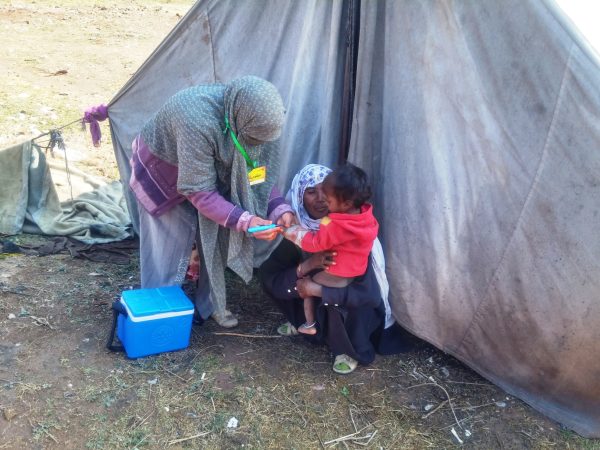
For instance, vaccine-preventable diseases, such as measles, diphtheria, polio, and rabies continue to affect people, especially children. At times, shortages and delayed shipments force health authorities to ration doses or postpone campaigns. In other cases, thousands of children die every year in Pakistan simply due to non-vaccination because their parents do not pay any heed to the importance of immunization. In this context, a lack of awareness and persistent vaccine shortages highlight a long-standing challenge within Pakistan’s pharmaceutical sector.
The government, it seems, is now pursuing broader pharmaceutical reforms with Chinese support to open an industry that has remained underdeveloped for a long time.
For the first time, Pakistan has approved a National Local Vaccine Production Policy. Arguably, the policy has set the framework for domestic vaccine manufacturing with assistance from Chinese companies. The policy seeks to build local production capacity, strengthen health security, and cut dependence on imported medicines and vaccines.
In this regard, the Chinese investment and technology transfer that is envisaged under the recent agreements could reshape the pharma sector. This is the first time that such substantial investment pledges and private-sector collaboration are happening with full support from the governments of both countries.
Pakistan is facing recurrent vaccine shortages and systemic challenges that severely undermine its immunization efforts. The economic costs of importing medicines intensify these challenges. Pakistan’s medicine and vaccine import costs run into hundreds of millions of dollars each year. It is estimated that the annual bill for imported vaccines could reach $1.2 billion by 2030. The planned local production could help Pakistan reduce imports and save foreign exchange.
Moreover, agreements have been reached with Chinese companies to produce raw materials domestically, which would further lower medicine prices and benefit the Pakistani public.
No other country apart from China has shown this level of interest in Pakistan’s pharmaceutical sector. Agreements signed at the conference include two in API manufacturing, eight in vaccine production, two in clinical trials, two in generic formulation injectables, and eight in medical devices. This could dramatically change Pakistan’s healthcare sector if implemented fully.
The deals struck recently pave the way for local production and knowledge transfer in the coming years.
As part of the agreements, Chinese firms are set to establish plants in Pakistan through joint ventures, co-produce raw materials, and build new industrial capacity that will also create jobs locally. Many of these units are expected to be built in special economic zones that are being developed under the China-Pakistan Economic Corridor, where targeted policy incentives are expected to accelerate industrial growth.
That said, Chinese private investors might still face regulatory and other obstacles in research and development. The Pakistani government must provide a competitive and transparent environment that is free from political instability and regulatory confusion if the partnership is to deliver results. An opportunity like this may not come again and should be taken seriously by the federal government.