

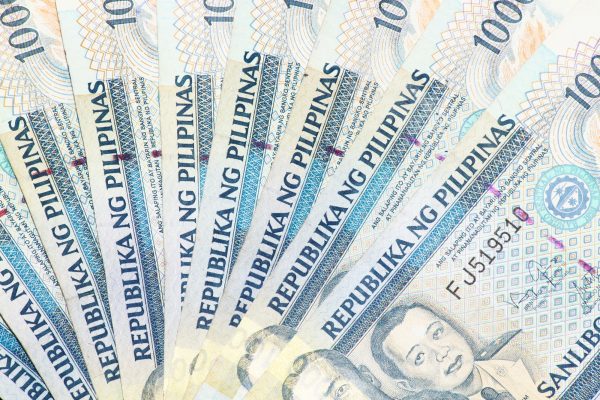
The Philippine peso fell to a record low on Friday due to rising oil prices and a strengthening U.S. dollar, despite attempts by the country’s central bank to offer relief.
According to a report by Inquirer.net, which cited data from Bankers Association of the Philippines, the currency weakened 37.7 centavos to close at 62.265 per U.S. dollar, surpassing the previous record-low close of 61.888 set the day prior.
The new record capped off three straight weeks of losses for the peso, which has been among the Asian currencies most vulnerable to the spike in energy prices brought about by the war in the Middle East. The peso has lost nearly 8 percent since the Iran war began on February 28, due in large part to the Philippines’ heavy reliance on oil imports, which has contributed to rising inflation.
This came despite a decision by the Bangko Sentral ng Pilipinas to raise its benchmark interest rate by 25 basis points point to 5 percent. Central bank Governor Eli Remolona Jr. described the increase, which brought the total increase in the current anti-inflation campaign to 75 basis points, as a “preemptive” move against emerging inflation risks. Philippine policymakers now expect inflation to average 6.1 percent this year, and 5.4 percent in 2027, up from a decade-long low of 1.7 percent in 2025 and 3.2 percent in 2024.
Citi analysts told Reuters that the outlook for the currency remained negative, “due to significant external pressures.”
“The current-account deficit is widening, driven by elevated energy prices and a weaker services balance in the recent quarter,” the analysts stated. “This pressure could persist, as future government infrastructure spending would keep the import bill elevated.”
Among Asian currencies, the other major casualty of the Iran war has been the Indonesian rupiah, which fell by around 8 percent in the first six months of 2026, and in early June sunk to a record low of 18,190 against the dollar – lower than even during the depths of the Asian financial crisis of 1997-1998.
The currency has been under pressure since President Prabowo Subianto came to office in October 2024, promising high-spending social programs that sent a tremor of concern through the markets. However, these concerns have only bene compounded by the economic reverberations of the Iran war.
The Thai baht has also weakened, falling to 32.96 to the U.S. dollar at the close of its last session, down 4.6 percent since the start of 2026.
The immediate impacts of the weak peso are likely to be mixed. As Inquirer.net reported, millions of families will benefit from the fact that remittances from relatives abroad will be worth more locally, potentially giving households greater spending power. Exporters may also benefit as a weaker currency makes Philippine goods more competitive overseas.
However, it noted that a weaker peso “also raises the cost of imported goods, while companies and the government face higher peso costs when repaying foreign-currency debt.”