

What would you call the mice with half-human brains detailed in Megan Molteni’s story? I chose mousensteins, but there are definitely better answers.
FDA still haunted by DOGE cuts
In April 2025, Elon Musk’s U.S. DOGE Service took a chainsaw to the Food and Drug Administration, slashing 3,500 workers and triggering a broader staff exodus. More than a year later, the FDA is trying to add more than 2,000 employees back, but it can’t — thanks to the same DOGE cuts.
DOGE’s push to centralize what were once individual human resources offices has backfired, creating bottlenecks and confusion. Hundreds of prospective new employees are stuck in pre-onboarding limbo and routine administrative tasks, like purchase approvals and travel payments, have fallen by the wayside.
When asked about the paralysis, an agency spokesperson demurred, highlighting the hiring efforts instead. But multiple employees told STAT’s Margaret Manto a different truth. Read more.
Is this a mouse, a human, or something else?
Researchers have created a mouse whose brain is half-human by volume.
In recent decades, scientists have gotten much better at growing “cerebral organoids” — miniature, three-dimensional brain-like structures — from human stem cells as a way to study brain development and disease. Now, a group from Stanford University has advanced their usefulness by growing these globs of cells inside mice missing chunks of their own brain.
Across memory and motor tests, the scientists reported that these neuro-chimeric mice performed about the same as normal mice. But hours of open field observations revealed something totally different.
What a wild item to write and a phenomenal story from STAT’s Megan Molteni. Read on for more about the scientific utilities for and ethical implications of these mousensteins.
Will Chris Klomp stand up to RFK Jr.?
That was the question on senators’ lips as two key committees grilled the senior federal health official nominated to be Kennedy’s second-in-command.
Over two days of hearings, senators fired questions at Klomp about whether he would stand up to the health secretary — especially on Trump and Kennedy’s vaccine policy changes, which have coincided with measles outbreaks across several states and multiple deaths in Pennsylvania.
The “famously thrifty technology entrepreneur” has already been a major player in the Trump administration as Medicare director and then chief counselor to Kennedy. He has negotiated deals with pharmaceutical companies and acted as a liaison between the Department of Health and Human Services and the White House.
What did Klomp say about the measles deaths? Read Chelsea Cirruzzo’s story.
I promise this photo is not AI-generated

This is a real picture of twin girls, Hiyab and Wuhbto, who were born in Ethiopia with conjoined skulls in 2024. They are now recuperating, unconjoined, after surgeons at a St. Louis hospital separated their heads in February.
Twins joined at the head — craniopagus twins — are exceedingly rare. One in every 2.5 million live births! Only 62 separation attempts have ever been made worldwide. Hiyab and Wuhbto shared brain tissue and blood vessels, which made surgery last more than 24 hours and required more than 60 specialists, according to an announcement from SSM Health Cardinal Glennon Children’s Hospital. Surgeons completed repair of Wuhbto’s skull earlier this year. Hiyab is slated for the same procedure this fall.
Medicine ain’t always perfect, but wow can it do some marvelous things. You can watch the livestream of the announcement here.
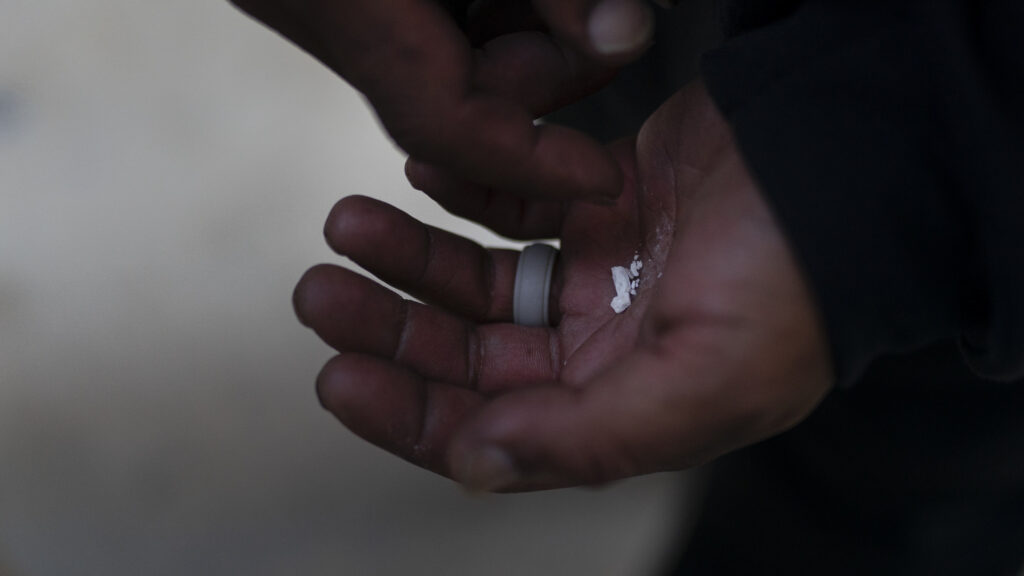
Purer fentanyl won’t solve the U.S. overdose death crisis
In January, a paper published in Science analyzed government mortality figures, data on drugs seized by the DEA, and Reddit posts to determine that decreasing fentanyl potency due to Chinese government crackdowns could explain the recent decline in U.S. opioid overdose deaths. But when another research team tried to replicate that study, they didn’t come to the same conclusion.
“A simplistic supply shock is not supported by the evidence,” the authors wrote yesterday in Science Advances.
The researchers noted that as fentanyl purity increased across the country, there was no associated national drop in overdose rates. While there did seem to be a broad association between declining purity and overdoses, it was shared with other, unrelated trends. And importantly, the DEA acknowledged at the time that increasing purity in its drug seizures was likely due to a change in its sampling plan.
It’s also critical not to overlook geographic variability in the drug supply, the replication study authors wrote. As one of them told Lev Facher when the first study was published, many regions had declining overdose rates before potency apparently began to drop. — Theresa Gaffney
Potentially good Ebola news
After 7,258 confirmed cases and 3,510 deaths, there is reason to be cautiously optimistic about the trajectory of the Ebola outbreak in the Democratic Republic of Congo.
Disease transmission rates are declining in most of the affected provinces, though months of work remain to get the outbreak under control, said Tedros Adhanom Ghebreyesus, the director-general of the World Health Organization, during a news conference yesterday.
The outbreak, caused by the Bundibugyo species of Ebola, is the second-largest on record. The WHO said it expects a Phase 3 randomized clinical trial of Ebola vaccines to begin in the next couple of weeks. The inimitable Helen Branswell has the full update.
What we’re reading
- How far would you go for sisterhood?, The Cut
- What happened to oppositional defiance disorder? STAT
- New maps reveal massive gaps in access to affordable birth control across the U.S, NPR
- How a fringe AI movement convinced Washington the end is near, Washington Post
- Trump Administration shift puts this corner of biotech back in favor, Wall Street Journal