

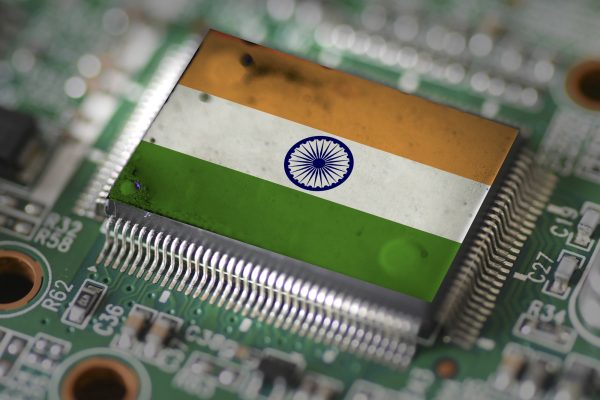
The fifth edition of SEMICON India closed on September 19 in New Delhi, after featuring a massive scale of over 600 exhibitors and 300 international companies across 52 countries. Themed “Silicon to Systems: Building the Ecosystem,” the exhibition-cum-conference served two objectives. For industry, it showcased expansion in India’s indigenous technology, ranging from high-performance computing and domestic processor design to system-on-chip design automation tools. On the policy front, the platform highlighted the evolution of India’s semiconductor ecosystem, stressing its expanding capabilities and role in the global semiconductor landscape.
Semicon 2.0, the second phase of the India Semiconductor Mission (ISM), was approved in July 2026 with an announced outlay of around $13 billion. The mission pitches India as a trusted and reliable partner in the global semiconductor value chain. India’s Electronics and IT Minister Ashwini Vaishnaw described the new phase as moving “from demonstrating intent to executing projects at scale.” With increasing participation from global stakeholders, India is turning its ambitions into a credible reality.
India, an old designer in the semiconductor ecosystem, is becoming a new producer. ISM 2.0’s progress is to be measured by two key strengths: the intellectual property created by India’s talent, and the inputs its factories consume.
India’s semiconductor journey is not a rags-to-riches developing country story. India was a capable and serious player in the industry early on. Back in the 1980s, it had a considerable semiconductor push, with only a thin gap between India and the latest semiconductor manufacturing technologies available globally. Unfortunately, India’s chip industry lost its momentum after a devastating 1989 fire at the state-run Semiconductor Complex Limited in Mohali. Then, after the 1991 economic liberalization, the zeal for at-home manufacturing diminished. Chips could be imported from abroad for less money, while Indian fabs faced thin subsidies, bureaucratic bottlenecks, and inadequate infrastructure.
Although manufacturing became a lost cause, what India tremendously excelled in was chip design. Design is the most intellectually demanding and value-dense task of the supply chain, and India hosts around 20 percent of the world’s chip design talent working out of its Global Capability Centers (GCCs). The Indian tech cities of Bengaluru, Hyderabad, Noida, and Pune harbor massive engineering talent providing R&D for firms like Intel, Qualcomm, Texas Instruments, and NXP. This part of the supply chain existed and thrived in India even before the ISM policy and rebranding.
No matter how impressive it sounds, domestic capabilities in designing chips for multinational companies and filing patents for foreign parent firms is one thing. Success in domestic manufacturing and design ownership is another.
ISM 2.0 targets the ownership gap by funding full-stack Indian semiconductor IP, startups, and deployment-linked design incentives. To ensure the IP claims, the policy conditions that the strategically important chip designs supported under the scheme will be co-owned by a state agency and remain in the country. However, co-ownership of IP tends to complicate licensing, acquisitions, and the venture funding that fabless startups need to scale. How this debatable condition pans out will determine whether India’s design talent concretizes into Indian companies.
ISM 1.0 was applauded for meeting its objectives early, by approving 12 manufacturing projects, including nine packaging units, with India’s first commercial fab under construction. Despite the achievements, India still imports more than 90 percent of its chipmaking equipment. To fill this gap and develop an ecosystem, ISM 2.0 offers fiscal support to producers of semiconductor equipment, chemicals, gases, and raw materials.
There is also a geoeconomic angle here that weighs as heavily as the domestic ownership argument. With the United States, the European Union, Japan, and South Korea all de-risking by diversifying supply chains away from geographical concentration in Taiwan and exposure to China, global players like Micron and Applied Materials are investing in India. They see India as a politically safe node in the supply chain network. Analysts have argued for strengthening chip cooperation between Japan, South Korea, and India, using complementary strengths in fabrication, market size, and labor power, to balance out the United States’ use of tariffs as geopolitical leverage.
The risk-diversification-minded friend-shoring might benefit India as long as the China-U.S. tensions persist. While this motivation could weaken if the tension eases, that shows no signs of happening in the near future. Plus, India is not in a zero-sum game; every plant and supply facility built today strengthens its domestic base irrespective of the geoeconomic shifts of tomorrow.
The challenge India now faces is beyond the capital-allocation problem, where the government offers subsidies and willing chipmakers strike the deal. The task is to build a domestic base of semiconductor-grade equipment and specialty chemical suppliers, which requires tacit knowledge, iterative supplier relationships, and long-term capital, complemented by sustained state support, not just a single funding cycle. This is how Taiwan, South Korea, and Japan built up their chip industries.
India already has the design talent; what it needs is to turn this talent into Indian-owned companies, and to build the supplier base its fabs lack. Amidst global de-risking and domestic ambitions, the real test of ISM 2.0 lies in India’s success in increasing Indian IP ownership and increasing the share of fabs’ inputs made in India. If both rise, India’s chip story will be the output of its full ownership endeavors, and not a byproduct of other countries’ de-risking.