

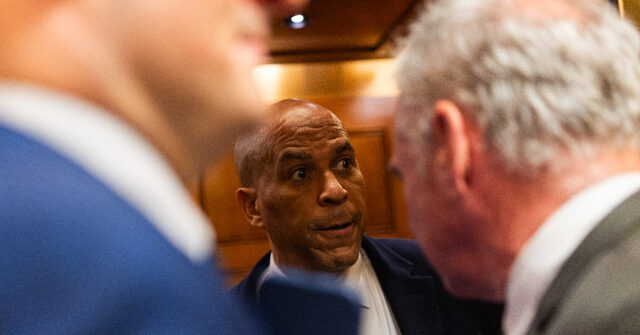
Sen. Cory Booker (D-NJ) attacked the newest settlement between the 12 state attorneys general and Paramount in their acquisition of Warner Bros. Discovery.
Last Thursday, days after a deal had been struck, paving the way for the acquisition, Booker wrote that the deal raises questions that need to be resolved.
“I respectfully urge the Court, before ruling on the joint motion, to direct the parties to file a statement, modeled on the competitive impact statement required by 15 U.S.C. § 16(b), that explains how each provision remedies each harm alleged in the complaint, sets out the pre-merger baselines against which the output and spending commitments were calibrated, and describes the structural alternatives the States considered and why they rejected them,” he wrote.
“The Court should also consider appointing an independent economic expert under Federal Rule of Evidence 706 to assess whether the decree’s commitments restore competition in the pleaded markets. Finally, the Court should measure the proposed remedies against the relief the States originally sought: an injunction blocking the merger altogether,” he added.
Paramount and the coalition 12 state attorneys general defended the settlement in response to Booker’s criticisms on Monday.
“The proposed consent decree eliminates that risk of post-merger output reductions,” Paramount’s lawyers wrote, adding that the deal “provides certainty for exhibitors and the broader industry: a guaranteed, enforceable pipeline of new releases every year.”
Paramount also defended the five-year term due to potential changes in the media landscape.
“None of the parties know what consumer demand will look like six years from now or how competition will change in the intervening years in this dynamic industry,” the lawyers wrote. “In fact, implementing a term any longer could hamper the Combined Entity’s ability to compete in the future because of changing consumer demand or new innovations, which would undermine the purpose of the antitrust laws to maintain and enhance competition.”
The state attorneys general also said that the deal “reflects a balance between preserving present levels of competition, requiring additional years of oversight, and the potential alternative of Warner Bros. seeking to merge with a different competitor.”