

As the bright sun shone down on the 209,145 names of the soldiers and officers inscribed on the African American Civil War Memorial Wall of Honor in Washington’s historic U Street Corridor neighborhood, the pride emanating from Frank Smith Jr. burned even brighter.
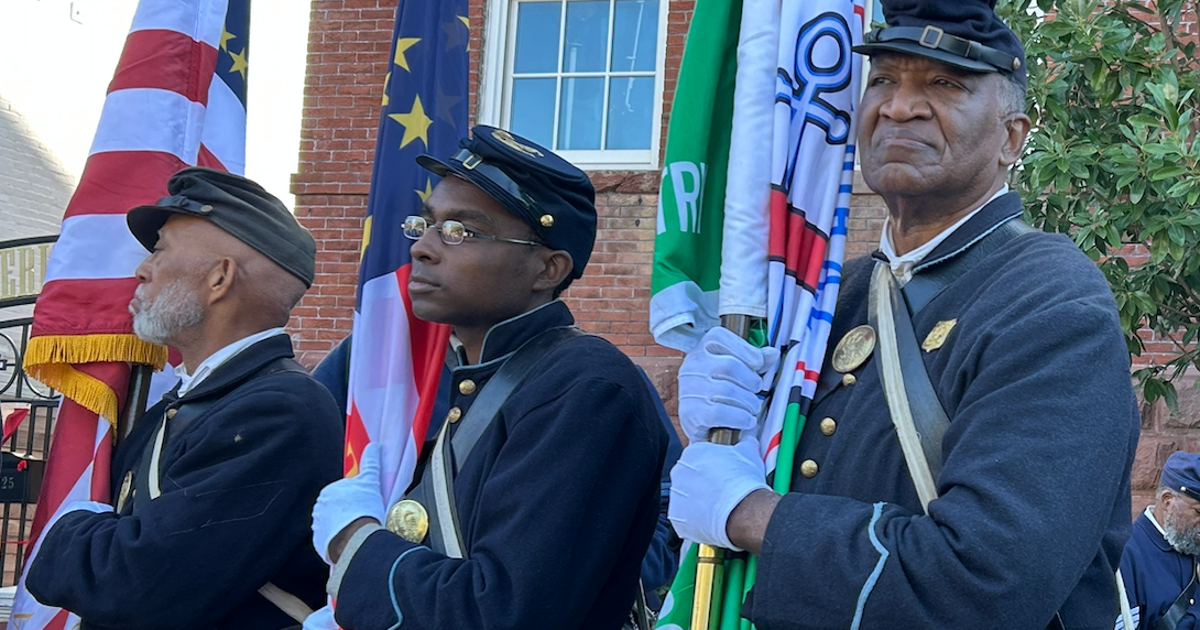
After an extensive five-year redevelopment process slowed by the COVID-19 pandemic and budget challenges, the African American Civil War Museum reopened its doors on Wednesday with a ribbon-cutting ceremony across the street from the memorial. About 100 people showed up for the event on the warm September morning.
For Smith, the museum’s founding director, the long wait was worth it.
“They kept this story alive when nobody else cared about it,” said Smith, gesturing toward the attendees, the invited descendants of the Black soldiers who fought during America’s bloodiest conflict. “They kept the stories, they kept the photographs, they kept the love letters, and they kept the heritage alive.”
Those artifacts, historical documents, drum sets, rifles, and much more, can now be seen by the public in the museum, which sits inside the 130-year-old, newly renovated Grimke School, a public school that served Black Americans after the Civil War.
The primary exhibit, titled “Glorious March to Liberty: Civil War to Civil Rights,” tracks the powerful history of Black soldiers in the Civil War and how their sacrifices later contributed to the Civil Rights Movement. A Men of Honor display spotlights Medal of Honor recipients, including William Harvey Carney, one of the first Black officers to receive the accolade. In the front of the building sits a 6-foot-tall bronze statue of Abraham Lincoln signing the Emancipation Proclamation.
Though the museum has existed for nearly three decades, the renovation includes a new exhibit highlighting former first lady Michelle Obama’s enslaved ancestors and their fight for freedom during the Civil War. Her great-great-grandfather, Caesar Cohen, and her great-grandmother’s stepfather, Jerry Sutton, served in the United States Colored Troops.

The African American Civil War Museum is not part of the Smithsonian Institution; it is a private nonprofit. D.C. Mayor Muriel Bowser and the city government worked to fund the museum. Smith and his board of directors solicited donations, chased grants and sought partnerships to make the renovations a reality.
“The building is funded by money from the city government,” Smith explained. “Then we have a committee, a lot of us here today, who raised about a half a million dollars in private funds.”
The reopening speaks to the “tenacity and the buoyancy that the museum has,” said Vedet Coleman-Robinson, president and CEO of the Association of African American Museums.
“To do a fundraising campaign and a renovation where so many of the museums, not just the African American museums, but museums as a whole are also closing, shows you how important it is,” she continued.
While Smith certainly isn’t turning away donations toward the museum, supporting the space doesn’t necessarily have to be financial. “People should look at this [museum] as a place of our own,” Smith said. “It means that we have to take care of it. Just as important as money is time. If I can have someone volunteer for four hours, that will save us a lot of money.”
The timing of the reopening couldn’t have been more prescient. The Trump administration, during both tenures, has launched multiple attempts at erasing Black history, and Smithsonian Institution Secretary Lonnie Bunch — a key figure who kept the president’s interference in the world’s largest museum at bay — recently announced he would step down amid the administration’s increased hostility toward the institution.
“At a time when the highest, most powerful leader in our country is trying to erase the history of African-American people in this country, what better way to show them and show him than to cut a ribbon on a monument that will forever enshrine what the African American soldiers did for our country,” said Ward 1 Councilmember Brianne Nadeau. “Our country wouldn’t exist today if it were not for these soldiers.”
Few understand the importance of fighting to preserve Black history more than Smith, who actually lived it. He was a founding member of the Student Nonviolent Coordinating Committee during the Civil Rights Movement of the 1960s and clearly isn’t afraid of a fight to preserve our history.
“That sucking sound that we hear is the federal government pulling African American exhibits out of these federal entities,” he said. “Thank God we’ve got something like this to remind us that our fight for freedom changed the course of American history.”