

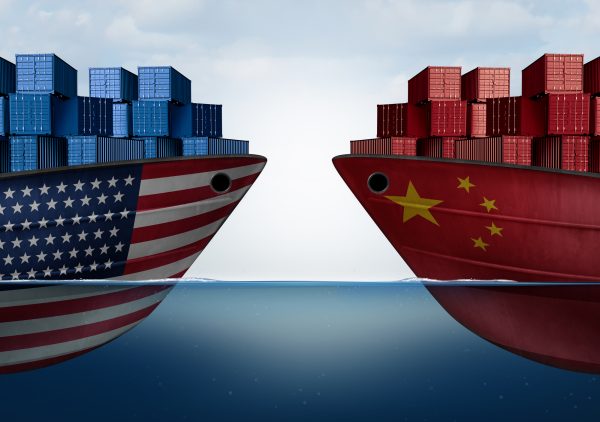
The intensifying rhetoric of economic “decoupling” – or even a new “Cold War” – between the United States and China has become the mainstay of the conversation about the future of the global and the East Asian economy.
The United States frames its policy toward China as “strategic competition” and seeks to limit its reliance on China in order to protect its industrial base, lessen its import reliance in critical sectors, and mitigate the potential for the weaponization of interdependence by Beijing.
Meanwhile, the Chinese leadership asserts that the U.S. aims to “contain, encircle and suppress” China and similarly aims to lessen its dependence on the U.S. market and U.S. technologies, pursuing its own form of disengagement.
These developments suggest a reconfiguration of the global and regional economic order, which could prove to be especially detrimental to East and Southeast Asian economies. As many analysts and policymakers have pointed out, a regional economic order beset by the fracturing of trade ties, and trade rules, based on exclusive spheres of great powers, would carry significant economic costs and undermine the development strategies of East Asian states reliant on regional manufacturing production networks.
However, the decoupling rhetoric masks the fact that the United States and China play very different economic roles in East Asia and possess very different sources of economic power that can be used to shape the regional economy and influence regional politics. A nuanced evaluation of these differences suggests that the potential depth of decoupling is limited as long as economic rationality and the welfare of their East Asian neighbors and partners remains a factor in Chinese and U.S. calculations. Both great powers should remain key partners for East Asian economies.
An immediate and decisive decoupling from China remains unlikely, for China remains a key hub in East Asian production networks and an increasingly important source of value-added even for U.S. allies and partners.
One way to measure China’s role is to assess its “hubness” in trade, which represents the relative share of trade dependence of the region on a certain economy. This measure shows that China overtook the European Union and the United States as the main trade hub for the Association of Southeast Asian Nations (ASEAN) and Northeast Asia during the 2008 financial crisis, and the dependence of East Asia on Chinese trade has continued to deepen since then.
A similarly important story is China’s rise in regional production networks, especially in electronics manufacturing, where the share of Chinese value-added is on the rise and China’s position in production networks is advancing. Manufacturing electronics products without Chinese parts and components is increasingly unrealistic.
This means that Southeast Asian economies are becoming more reliant on Chinese inputs and trade ties for their development. Many Southeast Asian factories source components from Chinese suppliers and supply their own components and products to factories located in China.
At the same time, China’s importance in regional production should not be overstated. Chinese suppliers are still positioned in a so-called backwards position in value chains, while the United States, Japan, South Korea, and Taiwan occupy the forward positions.
A forward position means that these economies produce and export parts, components, and technology that is used in other countries’ production, and then re-exported – indeed, often back to the United States or Europe. A backward position means that the country in question is using imported parts, components, and technologies to produce goods that are exported. Thus, China and most ASEAN economies remain reliant on inputs from developed countries for their exports.
The situation is similarly nuanced when assessing the revealed comparative advantages of regional economies. In plain terms, this index shows if a country is punching above its weight in the exports of certain products. Data disaggregated by the sophistication of exported products from the CHELEM database hosted at the French CEPII institute of international economics show a remarkable division of labor in East Asia. China’s advantage in low-tech manufacturing is declining, while its advantage in high and intermediate technology products is rising, which means that it is competitive among various product sophistication levels, but not overly competitive in either of those.
ASEAN, meanwhile, is strong in exports of high-tech and low-tech products. Japan is dominant in the higher end of “intermediate” technologies, while South Korea is highly competitive in both intermediate and high-end goods. This means that the strengths and weaknesses of regional economies in exports are balanced and fairly complementary.
The United States Remains a Key Market and Financier
Financial power is an area where China’s rise has garnered a lot of attention, but some of this attention is misplaced. Although China has become the developing world’s largest official creditor, and its policy banks and developers play an increasingly important role in infrastructure development in Southeast Asia and beyond, private enterprises from the United States, the European Union, and Japan remain more important investors in the real economy.
In recent years, the U.S. has remained by far the largest source of inward foreign direct investment (FDI) flows and consequently, firms registered in the U.S. remain the largest holders of FDI stock in Southeast Asia, according to the ASEAN Investment Report. Similarly, the U.S., the EU, and Japan are the most important destinations for investment capital outflows from ASEAN. Given the slow pace and political constraints of financial liberalization in China, these patterns are unlikely to change considerably in the mid-term.
FDI inflow is a key determinant of a country’s participation in international production networks. In other words, the China-centered value chains in East Asia are held together by American, European, Japanese, and increasingly South Korean and Taiwanese capital, and technology.
An even more important component of the trade- and production-based development strategies of East Asian economies is the access to large markets for their exports. According to the ASEAN statistical yearbook, ASEAN’s trade with China reached $669 billion in 2021, while the corresponding number was only $364 billion for the United States. China’s share of ASEAN trade stood at 20 percent, while the United States’ was a mere 11 percent. However, the nations of ASEAN ran a $146 billion surplus with the U.S., and a $107 billion deficit with China.
The gap between the importance of the U.S. and Chinese markets is not this large, however. Raw trade data does not consider that the production-centric nature of East Asian trade results in many back-and-forth transactions of parts and components among regional economies, which inflates regional trade values and obscures where the final products are consumed.
A more meaningful measure of market access is how much of the value added of a certain economy ends up being consumed in either China or the United States, which reflects where the demand for the exports of East Asian countries ultimately resides. According to the OECD’s Trade in Value-Added database, the balance of value added embodied in final demand for the ASEAN was a $14 billion surplus with China, and a $56 billion surplus with the U.S. for the latest year available (2018). South Korea is the only significant economy in the region which, on balance, is much more reliant on Chinese final demand than on that of the United States.
Thus, in spite of ASEAN’s seeming trade deficit with China, it is becoming more reliant on Chinese demand. On the other hand, the U.S. market is still much larger than China’s. The share of private consumption relative to Gross Domestic Product is 38 percent in China, and 68 percent in the United States. Even in the face of recent U.S. policies aimed at limiting manufacturing import dependence and Chinese policies seeking to shore up domestic demand, U.S. market power remains unmatched.
The Limits of Disengagement
These different roles played by the U.S. and China in the East Asian economic system are a result of the distinct fundamentals of their domestic economies. China has pursued a production- and investment-based growth model in the past few decades, while the United States is a post-industrial, heavily financialized economy, sustained by high consumption and its central position in the global financial order. These fundamentals will prove to be harder to shape than unilaterally altering trade policies.
On the one hand, this means that attempts at isolating China are limited by the economic realities. “Friend-shoring,” “nearshoring,” and newfound industrial policies in the United States (and Europe) could very well lead to the diversification of U.S. imports, lessen the perceived national security risks associated with import dependence, and provide economic benefits to ASEAN countries by shifting some manufacturing activity from China to Southeast Asia. However, these policies are unlikely to fundamentally challenge China’s central position in regional trade and production networks in the mid-term. As Apple’s struggles in diversifying the production of the iPhone show, China-centered production networks are not easy to replicate in other countries, as Chinese logistics and suppliers possess significant advantages.
On the other hand, while China is undoubtedly becoming more important for regional economies as a market and a source of financial capital, the United States and its developed allies remain the key providers of demand, capital, and technology for the region – including for China. Doubling down on regional integration through the Regional Comprehensive Economic Partnership (RCEP) and the Comprehensive and Progressive Agreement for Trans-Pacific Partnership (CPTPP) would mitigate the costs of the potential loss of the U.S. market, but these frameworks could only provide an alternative if they also provide more demand and capital.
At the same time, U.S. security interests vis-à-vis China can only be guaranteed with its regional allies, and partners – countries that would suffer severe economic losses in the event of a decisive decoupling, even in the face of the limited benefits friend-shoring would provide. As regional leaders point out, they need both great powers to remain engaged in East Asia, and economic realities suggest they would do well to do so.