

The ongoing trade conflict between China and the United States is not merely a matter of intergovernmental policy confrontation or macroeconomic adjustment; it has also served as a catalyst for internal transformation within Chinese enterprises. Under the pressure of U.S. tariffs since 2018, Chinese firms have been forced to choose between adaptation and obsolescence, triggering a series of internal reforms, supply chain restructurings, and accelerated technological innovation.
The trade war has thus induced significant structural changes at the firm level in China, inadvertently advancing corporate resilience and reform. Chinese enterprises have proactively responded through strategic overseas investments, reassessment of supply chains, and expedited technological upgrading. These transformations suggest that the process of China-U.S. “economic decoupling” is unfolding largely through firm-level strategic decisions and adaptive behavior, even in the absence of a formal political rupture between the two states.
Chinese Enterprises Under Pressure: Reassessing Supply Chains
The trade war has significantly increased the costs associated with exporting goods directly from China to the United States. In order to survive and remain competitive, Chinese enterprises have been compelled to reevaluate the configuration of their industrial chains and trade routes. This has ultimately triggered a wave of enterprise-led supply chain restructuring and market diversification.
Initially, many Chinese companies sought to circumvent U.S. tariff barriers by relocating portions of their production to third countries. By shifting final assembly or certain stages of the manufacturing process to these locations, firms could legally obtain a new country-of-origin designation and thereby avoid additional duties when exporting to the United States. This trend was already encouraged by rising labor costs in China and intensifying domestic competition, but the trade war significantly sped up the process.
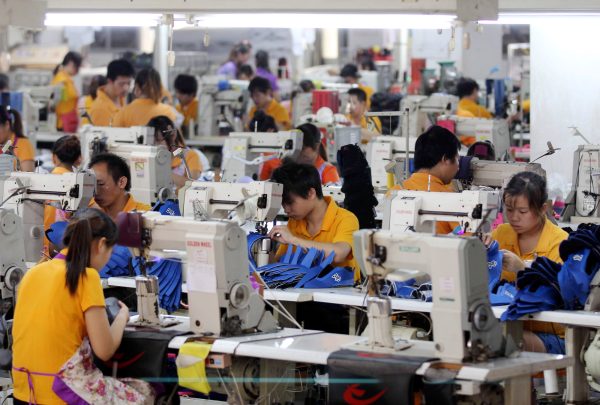
The extent of production capacity relocation varies across industries. Labor-intensive sectors – such as apparel, footwear, and basic electronics assembly – have seen the most pronounced trends toward relocation. These industries had long faced pressures to move offshore due to cost considerations; the trade war merely acted as an accelerant.
In contrast, capital-intensive sectors such as automotive manufacturing and heavy machinery have been far more reluctant to relocate, due to their complex supply chains and the vast scale of China’s domestic market. In sectors like electronics, which are both tariff-sensitive and highly integrated, China continues to maintain a strong comparative advantage.
In addition, much of the capacity leaving China has been redirected to emerging economies in Asia rather than returning to the United States. This suggests that the trade war has driven supply chain diversification, rather than actual reshoring of manufacturing to the U.S.
Diversification of Export Markets and Import Sources
In addition to relocating production, Chinese enterprises have actively explored new export markets to reduce their dependence on the United States. The trade war has heightened awareness among firms of the need to identify new growth opportunities globally in order to disperse market risks. As a result, companies have increased their marketing efforts in Europe, Southeast Asia, Africa, and Latin America, striving to overcome overreliance on the North American market.
These sustained efforts have begun to bear fruit. The relative importance of the United States in China’s export structure has declined yearly, while South–South trade between China and developing countries has been steadily expanding. By 2023–2024, only about 30 percent of Chinese exports were destined for G-7 developed economies – down from nearly 48 percent in 2000. At the same time, exports to emerging markets and countries along the Belt and Road Initiative (BRI) have surged.
This diversification is not limited to exports. Chinese enterprises have also sought new import channels to reduce dependence on the United States for critical goods and technologies. This shift is particularly evident in the agricultural sector. Following the imposition of retaliatory tariffs on U.S. agricultural products such as soybeans, Chinese importers – both state-owned and private – rapidly pivoted toward suppliers in Brazil and Argentina.
Similarly, in the field of high-tech component imports, Chinese firms have actively pursued non-U.S. supply chains. For instance, Huawei has incorporated a greater number of domestically produced components and memory chips in its latest flagship smartphone, the Pura 70.
This pragmatic adjustment has not only enhanced firms’ resilience to external shocks but has also had broader geopolitical implications. It is fostering a trend of economic “decoupling” – or more precisely, a gradual disengagement between the Chinese and American economies. This shift is not the result of an explicit political rupture, but rather the cumulative outcome of thousands of firms recalibrating their operational strategies and incrementally scaling back their exposure.
However, although Chinese enterprises seek to mitigate risk through diversification strategies, they also face a range of obstacles in new markets, including differences in regulatory standards, intellectual property disputes, and even resistance from local governments or civil society groups.
Accelerating Technological Innovation and Indigenous Development
The most far-reaching transformation catalyzed by the China-U.S. trade war at the enterprise level lies in the acceleration of technological innovation. The United States began to tighten export controls on high-tech products and impose sanctions on a range of Chinese technology companies. As a result, Chinese firms not only faced rising export costs, but also the heightened risk of being cut off from critical foreign technology.
In response to these challenges, China’s high-tech industrial community rapidly mobilized a wave of R&D initiatives aimed at achieving technological self-sufficiency and autonomy. As one Chinese industry commentator noted, “Since the onset of the U.S.-China trade war during Trump’s first administration, Chinese enterprises have gradually built resilience by developing indigenous technologies and diversifying their global supply chains.”
For example, China’s semiconductor industry – one of the primary targets of U.S. sanctions – has since 2018 accelerated investments in R&D and capacity expansion. Numerous chip design and manufacturing firms have emerged or expanded, backed by a combination of state funding and private capital, in an effort to substitute U.S.-made components with domestically developed technologies. For example, leading Chinese AI chipmaker Cambricon and CPU design company Loongson have both reported that their core business operations are now largely decoupled from the U.S. market and technological ecosystem. In 2024, both companies announced that overseas revenues accounted for less than 1 percent of their total income.
The positive feedback mechanism between policy directives and enterprise behavior has become particularly pronounced. Following President Xi Jinping’s call for “sci-tech self-strengthening at higher levels,” Beijing swiftly introduced a range of industrial funds and technological support measures.
At the same time, Chinese firms have come to perceive foreign technological chokepoints as existential threats, prompting aggressive efforts toward tech breakthroughs.
Crucially, indigenous innovation in China does not equate to self-isolation. Chinese firms continue to promote international collaboration. Huawei, for example, though restricted in Western markets, has continued to partner with local telecom operators in Africa and the Middle East for 5G deployment. In the semiconductor sector, despite mounting pressure from the United States, Chinese companies are actively building partnerships with non-sensitive suppliers in Taiwan, South Korea, and Japan. This emerging regional cooperation network represents a form of “de-Americanized” technological connectivity that is gradually taking shape.
By 2025, China’s pursuit of technological autonomy has begun to yield tangible results. The country’s dependence on imported high-tech products has steadily declined. Since 2020, growth in imports of mechanical, electronic, and high-tech goods has slowed significantly, with some categories even registering negative growth – suggesting that domestic production or alternative sourcing is increasingly meeting demand.
China’s phased breakthroughs in several critical areas have prompted the United States to reassert trade protectionism and expand technological containment. In 2023, for example, Washington further tightened its export controls on semiconductor manufacturing equipment. This dynamic suggests a feedback loop: the more Chinese companies innovate and start to compete globally without needing the West, the more some Western policymakers see a strategic competitor that must be slowed. In turn, China is likely to respond by pushing its firms to innovate even more. The trade war thus injected a new impetus into the long-term “innovation race” between the U.S. and China.
Broader International Implications: Decoupling and a New Economic Order
Firm-level transformations within China are collectively reshaping the foundational structure of international economic relations. For years, policymakers and scholars have debated whether the Chinese and U.S. economies are undergoing a process of “decoupling.” Empirical evidence suggests that decoupling is indeed unfolding across multiple domains, and that this process is largely being driven by firms’ strategic adjustments in response to mounting pressures.
Trade data reinforces the observation of economic decoupling. As companies reduce their dependence on each other’s markets, the interdependence between the Chinese and U.S. economies is steadily weakening. American retailers that had long relied on Chinese manufacturing are now turning to alternative suppliers in countries such as Vietnam, India, and Mexico – even though many of these suppliers remain under Chinese capital ownership. Meanwhile, China’s procurement from the United States has been declining, while imports from emerging markets and the EU have been rising.
At the investment level, Chinese OFDI to the United States has declined sharply since the onset of the trade war. This contraction has been driven not only by China’s tightened capital controls and the expansion of U.S. investment screening mechanisms, but also, crucially, by the strategic choices of Chinese firms themselves to avoid high-risk markets. As Ka Zeng and Soo Yeon Kim observed, during the trade war, Chinese enterprises showed a marked preference for greenfield investments in politically “friendly” or “neutral” countries – suggesting that firms are increasingly assessing investment destinations not solely on economic returns, but also on perceived political risk.
In the technology domain, Chinese enterprises continue to advance the development of independent tech ecosystems, potentially leading to the emergence of two distinct technological spheres: one led by China, and the other by the United States. As a result, global standards and systems may begin to fragment, posing new challenges for third countries that may be forced to “choose sides” between two competing technological ecosystems.
At the supply chain level, structural bifurcation is also becoming increasingly apparent. Numerous multinational corporations are now actively exploring “China-free” or “U.S.-free” supply chains to reduce the risk.
From the perspective of international relations, firm-led economic decoupling is likely to generate increasingly complex political consequences. On the one hand, the reduction in economic interdependence threatens to undermine the foundation of China-U.S. relations. For a long time, commercial ties were regarded as the ballast of the bilateral relationship. On the other hand, the two countries once relied on extensive networks of shared commercial interests to facilitate stable communication and offset political confrontation. With the erosion of these networks, corporate constituencies that once advocated for cooperation – such as lobbying groups and multinational investors – are in retreat. In this context, the enterprise-level decoupling triggered by the trade war may contribute to the emergence of a more structurally antagonistic international order.
However, decoupling does not equate to complete severance. Many Western multinationals remain deeply engaged in the Chinese domestic market, especially in consumer goods and services. Conversely, Chinese firms continue to rely heavily on select Western technological inputs – such as U.S.-made electronic design automation (EDA) software. The current landscape is thus better described as one of “selective decoupling” or “conditional de-risking.” Nevertheless, even partial fragmentation is likely to exert lasting impacts on global resource allocation and strategic expectations.
A key characteristic of these transformations is their decentralized nature. No government directive has mandated that “X percent of production capacity must be moved to Vietnam” or that firms “fully replace their technology stack.” Rather, countless enterprises – guided by risk perception, independent strategy, and market logic – are voluntarily or reactively making such shifts. Even if China-U.S. tensions were to ease in the future or tariffs were relaxed, the alternative pathways born out of crisis are likely to exhibit “stickiness” and irreversibility. Once companies have completed overseas factory construction or established indigenous R&D capabilities, there is little incentive to revert to earlier structures of dependency.