

China’s latest official figures on the economy confirm two simultaneous truths.
First, deflation, lower demand for durable goods, and lower imports persist, even if there has been some consumption rebound. New fiscal stimulus and a strong push for local government bonds to rescue the real estate sector have not had an impact on new borrowing and investor trust. Moody’s downgrading warning can well justify President Xi Jinping’s reported remark that China’s economic recovery is still “at a critical stage” – and vice versa.
Second, there remains policy space to boost the economy. Even officially, China’s currency reserves have risen again, while the true extent of its holdings in foreign denominated assets is generally underestimated. Official policy has consistently refused monetary expansion, on grounds of financial security and because the interest gap with other major currencies has narrowed or disappeared, suggesting there is a risk of hot money outflow. But Xi now talks of an “effective” if stable monetary policy. And exports, after five years of boom, are holding up, even as the Chinese government cites weak international demand as a factor weighing on a sluggish domestic economy.
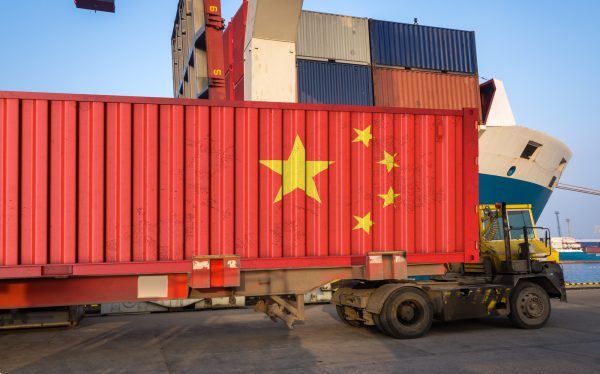
The consequences for China’s economic partners are quite clear. Exports have become the mainstay of growth. They are spearheaded by China’s breakthrough in key industries of the future and in core consumer sectors, themselves fueled by past and present investment and subsidies.
After solar panels and batteries, China’s nuclear industry looks ready for exports. Among many nuclear developments, China has just connected to its electricity grid the world’s first gas high-temperature small modular reactor (SMR) – and is well on the way to put into production a low cost pressurized SMR. This is also the path to achieve more green hydrogen production, another potential breakthrough for the auto industry.
Let’s not focus purely on foundational or critical technologies, however. In the auto industry, for instance, exports of thermal vehicles increased just as rapidly as that of electric vehicles (EVs). Even if national subsidies have now been stopped, provincial competition has created production capacities of 40 to 50 million cars per year. Chinese solar panels are currently selling at a heavy discount in Europe. In spite of the chip export denials that impede Huawei, China still makes two-thirds of the world’s mobile phones.
The drive for new export niches will not stop. In the measures announced to boost the economy, the accent is now put on innovation, including immaterial infrastructure. Support for infrastructure, long a mainstay of China’s economic policies, is now tilted toward greening or digital infrastructure, as well as education.
China’s government is taking measures to unify the standards of domestic products with those prevailing internationally. In the past, this would have been interpreted as a gesture of opening up the market to imports. Today, it is much more likely to result in more exports from overcapacities in domestic production. Raising industry standards also means that public policy is now anticipating new international criteria for emissions and sustainability. It is a response to the requirements for sustainability that Chinese officials call protectionism in disguise.
Overall, deflation and a fairly managed currency guarantee continued international competitiveness for Chinese products. In fact, were the real estate, local debt, and finance crises to worsen, it would still be possible to sell foreign assets in order to restore confidence about the ability to extinguish debt, or alternatively to let the renminbi slide with a truly expansionary monetary policy – and therefore even more competitive exports.
From inside China, it is only a political or societal crisis that could challenge the present course. Unemployed youths are candidates, as are poorly compensated migrant and gig workers. So are indebted home buyers, who in China have no available debt resolution and must repay their loans to the last penny; in the words of one proud investment adviser extolling China’s economic strength, they “cannot flee from the temple.” The potential for such events, not to mention factional strife at the top, to result in political upheaval is basically unpredictable.
It is therefore China’s partners who now face a dilemma. The news about the death of the Chinese economy has been greatly exaggerated. According to reports, Xi Jinping may have expressed this dilemma crudely to the EU leaders at their recent meeting in Beijing: Europe cannot achieve its greening transition without Chinese exports, given the higher cost of all alternatives. At the end of the day, after everything has been said about the unequal playing field, subsidies, and dumping, it remains that imports from China are a hedge against producer inflation, even more so in the sectors where innovation has been most strongly supported by decades of government intervention and funding. Where tariffs are a problem, Chinese goods transit through third countries, or are assembled there.
This is exactly the goal that Xi has explicitly pursued in the last decade: to make China’s partners more dependent on China than it is relative to those same partners. And to a large extent, he is still succeeding, in part because political democracies are also consumer societies with a low threshold for economically unsatisfactory options. Decoupling is a no-no, even though a pioneering study is claiming lower costs for Germany than for China.
Under the Chinese Communist Party (CCP)’s guidance and control, it is possible to keep the share of household income at 45 percent of GDP, whereas in the United States (and France) it reaches 70 percent. China’s political system enables it to “save” – read, make available for investment through a largely public financial system – the equivalent of 40 to 45 percent of aggregated household and company income. This allows for many inefficiencies, including long shot bets on innovation, added costs from import substitution, overemphasis on infrastructure, and the like.
Western hopes that China will change its economic model have floundered on unavoidable realities over the past two decades. Rebalancing the economy toward household income, consumption, and a service economy with increasingly powerful private companies and individuals would challenge CCP power, and in fact its own income base. That is precisely the reason why this generation of political leaders will not let this happen. China has the management capacity to steer extraordinary industrial, urban, energy, and transport development. It does not have the checks and balances necessary to create an independent central bank, liberalize capital markets, or become a significant international borrower – which would signal the true emergence of the renminbi as a reserve currency.
It must therefore accumulate, invest – and depend on the rest of the world to absorb its productive surpluses. Short of international crisis scenarios, this is where China’s true dependence lies.
The instinctive emphasis on limited de-risking as opposed to broader decoupling seems mistaken, particularly for Europe. Not only, as is often pointed out, because China invented one-sided decoupling. But also because Europe, thanks to its adherence to multilateral trade and institutions such as the World Trade Organization (WTO), has a larger dilemma than most. The United States and India have closed their doors to Chinese solar panels. Along with Japan and more recently Turkey, they are also essentially banning Chinese EVs from their roads. The result is that China’s overproduction in these key sectors is, by default perhaps, directly aimed at the European market.
This is in fact what the EU tried to communicate to China’s leaders at their recent Beijing meeting. In a trade world where the WTO no longer serves as a forum for conflict resolution, barriers are going up for various reasons: national security, economic security, or plain and simple retaliation for China’s own policies. So far, Europe has remained more open to Chinese exports than other major economies. It could indeed delay greening and emission curbs, which would gain a respite from China’s export drive in those sectors. It could also accelerate and increase taxation at the border on sustainable and ethical concerns, using the proceeds for its own greening transition.
As European Commission President Ursula von der Leyen told Xi during their recent summit, China’s export drive is politically unsustainable in Europe. If China does not curb its financing and export policies, it will soon lose the last open partner in many sectors.
This is not Europe’s preferred course of action. The Single Market itself was built on multilateral rules. Free marketeers rightly point out that targeted protectionist measures shift China’s export through third markets. They also point out the higher costs Europeans would bear due to increased import prices or reduced competition. Adversaries of de-risking, whether it is conducted for reasons of national security or for broader economic security purposes, emphasize that this may also reduce EU access to Chinese innovation (truly present in many logistical processes such as 5G, port control or auto production processes), and stimulate even more support in China for self-sufficiency in science and technology.
This is all very true, but less consequential than letting a command economy abuse its “developing economy” status gained a quarter of a century ago, when its GDP per capita was circa $1,000. Of course, the strategic competition and “struggle” initiated in the Xi era add a political dimension, as hopes for change and convergence are put off to a future generation.
There is currently no real self-correcting mechanism in China’s political economy. The imbalances have been there for a very long time, and it is naïve to expect that a leadership so devoted to struggle and strategic competition will commit itself to fair trade and updated multilateral rules.
That said, defensive measures will in some cases create added costs for society – and Xi is right when he refers to these costs. The EU may have to delay some greening to avoid over-dependence on China or face popular revolts if doing without China indeed proves very costly. The EU is particularly vulnerable, as it has the most ambitious plans combined with a relatively small carbon footprint in all but some energy production sectors.
De-risking implies costly research, procurement, and industry costs, best shared on a wider scale with suitable partners, whether these are like-minded or have similar interests. If the United States has the energy resources, the capital depth, and protectionist legislation to manage economic policy almost on its own, Europe does not have the same resources, and has taken more of a stand against protectionism. From these weaknesses, China has deduced more willingness to compromise, and there are Europeans who would oblige.
Those considering that option should be aware that it is only the advent of European trade defenses and other new tools under development, and a new firmness in refusing empty talk from Beijing, that may bring China to the table.
This article was originally published as the introduction to China Trends 18, the quarterly publication of the Asia Program at Institut Montaigne. Institut Montaigne is a nonprofit, independent think tank based in Paris, France.