

Get your daily dose of health and medicine every weekday with STAT’s free newsletter Morning Rounds. Sign up here.
Google Glass came out when I was in college, and they were dismissed as dorky, cumbersome to use, and quickly faded into obscurity. I don’t think Meta’s AI glasses will meet the same fate. The glasses, which can discreetly record audio and video, are already causing trouble.
Have you seen these Ray-Bans being used in your clinics and hospitals? Drop me a line: [email protected].
Can less aggressive prostate cancer therapy improve on standard care?
Treatment for prostate cancer has historically been all or nothing. To reduce the risk of death, the whole gland usually has got to go. That may be changing.
Interest in focal therapy — a less aggressive alternative — has been increasing as some researchers say it delivers similar benefits to traditional surgery or radiation without the side effects of incontinence and erectile dysfunction that can accompany removal. It targets lesions visible on MRI scans with heat, cold, electricity, and more to destroy cancerous tissue.
Not everyone’s convinced. Urologic oncologists who treat prostate cancer are split over focal therapy’s benefits, even after a recent study found that 10 years after treatment, only 0.1% of patients treated with focal therapy had died of prostate cancer. Professional guidelines still consider the therapy experimental, though it’s been in use since the 1990s.
What’s the holdup? Read more about one of urology’s hottest topics from STAT’s Annalisa Merelli.
Meta’s AI-powered smart glasses are becoming hard to ignore. Boys are bullying girls in school, customers are harassing Target employees, and there’s now a report that a male doctor asked a woman to undress while wearing the glasses, which can discreetly take photos and videos.
Many of the encounters posted to social media are similarly gross and gendered — some detractors call them “pervert glasses” — but they could also wreak havoc if regularly used in health care settings. It doesn’t have to be lewd. Handling patient data or diagnoses while recording with the glasses could represent a serious breach of privacy, according to experts.
The glasses are already banned in English and Welsh courts over privacy concerns. Will clinics and hospitals follow suit? Not everyone hates them. Some researchers say their hands-free recordings could enhance surgical education.
Are you seeing these Ray-Bans being used? I’d love to hear from patients, health care professionals and health privacy experts. My email is [email protected], and my Signal username is rosebroderick.11.
Scientists deploy Merck’s Ebola vaccine in DRC
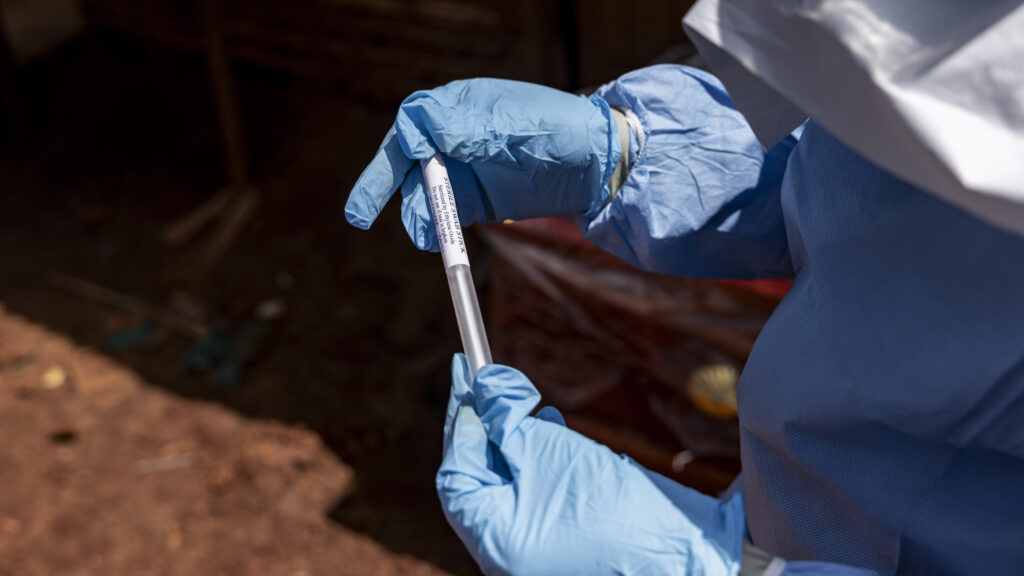
As the Ebola outbreak in the Democratic Republic of the Congo expands at an unprecedented rate, scientists are taking unprecedented steps to try to find ways to curb it.
As STAT previously reported, there’s been an interest in seeing whether Merck’s Ervebo, a vaccine that protects against a different species of Ebola virus, would be helpful in tamping down transmission and/or improving survival rates. Earlier this week the international organization that manages the global stockpile of Ervebo agreed to release 70,000 doses of the vaccine for use in the DRC — 20,000 in a clinical trial and 50,000 to be given to frontline workers.
Meanwhile, the Coalition for Epidemic Preparedness Innovations (CEPI) is funding a number of studies aimed at analyzing blood samples of people who have previously been vaccinated against various species of Ebola or Marburg, a related virus, to see if there might be evidence of cross-protection. Vaccines that target the Bundibugyo species of Ebola causing the DRC outbreak are in development but are probably still months away in some cases.
As of Aug. 18, there have been at least 5,200 confirmed cases; 2,476 of those people have died. — Helen Branswell
Queer adults are 12% of U.S. population
As the saying goes: We’re here, we’re queer, get used to it.
Over 25 million adults in the United States identify as lesbian, gay, bisexual, transgender, or gender diverse, according to a new Human Rights Coalition analysis of Census Bureau data. That’s 12% of the population — a demographic group almost as large as Black Americans, though queer people have their own unique health disparities.
Nevertheless, the Trump administration has spent the last two years targeting queer people’s health care, research, and existing data infrastructures. It ended a crisis hotline specifically for LGBTQ+ youth, removed CDC databases on gender and sexual orientation, and repeatedly pushed to end gender-affirming care for trans kids — a group that, if the youth numbers reflect adult numbers, is only 2.34% of the population.
The report breaks down the demographics further, including which cities and states contain the most queer people. (You’ll never guess which state has the fifth-highest percentage of queer people.)
Speaking of queer people …
… the progress on finding a cure for HIV has been remarkable. The FDA has approved a powerful drug that is not a vaccine, but it’s pretty darn close.
With this and other potential treatments in sight, policymakers need to prepare for the social and administrative consequences of a cure. “What happens to the benefits and services on which many people with HIV still depend?” write a trio of researchers.
People with HIV often rely on a suite of programs to stay afloat, whether it’s Medicaid, Medicare, Ryan White HIV/AIDS Program services, disability income, or housing assistance. The Ryan White HIV/AIDS Program alone served more than 600,000 people with HIV in 2024, representing more than half of people with diagnosed HIV in the United States.
Read more from these researchers, who want to make sure that benefits programs’ services don’t rely on HIV diagnoses as a proxy for need.
What we’re reading
- Opinion: Lil Nas X’s bipolar diagnosis and the paradox of treatment, STAT
- Why abortion opponents are turning their attention to banning surrogacy, The 19th
- ‘Mom, are we OK?’ Children worry their families can’t afford food after Trump’s SNAP cuts, NBC News
- Opinion: I helped develop the rotavirus vaccine. Trump’s overhaul makes me sick, Washington Post
- CBO analysis suggests $1 trillion in Medicare Advantage overpayments, Committee for a Responsible Federal Budget