

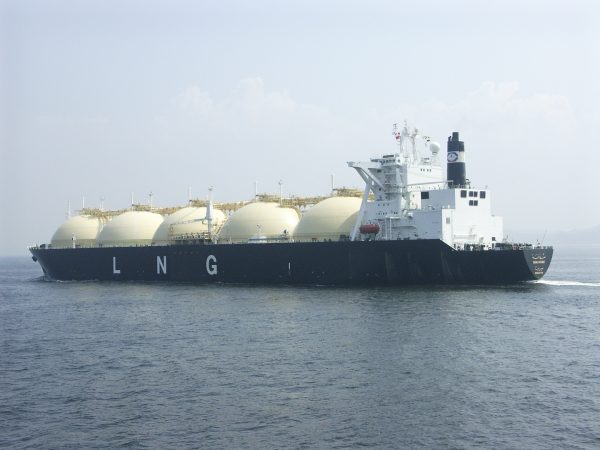
Under Prime Minister Kishida Fumio, the Japanese government approved a “Green Transformation” (GX) strategy last year aimed at advancing the clean energy transition. Yet Japan also leveraged its G-7 presidency in 2023 to advocate for increased financing of liquid natural gas (LNG) and upstream gas projects. While embracing cleaner energy, Japan continues to rely heavily on fossil fuel technology, including LNG.
Japan’s LNG strategy reveals the tension between advancing clean energy goals and maintaining reliance on fossil fuels. Despite its GX plans, Japan’s ongoing dependence on LNG illustrates the difficulty of balancing energy security with sustainability. The country’s approach to LNG procurement and market positioning reflects its efforts to stabilize amid global energy volatility.
Japan’s LNG History and Shift in Demand
Japan’s LNG history began in the late 1960s when it became the first country in Asia to import liquefied natural gas, initially from Alaska. Over the next five decades, Japan solidified its position as the world’s largest LNG buyer, driven by limited domestic energy resources and a growing industrial base.
The 2011 Fukushima disaster further accelerated Japan’s reliance on LNG as it shut down its 54 nuclear reactors, prompting long-term contracts with suppliers in Australia, the United States, and the Middle East.
In 2023, LNG accounted for 29 percent of Japan’s total energy generation, making the country the second-largest importer after China. However, Japan’s consumption of LNG is on the decline. In 2022, Japan’s LNG imports plummeted by 8 percent, reaching their lowest level since 2009. According to the Institute for Energy Economics and Financial Analysis (IEEFA) report, Global LNG Outlook 2024-2028, Japanese LNG demand dropped by 25 percent between 2014 and 2023 and is expected to fall by another 25 percent by 2030.
Weakening Japanese LNG demand is the result of a combination of factors, including a stagnant economy, the restart of nuclear reactors, the liberalization of the power market, and the increasing use of renewable energy sources. As a result, utilities are grappling with an LNG surplus, which the IEEFA expects will persist through 2030. To avoid the financial losses incurred by failing to sell gas in the domestic market, Japanese utilities have increasingly turned to reselling the fuel overseas. Japan’s LNG exports to third countries doubled between fiscal 2018 and 2022. Currently, the country consumes about two-thirds of its LNG imports, exporting the remaining third.
Japan’s Expanding Role in the Global LNG Market
Beyond its traditional role as a major LNG consumer, Japan is positioning itself as a key player in the global LNG market. Japanese companies, with strong government support, are deeply involved in all aspects of the LNG supply chain, from financing to fuel supply. While domestic demand for LNG is decreasing, Japanese utilities are expanding their focus on marketing and reselling the fuel overseas.
In recent years, Japan’s LNG procurement strategy has shifted toward more flexible contracts that eliminate “destination clauses,” thereby enhancing companies’ trading capabilities. In fiscal year 2021, 53 percent of Japan’s LNG purchases were bound by strict resale bans, but by 2022, this dropped to 42 percent as the country secured deals with more flexible suppliers like the United States and Australia.
Japan has also sought to bolster the demand side of regional LNG trade. In fact, Japan considers its efforts to build an Asia-wide gas market a vital component of its broader energy security strategy. The scope of the state-owned Japan Oil, Gas and Metals National Corporation (JOGMEC) has been widened to facilitate Japanese companies’ engagement in emerging LNG project opportunities. And Japanese companies are strategically expanding their investments in LNG markets throughout Asia. Leading companies are involved in over 30 gas-related projects across the region.
Japan aims to drive gas demand in Southeast Asia through infrastructure and power plant development, with Japanese firms poised to fulfill the resulting energy needs. Tokyo Gas, which has seen its trading volumes quadruple since 2017, has designated the development of Southeast Asia’s LNG value chain as its “ultimate target.”
Geopolitical Concerns and Supply Risks
Even with decreasing LNG demand, Japan’s heavy import reliance leaves it exposed to supply risks, as the fuel remains integral to the country’s energy needs. In the last two years, Japan has encountered multiple threats to its LNG supply stability, most notably the Ukraine war and tensions in the Middle East.
The war in Ukraine ignited a scramble for LNG supplies, with Europe seeking vast amounts to replace Russian piped gas, which previously accounted for nearly 40 percent of the continent’s imports. European nations’ aggressive acquisition strategies led to a redirection of LNG supplies that might have otherwise been available to Japan, affecting its ability to secure long-term contracts. This shift was particularly challenging for Japan, which has relied on stable, long-term contracts to ensure its energy security. The increased competition also led to higher LNG prices, straining Japan’s energy budget and prompting a reevaluation of its procurement strategies.
In addition, in response to the invasion, the United States and others pushed for a ban on energy exports from Russia, a key source of Japanese LNG. Western sanctions have placed pressure on Japan to wind down its exposure to LNG. In 2023, Japan’s LNG imports from Russia fell by 10.7 percent. Last December, Mitsui & Co and JOGMEC, both with 10 percent stakes in Russia’s LNG-2 Arctic project, declared force majeure, suspending their participation. Japan also reduced its dependence on Russian LNG from the Sakhalin-2 project.
Rising tensions in the Middle East, including the possible expansion of the Israel-Hamas war into a wider regional war, have sparked concerns in Japan with respect to potential disruptions to LNG supplies. The persistent targeting of commercial vessels in the Red Sea highlights the risks to Japanese procurement volumes and prices stemming from this period of conflict. Adding to Japan’s concerns about supply stability are its lack of contingency plans and limited storage capacity to stabilize LNG supplies.
Japan’s Risk Management Efforts
In response to these heightened risks, Japan is boosting its reliance on the United States and Australia; expanding its partnerships with Qatar, Oman, and the United Arab Emirates (UAE); and developing a domestic strategic gas reserve.
The U.S. and Australia have become increasingly important partners for Japan in LNG procurement. Japan has struck equity deals in five projects in the U.S. and Australia since 2022, securing 10- to 20-year offtake contracts. Japan imported 5.5 million metric tons of U.S. LNG in 2023, representing 8 percent of its total LNG purchases – a 34 percent increase from the previous year.
Japan is a major financier of U.S. LNG export infrastructure and a key market for U.S. LNG. Mitsubishi UFJ Financial Group (MUFG), Mizuho, and Sumitomo Mitsui Banking Corp. (SMBC) are the top three financiers of these projects. Energy firms like JERA, Japan’s biggest power generator, and Osaka Gas, alongside trading houses such as Mitsubishi Corp. and Mitsui, hold stakes in U.S. LNG facilities like Freeport LNG and Calcasieu Pass. Japanese export credit agencies Japan Bank for International Cooperation (JBIC) and Nippon Export and Investment Insurance (NEXI) have injected over $8 billion into the Freeport and Cameron LNG terminals on the Gulf Coast.
Similarly, Japan’s pivotal investments in Australia – its largest LNG supplier – helped establish the North West Shelf LNG industry and Japanese investment is now underwriting new gas projects. JERA recently acquired a 15.1 percent stake in Woodside Energy’s Scarborough project in Australia, highlighting the country’s ongoing efforts to secure reliable long-term supply sources amid geopolitical tensions. It was reported in June that JBIC will provide Woodside Energy Group Ltd. a $1 billion loan to develop the Scarborough Energy Project, a deal that follows the previously announced sale of two non-operating participating interests in the joint venture to JERA.
However, unanticipated recent political shifts, most notably Australia’s new gas emission reforms and the Biden administration’s moratorium on new LNG export approvals, have added uncertainty to Japan’s LNG strategy. Australia’s reforms – mandating high-emission facilities to offset carbon via credits or capture, and ensuring new fields meet net-zero emissions – could increase Japan’s LNG costs, while the U.S. export pause might hinder new investments. Despite this, Kyushu Electric Power is still exploring a stake in Energy Transfer’s Lake Charles LNG project in the United States, signaling Japan’s ongoing commitment to securing reliable LNG supplies from trusted allies.
Meanwhile, though, Japan is refocusing on the Middle East to help diversify its LNG import portfolio. While Qatar remains a key supplier, accounting for about 4.3 percent of Japan’s imports last year, Japan is also pursuing new deals with Oman and the UAE. Oman LNG has secured a 10-year agreement with Japan’s JERA starting next year, and Osaka Gas recently signed a long-term supply deal with Abu Dhabi National Oil Company (ADNOC) for the Ruwais LNG project, set to begin in 2028. Additionally, Japanese firms like Mitsui are exploring stakes in major Gulf gas projects, including Qatar’s North Field and the UAE’s Ruwais project.
Additionally, Japan’s efforts to secure stable LNG supplies amid geopolitical tensions include investments in a strategic LNG buffer (SBL). Last November, Japan’s Ministry of Trade, Economy, and Industry (METI) approved a plan for JERA to serve as the first supplier to this gas reserve, which aims to protect against supply disruptions. Under the SBL initiative, in an emergency, the government can order the strategic reserve to be sold to domestic firms, with financial support for loss-making sales provided by a fund managed by the state-owned Japan Organization for Metals and Energy Security (JOMEC).
Conclusion
Japanese officials are acutely aware of the delicate balance the country must strike between enhancing energy security through conventional sources and fulfilling its commitment to net-zero emissions by 2050. During policy discussions to shape the next Strategic Energy Plan by the end of fiscal year 2024-2025, METI Minister Saito Ken remarked, “I have a strong sense of crisis that Japan is in the most difficult stage for energy policy in the postwar era.”
In grappling with this challenge, Japan, once a pioneer in LNG, now faces criticism for promoting a questionable sustainability agenda and stands accused of climate greenwashing. Despite this, Japan’s continued support for new LNG projects signals its enduring reliance on natural gas, even after pledging at COP28 to move away from fossil fuels. JOGMEC CEO Takahara Ichiro reinforced this view, stating, “Natural gas and LNG will remain crucial even in a carbon-neutral society.”
Kishida’s decision not to seek re-election as the leader of the ruling Liberal Democratic Party (LDP) paves the way for the winner of the upcoming LDP presidential ballot to take the helm. Yet, despite growing criticism of Japan’s LNG expansion agenda as part of its overall strategy, opposing it will be challenging, as energy planners continue to view natural gas as a necessary, viable, and sustainable option.