

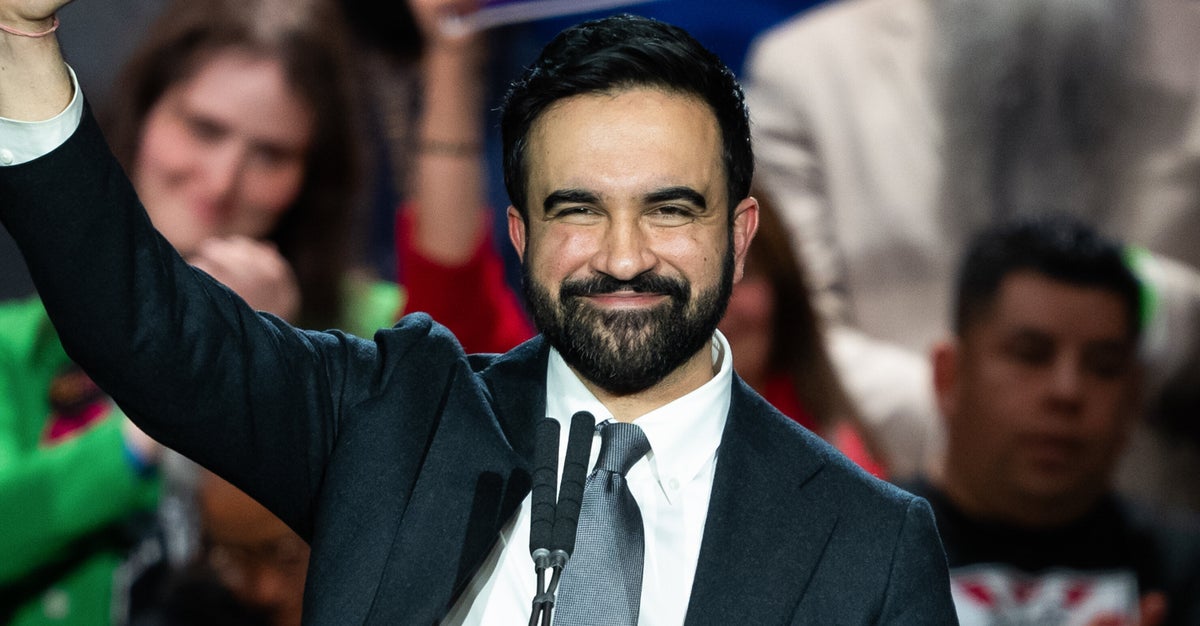
A few months ago, most of New York City Mayor Zohran Mamdani’s video team was basically brand new to politics.
As the six-person group of documentarians and journalists joined Mamdani in City Hall, they were tasked with making some of the least sexy parts of municipal government — the sanitation department, rats, rent guidelines — resonate with New Yorkers.
In less than five months on the job, their work has already made an undeniable impact on how people interact with local power, driving millions more to follow what Mamdani says online while bolstering actual increases in how many New Yorkers seek out and use city services.
Mamdani, who has been dogged by questions about whether he can deliver on his vision of a New York that serves the working class or how a democratic socialist might upend the largest city in the nation, has embraced what he calls “pothole politics” — a version of the “sewer socialism” that steered Milwaukee for over half a century. Already, the Department of Transportation has completed a record number of road repairs and universal child care is on track to becoming a reality through a partnership with Gov. Kathy Hochul (D), an alliance with Albany that critics said could never work.
In short: Mamdani is prioritizing quality-of-life reforms, and making sure residents both see and understand the city services, agencies and local statutes that are already in place.
“A city program doesn’t mean much if people don’t even know it exists,” Mamdani wrote in an email to JS.
Bloomberg via Getty Images
This is where the video team comes in. The team has churned out close to five documentary-style pieces and public service announcements each week since Mamdani took office Jan. 1. The NYCMayor Instagram account’s follower count has shot up to 2.5 million since Mamdani took over, a 150% increase from the end of Mayor Eric Adams’ term.
“Our job is to meet New Yorkers where they actually are — on their phones, in their feeds — and make sure they know what’s available to help them get by and stay in this city, because at the end of the day, these services should make life a little more affordable for the people who call New York home,” Mamdani said.
Using the right medium is only one part of the equation, though, according to Suri Kasirer, founder and CEO of top New York lobbying firm Kasirer.
“Social-first formats like short-form video only work when they carry useful information,” she told JS. “Strong political communicators answer the questions people actually have: What does this mean for me? Why should I care? What can I do next?”
To answer those questions in a way that’s compelling but not cringeworthy, Mamdani’s digital video team said, they maintain a strict “no meme policy.”
“You see other politicians trying to do that, and it never works, it always feels forced,” a spokesperson for the video team said. “We’re not doing this to go viral. We are trying to make stuff that is engaging, and if it goes viral, awesome.”
“Nothing that we put out is ever a joke,” they added. “Our role is to communicate the very serious work of government. I think if we don’t take it seriously, then someone who’s watching certainly won’t.”
Kasirer cosigned that strategy, telling JS that prioritizing “substance over clicks” shows the mayor’s administration is focused on relaying information that actually serves constituents, not just getting attention.
“It is easy to chase the low-hanging fruit online by capitalizing on a meme that could go viral,” she explained. “But government officials and institutions can engage people online without talking down to them. Constituents are capable of understanding serious and complex policy issues when they are explained clearly and accessibly.”
Decoding the dense, sometimes cryptic, language of politics is something many officials overlook the importance of, said Sarada Peri, a communications strategist and former speechwriter for President Barack Obama.
Politicians too often “assume people understand the system” and end up crafting messages that simply “go over people’s heads,” Peri told JS. There could be a simple reason that Mamdani’s videos break through.
“It might just be that he’s a normal person in the world and understands how communication is received,” she said.
Effectively explaining the ins and outs of city government via video is all about figuring out concepts that are creative and match the tone of their topics but don’t distract from the meat of the message.
The video team has produced pieces about the city’s crackdown on vermin shot from the POV of a rat, helped handcraft a Monopoly-inspired explainer of the Rent Guidelines Board, followed the mayor as he manned the phones at one of the city’s 311 call centers, paid tribute to Department of Sanitation workers after their round-the-clock snow-clearing operations this winter, and shot promos for the Mayor’s Municipal Madness tournament — a college basketball bracket-inspired competition where New Yorkers voted to pick which city fixes they wanted to see Mamdani take on.
This past Tax Day, a video announcing plans for a “pied-à-terre” charge made waves after using hedge fund manager Ken Griffin’s Central Park South residence as its backdrop, garnering over 100 million cross-platform views in the process. Part of Mamdani’s campaign promise to “tax the rich,” the proposal would levy a fee on luxury properties worth over $5 million that are not the owner’s primary residence.
One of their most “online” experiments, a “mukbang”-style livestream of the mayor and Department of Consumer and Worker Protection Commissioner Sam Levine munching on Taco Bell and Dunkin as they discussed a $1.8 million settlement the department won on behalf of 760 employees of the fast-food franchises, doubled traffic to DCWP’s website overnight.
The videos have led to a jump in the type of civic engagement that’s much more meaningful than just checking websites: Data from the mayor’s office showed the number of New Yorkers signing up for job opportunities as emergency snow shovelers tripled, while municipal lifeguard trials increased by 30% and applications for the Summer Youth Employment Program hit an all-time high for day-one applications after related PSAs went live.
While members of the mayor’s video operation told JS they focus on vivid visuals, sharp edits and smart storytelling to make their work stand out amid the “millions other things” competing for people’s attention, they couldn’t ignore the fact they’d been “gifted a uniquely charismatic and talented star” with Mamdani.
The mayor’s on-camera aura is far from his only asset — he’s also the brains behind some of his office’s most viral videos.
“He’s truly the best filmmaker out of all of us,” the video team spokesperson said. “He knows this is one of our most powerful tools and recognizes a lot of ideas that feel opaque or bureaucratic can come to life on video.”
As political campaigns look to replicate that Mamdani magic during this year’s midterms and ahead of the 2028 presidential election, Peri said, candidates should focus less on what worked for others and more on molding a clear, honest message about their vision.
“What made Mamdani a winning candidate and a good mayor is that he actually is authentic,” Peri said. “There is a relationship between what you say and what you actually believe and what you are actually trying to do.”
Voters are getting savvier, Kasirer said.
“Constituents are becoming increasingly aware of when politicians are speaking from a list of talking points, rather than speaking from their heart,” she said.