

The Illusion of Clean: Why Removing Food Dyes Won’t Fix America’s Diet
Americans will fight about almost anything — but not this: they don’t want chemicals coloring their kids’ food. And they’re right.
But removing food dyes won’t fix what’s broken in the American diet.
This is the illusion of clean: we strip out the most visible ingredient, keep everything else the same and call it progress.
We’ve gotten very good at making food look safer, without making it healthier.
Recent polling shows that 79% of U.S. adults support the FDA’s plan to phase out eight artificial food additives, and 76% say they’re concerned about food dyes in products they buy. But only 30% say they pay attention to food dyes and other ingredients when making purchasing decisions.
The Gap Between Knowledge and Behavior
Americans say they want dyes gone, but they’re still buying the same products that contain them. We don’t have a knowledge problem — we have a behavior gap.
In another poll, only one in three parents said the standard American diet is healthy for their kids, yet very few have tried alternative diets at home. Americans know much of what they’re feeding their children isn’t healthy, but that knowledge isn’t significantly changing what ends up in the shopping cart.
Awareness doesn’t change behavior — environment does. We like to think we shop with our values, but most of us shop with our habits. And habits are built by systems, not willpower.
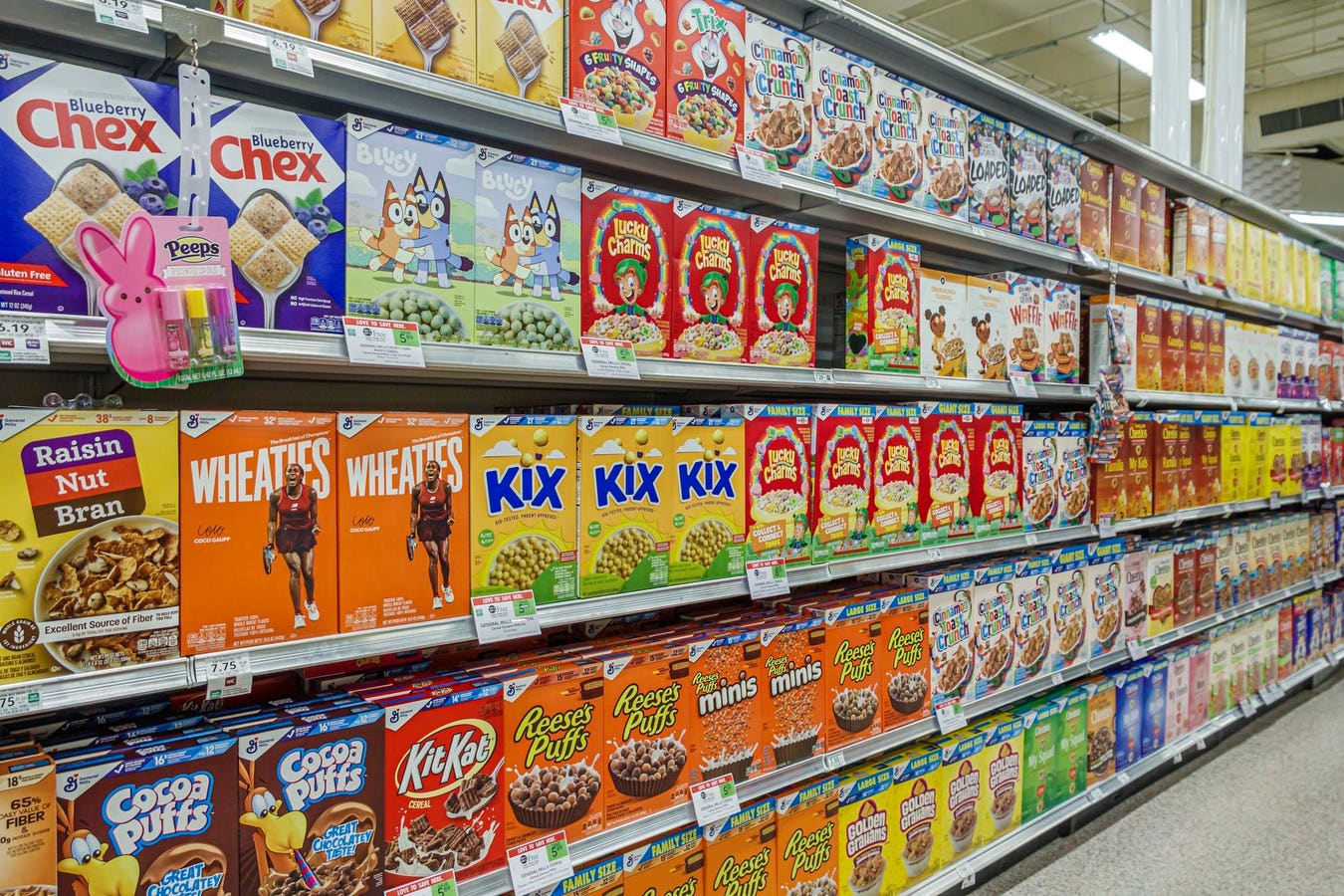
A dye-free Dorito isn’t health food — it’s just a slightly less colorful Dorito. If your definition of progress is a beige Cheeto, we may be setting the bar too low.
A dye-free Froot Loop is still a Froot Loop. And removing artificial coloring from a box of mac and cheese won’t make it healthy.
Removing dyes cleans up the label, not the diet.
Without behavior change, broader regulation, and widespread access to healthier choices, a ban on food dyes alone will not “Make America Healthy Again.”
What Drives Choice
Policy can change ingredients. It’s much harder to change behavior. Food manufacturers will be more inclined to remove dyes — and make more meaningful changes — if they believe consumers will keep buying their products. The market doesn’t respond to what people say in polls; it responds to what people buy.
We’ve been through this before. When General Mills removed artificial colors from Trix cereal in 2016, customers complained that the natural colors changed the look and nostalgia of the product, and children immediately noticed the missing blue and green pieces. Within a year, the colors were back.
(The company has since announced it will reintroduce versions of Trix and Lucky Charms made with natural colors.)
The lesson isn’t that Americans won’t eat non-dyed food. It’s that taste, cost, and brand identity are more powerful than an ingredient list, especially when the food is designed for children.
We are not just eating food — we’re consuming decades of engineered preference. If healthy choices aren’t the easy choices, they won’t be the common choices.
Policy Implications
The broad support for banning food dyes shows how a modest reform can gain traction by targeting something visible, even when it doesn’t address the underlying drivers of poor health.
Policymakers love visible wins. They’re easy to explain, easy to celebrate and rarely threaten the system that created the problem.
This is nutrition theater — high visibility, low impact.
Banning dyes is the kind of policy that looks bold, polls well, and leaves the hard work for later — which is often another way of saying never.
The risk is that parents and policymakers will treat a ban on dyes as the solution, rather than the starting point. The harder questions — about sugar, sodium, marketing, pricing and access to healthy food — remain largely neglected.
If this moment is going to matter, it has to go further: stronger school food standards, clearer warning labels, limits on marketing to children and reformulation that go beyond removing color. Because the problem isn’t just what’s in our food. It’s the system that decides what ends up on the shelf.
A Long-Standing Debate
The debate over food dyes isn’t new. It stretches back more than a century, to when industrial dyes first entered the food supply in the late 1800s.
For more than a century, the cycle has been predictable: alarm, denial, delay, partial reform — and then we move on before anything fundamental changes.
We’ve been chasing quick fixes to the American diet for decades, and each one has promised more than it delivered.
In my lifetime alone, we’ve cycled through them: egg whites over whole eggs, low-fat everything, fast food chains adding salads to signal change, low-carb revolutions, high-protein resets. And then the pendulum swings back again.
Dyes are the latest version of that pattern — a visible fix that feels like progress, but risks distracting from the deeper structural changes that actually shape diet and health. What feels like a new moment is actually the latest chapter in a very old story.
What is different now is the coalition. Advocates aligned with the “Make America Healthy Again” movement are pushing in the same direction as mainstream nutrition scientists and organizations like the Center for Science in the Public Interest, which has long warned about what it once called a “rainbow of risk.”
That kind of alignment is rare — and potentially powerful. But history suggests caution. We’ve been having this fight for more than a century, and we keep solving the easiest part.
Removing dyes may be the easiest step. It’s also the least likely to change how America eats.
If we stop here, we’ll mistake motion for progress.
We can take the color out of junk food. That doesn’t make it any less junk.