

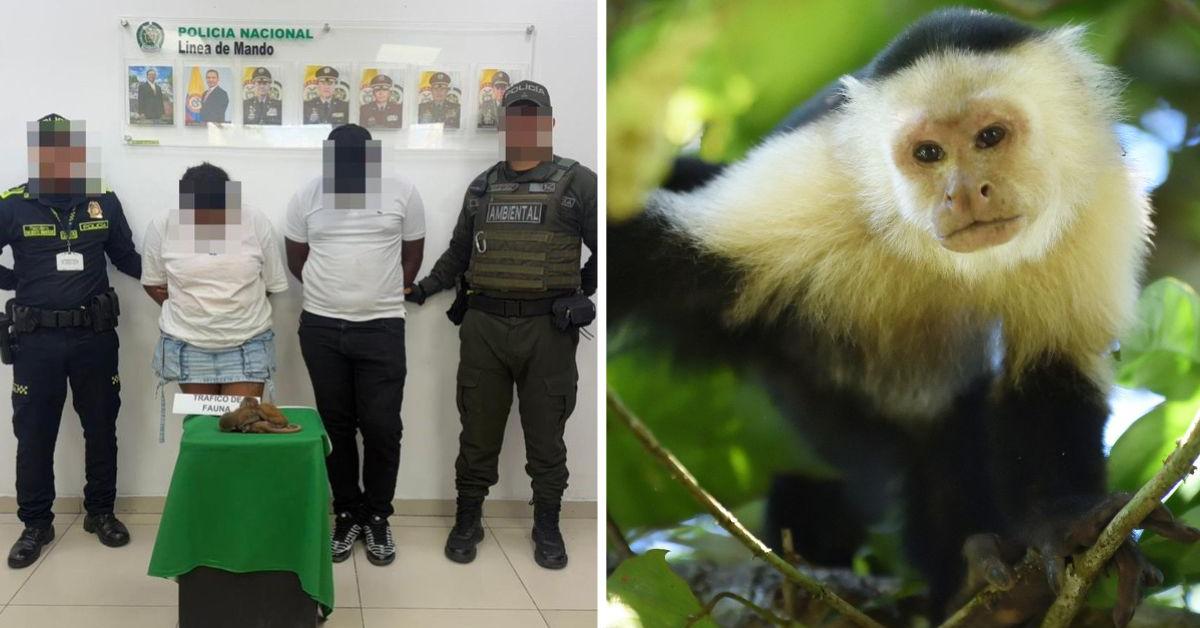
Two people are under arrest after trying to sneak through an airport with a trio of baby monkeys hidden in their underwear, RadarOnline.com can report.
The absurd plan took a tragic turn, however, when one of the small animals allegedly suffocated in the cramped clothing.
The would-be smugglers, a 27-year-old woman and a 26-year-old man, were caught at the Rafael Núñez International Airport in Colombia. The couple had packed the primates in their pants in a twisted attempt to evade immigration restrictions.
“At the airport, two people were apprehended who intended to traffic primates from Colombia to the Dominican Republic,” local police said in a post on X, adding, “They were carrying three monkeys in their intimate parts.”
Animals like these can sell for more than a million dollars on the international black market.
Two of the primates were identified as white-faced capuchins, while the third was a howler monkey. The capuchins survived, but the howler did not, after apparently suffocating in the pants of one of the captors. They are now charged with the illegal exploitation of natural resources and wildlife trafficking.
In a statement, Brigadier General Gelver Yecid Peña Araque said: “This practice is evidence of absolute cruelty and a flagrant violation of animal rights. The animal died in conditions that we can only describe as inhumane.”
According to the U.S. Sun, there is significant demand for native primates as domestic pets around the globe. But the white-faced Capuchin is protected under Annex III of the Specially Protected Areas and Wildlife Protocol for the Wider Caribbean.
The Colombian Red Howler monkey is also considered protected under several international rules and regulations.
The couple could be sentenced to 11 years in prison and forced to pay a substantial fine if found guilty of smuggling.
After the arrests, police promised to step up patrols at the airport, warning that they will not allow those with evil intentions to “turn biodiversity in Colombia into a contraband commodity.”
“This crime ripped weeks-old baby monkeys from their mothers, disrupted fragile ecosystems, endangered a vulnerable species, and posed significant public health risks,” said U.S. Attorney Adam Gordon at the time. “This is not merely an economic crime; it is a severe and lasting injury to both wildlife and public safety.
“Border security is not just about interdicting drugs and preventing illegal entries, it also involves protecting the public from dangerous diseases. U.S. Fish and Wildlife Service contributes to securing our borders and keeping the public safe.”
Ultimately, the three Mexican spider monkeys that were seized and quarantined found a home at the Brookfield Zoo in Chicago as part of the Association of Zoos & Aquariums Wildlife Confiscations Network.