

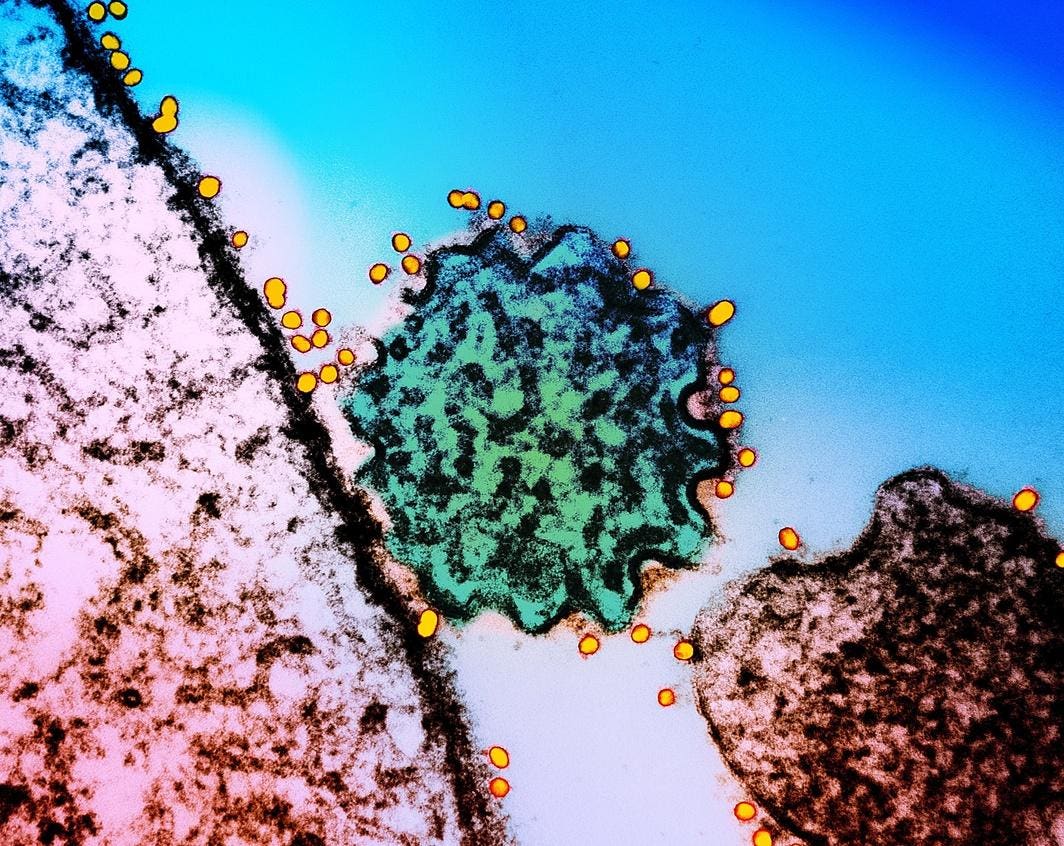
Colorized transmission electron micrograph of a single Nipah virus particle (center, colorized green) that has budded from the surface of an infected cell (pink). Nipah virus surface glycoproteins have been labeled using a technique called immunogold labeling in which gold particles (yellow) are bound to antibodies that recognize a specific viral antigen or epitope, which then bind to that individual virus species both within and on the surfaces of infected cells, allowing researchers to see the antibodies and confirm the virus type in the image. (Photo by: NIH-NIAID/Image Point FR/BSIP/Universal Images Group via Getty Images)
BSIP/Universal Images Group via Getty Images
Nipah and Hendra viruses are among the deadliest viruses known, killing between 40 and 75 percent of people infected. They are closely related members of the henipavirus family. Nipah virus is found primarily in South and Southeast Asia, while Hendra virus circulates mainly in Australia. Despite their pandemic potential, there are no approved treatments for patients.
Both viruses spread from fruit bats, their natural reservoir, into other animals before infecting people. Nipah virus has caused outbreaks linked to contaminated food, infected livestock, and person-to-person transmission. Hendra virus typically passes from bats to horses before occasionally infecting humans. Although outbreaks remain relatively rare, both viruses can cause severe pneumonia and encephalitis, placing them among the World Health Organization’s highest-priority emerging pathogens.
Why Two Antibodies?
Because Nipah and Hendra viruses are closely related and share many of the same surface proteins, the same antibodies can recognize both viruses individually. The new treatment takes a different approach by combining two antibodies, each targeting a different viral protein. One blocks the receptor binding protein, which the virus uses to attach to human cells. The other targets the fusion protein, preventing the virus from entering the cell.
Most antibody therapies rely on a single target. Although effective, a single mutation can allow the virus to escape treatment. By attacking two essential proteins instead of one, the antibody cocktail makes resistance far more difficult to develop while maintaining activity against both Nipah and Hendra viruses. The combination protected animals from lethal infection and remained effective against viral mutations that escaped individual antibodies.
The two antibodies also recognize regions of the proteins that rarely change across circulating strains of both Nipah and Hendra viruses. Targeting parts of the virus that rarely change may help preserve protection as new variants emerge.
Animal Protection
The treatment was tested in hamsters infected with a lethal dose of Nipah virus. Animals receiving either antibody survived infection. The antibody combination also provided complete protection, even when treatment was delayed until after infection had begun.
Laboratory testing produced similar results. The cocktail neutralized viruses representing both major Nipah strains as well as Hendra virus, demonstrating broad activity across multiple members of the henipavirus family.
Beyond Nipah and Hendra
Viruses constantly evolve. Treatments directed at a single target can become less effective as new mutations accumulate. Combining antibodies that recognize different conserved regions may provide a more durable way to prevent resistance while maintaining protection.
Similar strategies are already being explored for other rapidly evolving viruses. Future antibody therapies may increasingly rely on combinations that attack multiple essential targets rather than a single vulnerable site. The same principle could strengthen treatments for both newly emerging viruses and those that continue to challenge existing medicines.