

In 2025, just under 119 million foreign visitors arrived in the countries of Singapore, Malaysia, Vietnam, Indonesia, Thailand, and the Philippines. Inbound travel to the region has now reached about the same level as in 2018, but remains below the high-water mark of 2019, when visitors to these six countries hit approximately 127 million. But beneath the headline numbers, some interesting and potentially very important shifts are underway.
Whenever you talk about tourism in Southeast Asia, Thailand usually leads the conversation. For many years, Thailand was unquestionably the largest draw for foreigners visiting the region. While that remains true, it is starting to change. In 2025, Thailand recorded almost 33 million inbound arrivals, still the largest by a considerable margin. But arrivals actually fell 7 percent compared to 2024 and remain well below the 2019 peak of almost 40 million.
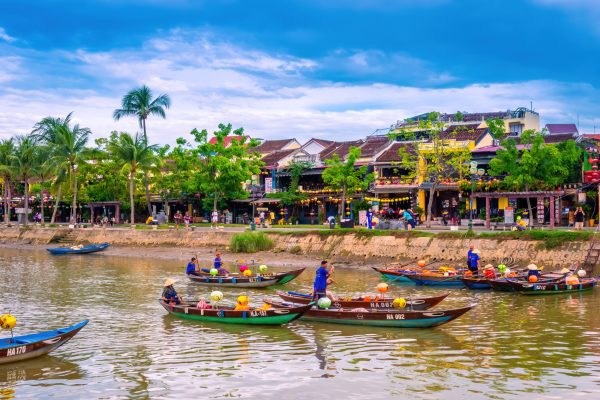
Not only are less tourists visiting Thailand, but competitors are quickly rising. The main one is Vietnam, which recorded 21 million arrivals in 2025, 45 percent of which came from just two countries: South Korea and China. Vietnam’s growth as a popular tourist destination in Southeast Asia has been remarkable. In 2016, when Thailand saw 32 million inbound visitors, Vietnam had only 10 million. In the decade since, Vietnam has more than doubled these numbers while Thailand remains at around the same level.
This mirrors Vietnam’s overall rise as an export powerhouse in Southeast Asia. Vietnam recently overtook Thailand in exports of goods, and it is now quickly catching up in service exports like tourism. Given how dependent Thailand’s economy is on exports, of both goods and services, and the low growth equilibrium the economy has been trapped in since the pandemic, the lackluster performance in its tourism sector and the sharp rise of Vietnam’s could pose a tricky long-term problem.
Elsewhere in the region, inbound tourism to Singapore and Malaysia has steadily recovered. Tourism, and the foreign exchange it generates, is not so central to the economies of Singapore and Malaysia as it is in other parts of Southeast Asia. But it’s safe to say Malaysia (with 26.6 million inbound arrivals in 2025) and Singapore (almost 17 million) have resumed their positions as popular regional destinations for a variety of tourists and visitors.
The Philippines remains the smallest of the major tourism markets in Southeast Asia, and this has been the case for some time both before and after the pandemic. Foreign visitors reached 6 million in 2025, placing the Philippines far behind its competitors in terms of market share. It also remains well below the 2019 peak of 8 million visitors. While the Philippines lags behind its regional peers when it comes to international travel, local airlines have been betting big on the strength of the domestic travel market to offset muted international appeal.
Indonesia recorded 15.4 million arrivals in 2025, nearly on par with 2019 levels. Unsurprisingly, almost half of these visitors arrived in Bali. For around a decade now, Indonesia has been attempting to make its tourism sector less reliant on Bali, developing and promoting destinations like Lombok, Labuan Bajo and Lake Toba. While some of these destinations, such as Labuan Bajo, are increasing in popularity Bali remains overwhelmingly the main draw.
From a macroeconomic perspective, it doesn’t matter if international visitors spend their foreign currencies in Bali or any other part of Indonesia. It all gets captured in the current account as an export. But it matters a lot to the places that are experiencing an influx of tourists. While the local economy benefits from its status as a popular tourist destination, there are downsides like resource depletion, an uptick in crime and public disturbances, traffic congestion and pollution. Balancing the benefits against the costs can be difficult and we are increasingly seeing a push for less volume and more value when it comes to foreign tourists in the region.
Indonesia recently stepped up regulatory oversight of foreign visitors in the country, particularly digital nomads and content creators. Thailand has also started pivoting toward policies that target fewer tourists who will spend more when they are in the country. The visa free window was recently reduced from 60 to 30 days for most nationalities, and authorities have started cracking down on businesses and land held by foreigners through nominees.
This suggests that some of the big markets like Indonesia and Thailand are becoming (or trying to become) more discerning in their approach to drawing in foreign visitors. They want the foreign exchange and investment, but would like to reduce some of the other headaches that come with it. Vietnam, meanwhile, continues to rapidly gain on its competitors as a marquee destination. One does wonder if, in a few years, policymakers in Vietnam will be having similar discussions about volume versus value, if they aren’t already having them.