

• Home
  • Politics
  • Health
  • World
  • Business
  • Finance
  • Tech
  • More
    • Sports
    • Entertainment
    • Lifestyle
What's Hot

NYC high school faces backlash over ‘intifada’ post

October 22, 2026

Feds launch Medicaid fraud crackdown in NYC adult day care centers

October 21, 2026

‘Slow Horses’ Season 6 Finale Recap: Olivia Cooke Interview

October 21, 2026
Facebook Twitter Instagram
  • Contact
  • Privacy Policy
  • Terms & Conditions
Thursday, October 22
Patriot Now NewsPatriot Now News
  • Home
  • Politics

    NYC high school faces backlash over ‘intifada’ post

    October 22, 2026

    Stephen Miller Goes Off on Foreign Scammers During White House Roundtable on Cybercrime * The Gateway Pundit * by Jordan Conradson

    October 21, 2026

    JD Vance’s Ohio Rally Disaster May Have Gotten Sherrod Brown Elected

    October 21, 2026

    El-Sayed’s Muslim Brotherhood Boost… Look Who’s Cheering Him On! (VIDEO) * The Gateway Pundit * by Grant Stinchfield

    October 21, 2026

    Why Republicans’ massive cash advantage is evaporating on the airwaves

    October 21, 2026
  • Health

    Feds launch Medicaid fraud crackdown in NYC adult day care centers

    October 21, 2026

    American Diabetes Association shakes up leadership

    October 21, 2026

    Ebola, Nigeria, Vaccines, CRISPR, Mark Cuban: Morning Rounds

    October 21, 2026

    Mark Cuban’s Cost Plus Drugs tackles expensive rare disease treatments

    October 21, 2026

    Counterintuitive approach floated to boost measles vaccine uptake

    October 21, 2026
  • World

    Amy Robach And T.J. Holmes’ Exes Are Now Engaged — To Each Other

    October 21, 2026

    Pro-Trump New York Post Warns How He Could Spark ‘Full-On Riot’ In GOP

    October 21, 2026

    Reporter Hits Back At Trump’s ‘Sick Person’ Jab With Pointed Health Update

    October 21, 2026

    Bush Family Member Rebukes Trump, Breaks From GOP In Key Race

    October 21, 2026

    Trump Dodges JD Vance 2028 Endorsement Question, With Vance Right Behind Him

    October 21, 2026
  • Business

    ATF Rule Could Cause Classic Showdown Between Mom And Pop Shops Versus Online Retailers

    July 10, 2026

    Costco Shows That You Can Build A Thriving Business With One Simple Trick (Pay Your Workers)

    July 9, 2026

    The Agency Elizabeth Warren Built Now Advances Trump’s Agenda

    July 9, 2026

    Meta To Shell Out Billions For New AI Data Center Outside US

    July 9, 2026

    How Big Banks Are Scheming To Jack Up Your Fees

    July 8, 2026
  • Finance

    The Indian Government’s Job Statistics Are Misleading

    October 21, 2026

    The China-US Quantum Computing Contest

    October 21, 2026

    China’s AI Industry Brings Both Gains and Challenges for Its Fragile Economy

    October 21, 2026

    Goldman Sachs, JPMorgan, Morgan Stanley dominate AI stock boom

    October 21, 2026

    Taiwan’s Tech Diplomacy Has a Labor Problem

    October 20, 2026
  • Tech

    Texas AG Ken Paxton Sends Compliance Letters to 156 Data Centers over Water Usage Reporting

    October 16, 2026

    Musk Unveils Flying Tesla Roadster at SpaceX Texas Site

    October 16, 2026

    Nvidia’s Jensen Huang Says U.S. ‘Absolutely Must’ Work with China on AI Safety

    October 16, 2026

    8 States Sue OpenAI Alleging ChatGPT Deceived Parents and Harmed Children

    October 16, 2026

    Poll Shows Mike Rogers Edging Out Abdul El-Sayed in Michigan Senate Race

    October 15, 2026
  • More
    • Sports
    • Entertainment
    • Lifestyle
Patriot Now NewsPatriot Now News
Home»Finance»Why Is the India-US Bilateral Trade Agreement Still On Hold?
Finance

Why Is the India-US Bilateral Trade Agreement Still On Hold?

July 9, 2026No Comments5 Mins Read
Facebook Twitter Pinterest LinkedIn Tumblr Email
Why Is the India-US Bilateral Trade Agreement Still On Hold?
Share
Facebook Twitter LinkedIn Pinterest Email

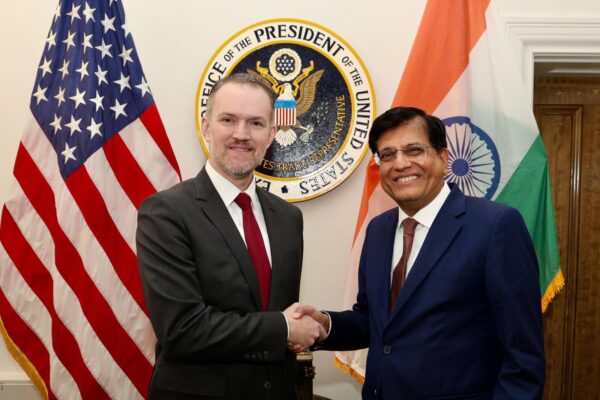
About two weeks ago, the much-anticipated bilateral trade agreement (BTA) between India and the United States seemed close to completion. United States Trade Representative (USTR) Jamieson Greer led a team to New Delhi, and both governments aligned on claims that 99 percent of the deal was finalized. 

Immediately after Greer’s visit, however, the Indian government unexpectedly pulled back from the deal. 

Clarifying India’s position, Commerce Minister Piyush Goyal claimed immediately afterwards that the BTA would remain on hold unless the United States offered India “some competitive advantage over what is being given to countries like Vietnam, Thailand, the Philippines, Indonesia, Malaysia, China, Bangladesh, Sri Lanka, and other neighboring countries.” 

This about-face was surprising given India’s long-standing enthusiasm to clinch the deal with its second-largest trading partner. 

Negotiations began in early 2025 following political endorsement from the leaders of both nations, who launched “Mission 500” to double total bilateral trade to $500 billion by 2030. The BTA was to be the primary catalyst. Initially, both governments agreed that the first tranche of this multi-sector trade deal would be ready by fall 2025.

This timeline proved overly ambitious for two primary reasons.

U.S. President Donald Trump’s “America First” trade policy explicitly stated he would “negotiate agreements on a bilateral or sector-specific basis to obtain export market access for American workers, farmers, ranchers, service providers, and other businesses.” This signaled that the United States would prioritize its own stakeholders without guaranteeing reciprocal advantages to partner countries.

Then there were tariff disputes between India and the United States. Trump repeatedly targeted India for maintaining high tariffs and enjoying a trade surplus with the U.S. It seemed, therefore, that the BTA was being envisioned as a mechanism for Washington to extract market access concessions from India, particularly within its protected agricultural sector.

See also  Higher interest rates, inflation push Gen Z investors to trade stocks

Although the original deadline was missed, the two nations announced a framework for an “Interim Agreement regarding reciprocal and mutually beneficial trade” in early February. The Indian government enthusiastically hailed this as a “landmark trade victory” that unlocked the “$30-trillion US market for exports across key sectors.”

But this optimism did not match the actual terms of the framework. 

India had agreed to eliminate or reduce tariffs on all U.S. industrial goods as well as a wide range of agricultural products, but the U.S. secured the right to apply a reciprocal tariff rate of 18 percent on originating Indian goods. By accepting these asymmetric terms, India was, in effect, opening its sensitive sectors even though the U.S. could increase tariffs on Indian exports seven-fold, compared to July 2025 levels.

Trump announced at the same time that India had committed to halting direct or indirect imports of Russian oil. In exchange, he said, the U.S. had agreed to remove the 25 percent ad valorem duty it had imposed on India in August 2025 over these very oil imports. 

For India, halting Russian oil imports represented a major geopolitical shift, considering Russia’s decades-long role as a dependable strategic partner.

The framework was quickly turned upside down when the U.S. Supreme Court ruled that Trump did not have the authority to impose “reciprocal tariffs” under the International Emergency Economic Powers Act (IEEPA). This knocked the bottom out of  the Trump administration’s trade unilateralism, as it was under the IEEPA that high tariffs were levied on 57 countries in April 2025. 

See also  Asian shares fall back amid selling of China property shares

The U.S. Supreme Court ruling forced, therefore, both the Indian and U.S. governments back to the drawing board.

India’s initial acceptance of the lopsided February deal remains difficult to parse. Its subsequent refusal to finalize the BTA, however, stems from sudden and new U.S. provocations. Within weeks of the Supreme Court ruling, the Trump administration initiated two separate investigations under Section 301 of the U.S. Trade Act of 1974, which grants the USTR unilateral tariff authority to investigate and take unilateral tariff actions against other countries it trades with. 

In the first investigation, the USTR is examining 60 trade partners for their failure to impose and effectively enforce a prohibition on the importation of goods produced with forced labor. India is among the 54 countries facing the prospects of additional import duties of 10 percent. 

The second USTR investigation is for determining structural excess capacity of the countries it trades with. Sixteen of them are being targeted for manufacturing overcapacity across 22 sectors. In India, seven sectors are targeted – including broad categories such as construction goods – meaning that any subsequent duties could broadly depress exports to its largest trading partner, the United States. 

Unlike the first investigation, the USTR has not as yet specified the duty rates it intends to impose. For decades, governments have been forging bilateral trade agreements to provide a transparent and predictable trading environment to their businesses. The Trump administration is clearly an exception in this regard; its trade dealings have been anything but predictable. 

Given this situation, the Indian government faces some hard choices while continuing to negotiate the BTA. Surely, it would not like to be left in a situation where the U.S., after extracting all the concessions it is seeking, uses unilateral measures like Section 301 to deny benefits to Indian businesses.

See also  Morning Bid: Markets hold their nerve amid Mid East trouble

Originally published under Creative Commons by 360info™.

Agreement bilateral Hold IndiaUS trade
Share. Facebook Twitter Pinterest LinkedIn Tumblr Email

Related Posts

The Indian Government’s Job Statistics Are Misleading

October 21, 2026

The China-US Quantum Computing Contest

October 21, 2026

China’s AI Industry Brings Both Gains and Challenges for Its Fragile Economy

October 21, 2026

Goldman Sachs, JPMorgan, Morgan Stanley dominate AI stock boom

October 21, 2026
Add A Comment

Leave A Reply Cancel Reply

Top Posts

Can Natural Edibles Boost Your Mood And Mind?

May 31, 2024

Trump Again Delays TikTok Ban While Thousands Of Users Celebrate Charlie Kirk Assassination

September 16, 2025

Biden’s Sexual Assault Accuser Tara Reade Will Testify Before Congress, Says MAGA Rep Matt Gaetz

March 25, 2023

Biden Walks Off After Question on Jobs Report

September 2, 2023
Don't Miss

NYC high school faces backlash over ‘intifada’ post

Politics October 22, 2026

INTIFADA FLARE UP: One of New York City’s most prestigious public high schools is facing…

Feds launch Medicaid fraud crackdown in NYC adult day care centers

October 21, 2026

‘Slow Horses’ Season 6 Finale Recap: Olivia Cooke Interview

October 21, 2026

The Indian Government’s Job Statistics Are Misleading

October 21, 2026
About
About

This is your World, Tech, Health, Entertainment and Sports website. We provide the latest breaking news straight from the News industry.

We're social. Connect with us:

Facebook Twitter Instagram Pinterest
Categories
  • Business (4,399)
  • Entertainment (7,545)
  • Finance (5,263)
  • Health (2,972)
  • Lifestyle (1,962)
  • Politics (5,041)
  • Sports (5,499)
  • Tech (2,833)
  • Uncategorized (4)
  • World (7,844)
Our Picks

Elderly woman who ran dog rescue is charged with dozens of felonies in largest animal cruelty case in Ohio state history

July 26, 2023

How To Spot A Trustworthy Psychic And Avoid Scams

August 22, 2024

ECB cuts through bank turmoil to keep rate hike pledge

March 18, 2023
Popular Posts

NYC high school faces backlash over ‘intifada’ post

October 22, 2026

Feds launch Medicaid fraud crackdown in NYC adult day care centers

October 21, 2026

‘Slow Horses’ Season 6 Finale Recap: Olivia Cooke Interview

October 21, 2026
© 2026 Patriotnownews.com - All rights reserved.
  • Contact
  • Privacy Policy
  • Terms & Conditions

Type above and press Enter to search. Press Esc to cancel.