

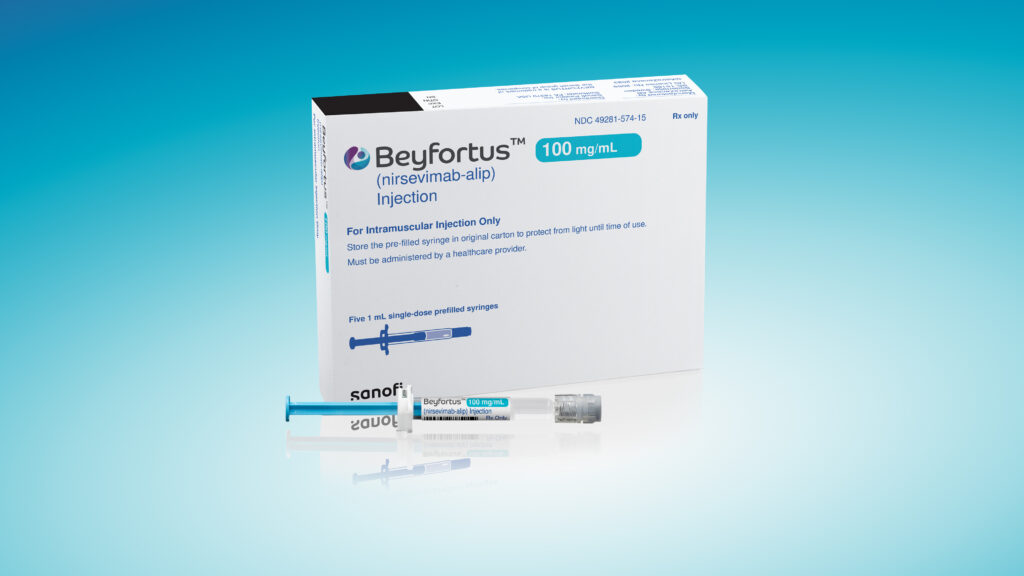
In a fall in which new tools to fight old diseases — updated Covid-19 vaccines, new products to protect older adults and babies from RSV — have been introduced with fanfare but rolled out in a particularly rocky manner, frustration may be about to go next level.
Parents of young babies are anxiously waiting to find out how and where they’ll be able to get their children shots of Sanofi’s new monoclonal antibody that protects against RSV, or respiratory syncytial virus. People who are late in, or approaching the late stages of their pregnancies and eligible for Pfizer’s new maternal RSV vaccine — which will protect their infants after they are born — are also wondering when and where they’ll be able to get access.
It’s starting to look like some will have success, while others will struggle, depending on where they are located and how far along birthing hospitals, obstetrical practices, and pediatricians’ offices have progressed in cracking the complicated logistics of working these important and expensive offerings into the care they provide.
“There will definitely be some implementation challenges,” said Brenna Hughes, a maternal-fetal medicine specialist at Duke Health in Durham, N.C., told STAT in a recent interview.
Helen Chu, an infectious diseases expert at the University of Washington, agreed.
“It’s not clear what the availability of either product will be in different jurisdictions right now. So I think we have to sort of operate in a scenario as though people may not have both. And then you just get whichever one is available to you,” Chu said.
Obstetricians and gynecologists, birthing hospitals, pediatricians, and the professional groups that advise these health professionals are scurrying to try to make the complicated arrangements that are needed to put these pricey new products into use in time to protect babies from what is, for them, a nasty infection, one that is likely to start circulating more robustly in coming weeks.
The challenges of using the antibody shot and the maternal vaccine are myriad and in some respects ironic. For years there were no tools with which to combat RSV, which is the most common cause of hospitalization of children under the age of 1 in this country, leading to between 58,000 and 80,000 hospitalizations every year.
Now there are two that approach the problem from different angles, either by providing indirect protection via maternal immunization, or directly by giving a shot to babies shortly after birth or — if they are born in the spring or the summer — in the autumn before RSV season starts. Both appear to provide six months or more of strong protection, but because maternal antibodies will have worn off by the time babies born in the off-season first encounter RSV, the Centers for Disease Control and Prevention has recommended that the vaccine only be offered seasonally, to pregnant people who will give birth between October and March, administered exclusively between weeks 32 and 36 of gestation. This will be the purview of obstetricians and gynecologists.
That is one level of complexity. But a bigger complicating factor is the costs of these products, which obstetricians, pediatricians, and birthing hospitals must purchase in advance and hope to get compensated for. Private insurers have to cover the costs of both of these products, but they have up to a year to incorporate new must-cover items into their programs — and some do not move with alacrity when new products arrive. Sean O’Leary, a Colorado pediatrician who is actively involved in helping the American Academy of Pediatrics guide its members through this challenging new period, is urging parents and parents-to-be to contact their insurance providers to make it clear they want coverage now.
The list price for Sanofi’s antibody product, Beyfortus, is $495 a dose; babies would receive one dose. The list price for the maternal vaccine is $295 a dose, which is hefty for a vaccine. By comparison, the tetanus, diphtheria and pertussis jab (Tdap) that obstetricians give to their patients during pregnancy costs somewhere between $46 and $54 a dose.
In the case of birthing hospitals, which may or may not be planning to give babies the more expensive RSV antibody product — some may choose to leave this to pediatricians — at present they do not have a clear path to compensation for roughly half the babies to whom they would give the shot, if they administer them. Birthing hospitals are paid a set fee for delivery and there is currently no firm plan to bump up that fee to cover this big additional cost. They were earlier asked to absorb the cost of giving babies a dose of hepatitis B vaccine at birth, but at $26 a dose, that was a far less onerous addition to their care.
“This is a big, big cost,” said Hughes, who suggested birthing hospitals should be paid extra to cover the cost of giving newborns Beyfortus. “They should not be losing money in order to be able to provide birth services.”
Further confounding the problem for birthing hospitals is that most have not until now been enrolled in Vaccines for Children, a CDC program that provides vaccine doses of all recommended kinds for children whose families qualify financially for this care. A little over half of American children are vaccinated through the program, which will be covering the cost of Beyfortus for VFC-eligible babies. Enrollment in VFC would give birthing hospitals a free supply of Beyfortus for use in eligible children, but they must also purchase doses to provide the product to babies who do not meet the criteria for VFC vaccines.
Some birthing hospitals will be able to provide Beyfortus to babies this winter, but others will not, warned O’Leary, a professor of pediatrics at the University of Colorado School of Medicine and a pediatric infectious diseases specialist at Children’s Hospital Colorado.
“Hospitals are trying to figure out how to do this. There are certainly hospitals that I’ve heard of that are saying ‘We can’t do this right now, because of the cost.’ There is a lot of activity trying to get hospitals enrolled in the VFC program, because only roughly 10% to 12% of delivery hospitals in the U.S. are,” O’Leary said.
“So these things take time. Some of them are probably going to get enrolled for this season, others perhaps for next.”
Hughes helped the American College of Obstetricians and Gynecologists — known as ACOG — devise its new guidance for members on how to advise patients on whether to get the new maternal RSV vaccine and when they are eligible for it. She said this year it is going to take coordination by players from across the health care delivery spectrum to try to get these preventive products to the pregnant people and babies who need them.
“I do think that this season, there will be some challenges in terms of making sure that we all work together within our health systems to develop our own local strategy, to make sure that we can reach as many children as possible,” Hughes admitted.
Obstetricians, she said, are experienced at recommending vaccines to their pregnant patients; already they are meant to offer Tdap, flu, and Covid shots during pregnancy. “I think in terms of counseling about the RSV vaccine, obstetricians will be quite familiar with this type of counseling … and very capable of providing that counseling,” Hughes said, though she noted that discussing a choice pregnant people may want to make — deciding not to be vaccinated themselves so their babies could get Beyfortus — adds a new wrinkle to this work.
Another wrinkle: This year the choice may be theoretical only, because birthing hospitals and pediatricians are still working to try to stand up their ability to deliver Beyfortus to newborns and young babies.
Ideally, the choice of whether a pregnant person should get the vaccine or wait to give their baby the antibodies after birth should be up to the pregnant person. But this year, Hughes said, getting what you know is available may make the most sense. In some ways, it’s reminiscent of the advice health experts gave in the early, frenetic days of the Covid-19 vaccine rollouts — the shot you can get is your best option, she suggested.
“I think it’s a very similar approach. I would like for folks to get something,” Hughes said.
“If an obstetrician is not sure whether or not nirsevimab” — the chemical compound in Beyfortus — “is available in their hospital, or whether their patient may be able to go to a pediatric setting where there it will be available, and they have access to the vaccine, absolutely we would like that patient to have access to that and get that vaccine during pregnancy,” said Hughes.
The uncertainty about access to these products is already concerning parents. After last fall’s very early and very severe RSV season, those keen to protect their babies are looking for answers — and access.
Rachel Fusfeld, who lives in Queens, N.Y., is on a quest to find Beyfortus for her 7-week-old son. Last year the babies of two of her friends ended up in hospital with RSV for a couple of weeks apiece; it’s a circumstance she would very much like to avoid for her family. Fusfeld has a 3-year-old who is in preschool, and she’s afraid he’ll bring the virus home to his baby brother.
She’s been asking since her son’s birth in August when he’ll be able to get Beyfortus. A pediatrician at the hospital where she gave birth explained that pediatricians can’t afford to stock the product. “So, TBD on when you’ll actually be able to get it,” she said she was told.
Fusfeld has asked her family pediatrician on every visit when her baby is going to be able to get Beyfortus. “They’ve expressed the same concern and they don’t know,” she said, noting the pediatrician is part of a big health unit. “It’s not just a little mom-and-pop [practice]. This is a pretty substantial operation. And they still can’t get it to their patients.”
Fusfeld’s concern is felt by others. Facebook and WhatsApp mom groups she belongs to are full of people seeking information on how to get Beyfortus for their babies.
“And I’m seeing more and more messages of people asking like ‘Wait, is this actually available?’ ‘When are we going to get it?’ And nobody knows or understands what’s happening. And as the weather’s getting colder, we’re like, ‘Oh, crap! We’re getting into flu-Covid-RSV season. And like, where’s our shot?’” she said.
They know the clock is ticking. In pre-pandemic times, RSV season in most parts of the U.S. typically ran from about late November through the end of March, often peaking in January or February. Some areas — Florida, Alaska, Hawaii, and some U.S. island territories — have less prescribed seasons and may face the risk of RSV year round. In those areas, recommendations on use of these products should follow state, local, or territorial guidance on timing of administration, experts advise.
O’Leary, who chairs the AAP committee that updates the pediatrics association’s manual on infectious diseases, “The Red Book,” explained that for pediatric practices, the cost of purchasing vaccines is the second largest operating expense, after salaries. Pediatric practices have low profit margins, he noted, and many will struggle to stock the Beyfortus they’ll need for babies who aren’t covered by the VFC program.
“Now, all of a sudden, you’ve got the most expensive product that they deal with, and it’s for their entire birth cohort. So this is a very challenging situation for your average private practice,” O’Leary said.
They have just been given a bit of help. The CDC has indicated that it will allow pediatricians and birthing hospitals to “borrow” Beyfortus doses across their private and VFC stocks for the 2023-24 season.
That means that if pediatricians have only VFC-supplied Beyfortus in stock and need a dose for a baby who is not eligible for VFC coverage, they could use the dose, so long as they replace it. Likewise, if a care provider has private stock but no VFC doses, a VFC-eligible child can be given a private-stock injection. Strict record-keeping will be required, the CDC guidance states.
“It’s basically to avoid missed opportunities for immunization,” O’Leary said. “So if, for example, you had ordered your private stock, and you’ve got a bunch of that, and you’ve got a VFC-eligible patient and you know your VFC [supply] is going to be coming, you can use the private stock for those kids.”
O’Leary admitted he’d been a bit pessimistic about how big an impact the new RSV products to protect babies could have this year. But seeing the work people across the country are putting into the effort, he is more hopeful. “There’s a lot of people working really hard to make this happen. It’s hard to predict how much penetration it’s going to get this first season, but a lot of places are making it work.”