

Get your daily dose of health and medicine every weekday with STAT’s free newsletter Morning Rounds. Sign up here.
Good morning. I’m seeing “You Can See Everything” tonight, so I haven’t read Matt Herper’s review yet. But you should! If you’ve seen the film, did you like it? Send your thoughts, but leave out any spoilers until ~ 10 p.m. EST tonight.
A counterintuitive way to boost measles vaccinations
You may have seen this recurring anti-vaccine talking point online: Measles is just another routine illness, people say, pointing back to the 1960s when doctors debated if the disease was serious enough to warrant mass vaccination. (There’s even a Brady Bunch clip that goes with the argument.)
Amid skyrocketing measles cases, historic death counts, and dropping vaccination rates, public health messaging on the virus often emphasizes its potential harms. But for his latest story, STAT’s Nick Florko spoke with communication experts who believe acknowledging that most children do recover from measles could help build back the trust needed to convince people to take the disease more seriously.
“If you acknowledge that most kids are fine, you earn the credibility to explain why ‘most’ isn’t good enough when a safe, effective alternative exists,” said Katrine Wallace, an epidemiologist at the University of Illinois Chicago. Read more.
4 in 10
That’s the number of deliveries at birth centers that aren’t covered by insurance, according to a new Commonwealth Fund report on the state of these freestanding, community-based pregnancy facilities. (Compare that to only 3% of families paying out-of-pocket for hospital deliveries.)
Many people favor these midwife-led centers for low-risk births due to their focus on unmedicated delivery and comfortable, non-hospital settings. There’s evidence that this model can reduce C-sections and address racial disparities. But the report also found that 10 U.S. states have no birth centers, and eight have only one. Despite significant growth over the past twenty years or so, only 0.62% of births occurred at centers in 2024.
“We’re in this medical health care metropolis … and everyone’s like, ‘Oh, my God, we have one birth center,’” Nashira Baril, who founded a Boston birth center, told me in 2022 for a story about how difficult it is to open and maintain these centers. “We’re talking about a model where the health care system has continually advantaged obstetrics over midwifery.”
Can Mark Cuban disrupt the CRISPR business?
Last year, we saw CRISPR’s massive potential when researchers built a gene editing drug to save KJ Muldoon, a cutie-pie 6-month-old with a rare genetic mutation.
We also saw that there are huge hurdles standing in the way for millions of patients who might benefit from their own custom-made rare disease medicines. As STAT’s Jason Mast exclusively reports today, billionaire Mark Cuban thinks he can solve one of them, regarding the FDA’s stringent manufacturing requirement. (Cuban runs Cost Plus Drug, which aims to distribute pharmaceuticals at lower prices.)
“Saw your article on baby KJ and n of 1 therapies,” Cuban wrote to Jason earlier this year. “We are about to the point at Cost Plus where we can manufacture them faster and for about 50k service fee.” Read more about Cuban’s bold swing and how experts are reacting.
Turning big ambitions into real medicine
After decades of quiet work around a protein called PRAME, a small German biotech company has captured the industry’s attention. PRAME is expressed in more than 50 different tumor types, and Immatics seems to have its sights on many of them, with some promising early data. Last year, the team presented results from a study of 16 people with a rare eye cancer whose tumors shrunk after receiving an experimental cell therapy. This summer, researchers in collaboration with Immatics explained how they were able to supercharge a teenager’s own T cells to eliminate tumors throughout his body.
“It’s a very, very exciting moment,” Harpreet Singh, the company’s CEO, told STAT’s Drew Joseph. But as anyone who has followed biotech for even a short time knows, exciting early data does not guarantee success. Read more from Drew about the company’s promising data and challenges ahead.
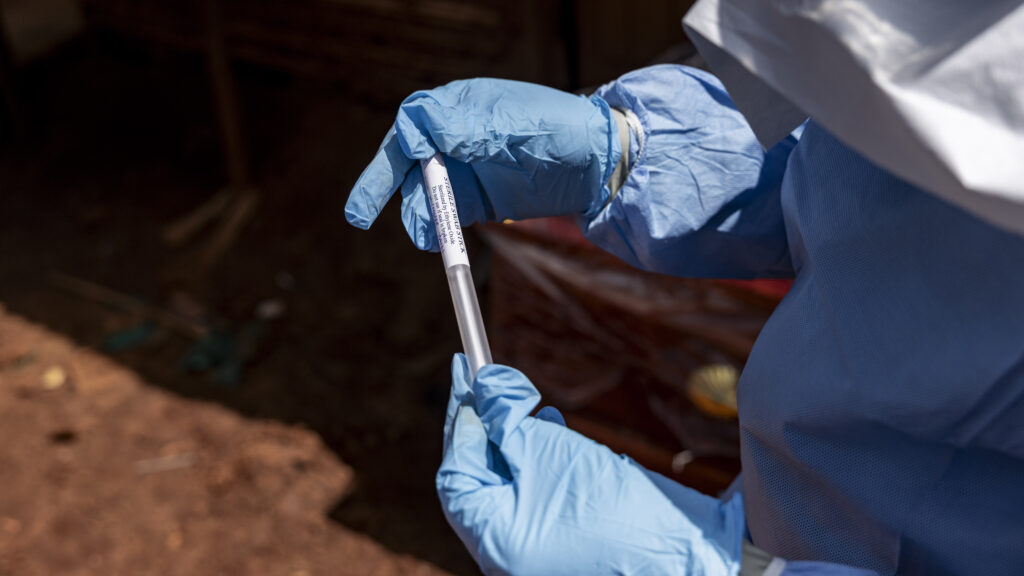
Nigeria has confirmed an imported Ebola case tied to the ongoing outbreak centered in the Democratic Republic of the Congo, becoming the fifth country to identify a related infection, health officials said.
The case is a woman who had recently traveled to Uganda and who became sick on Oct. 7, four days after arriving in Nigeria. She sought care at a private clinic in Abuja on Oct. 11 and her infection was confirmed yesterday. She remains in isolation, and public health officials are at work reconstructing her contact networks and travel history. So far, 44 contacts are being monitored.
In recent weeks, Kenya has documented nine cases tied to an imported infection, as the outbreak — the second largest on record — continues to grow. The outbreak is caused by the Bundibugyo species of Ebola.
“WHO urges all countries in the region to sustain a high level of readiness as the outbreak in the Democratic Republic of the Congo continues to evolve,” the WHO said.
Tracking LGBTQ+ youth mental health
LGBTQ+ youth continue to face high and increasing rates of anxiety, depression, and suicidal ideation, according to two years of survey data published Tuesday in the Trevor Project’s latest report. But there’s a bit of good news: Rates of self-harm and suicide attempts decreased in that same time span. Self-harm dropped from 38% to 34% among survey respondents, and suicide attempts from 9% to 7%.
The nonprofit’s longitudinal study has surveyed nearly 1,700 young LGBTQ+ people every six months since September 2023. Some more key findings include:
- Desire for gender-affirming hormones increased for trans and nonbinary respondents, and surprisingly, so did access. But it’s important to note that many youth aged into adulthood during the study period, and crossing that threshold eliminates many barriers. Over the study period, 73% of those 18 and older were able to access hormones, but just 33% of minors.
- Young people who are subjected to or threatened with conversion therapy had nearly three times higher odds of suicidal ideation than those who aren’t. Conversely, those who report family support had 45% lower odds.
- Past-year houselessness increased from 7% to 13% between 2024 and 2025. Youth who reported unstable housing situations had twice the odds of self-harm and suicidal ideation as those who didn’t.
NIH shouldn’t pull back on replication
Leaders in the Trump administration, including health secretary Robert F. Kennedy Jr. and NIH Director Jay Bhattacharya, have repeatedly emphasized the importance of replication as part of their new gold standard for science. But lately, the concrete plans to fund replication efforts have been dramatically scaled down, in part because of concerns over cost. That’s a bad idea, health policy professor Mark Louie F. Ramos writes in a new First Opinion essay.
“The beauty of replication is that we have considerably more information when conducting a study a second time,” Ramos argues. And even scientists who do everything right can learn something from repeated experimentation, he adds. Read more on why Ramos believes the government should find a way to fund a strong replication infrastructure.
What we’re reading
-
‘An unprecedented case of child abuse,’ New Yorker
-
When Idaho banned abortions, OB-GYNs fled. The doctors who stayed are cracking, New York Times
- Opinion: How knocking on doors can help beat measles — again, STAT
- Vanessa Kerry is the new WHO envoy for health resilience. What’s on her to-do list? NPR
- He’s slashing quality at nursing homes. This state is letting it happen, Boston Globe