

The government of Uganda has gone quiet on an outbreak of the deadly Marburg virus that it reported late last month, with the World Health Organization acknowledging Thursday it has made repeated requests for updated information on the status of the investigation into how it started and how far it may have spread.
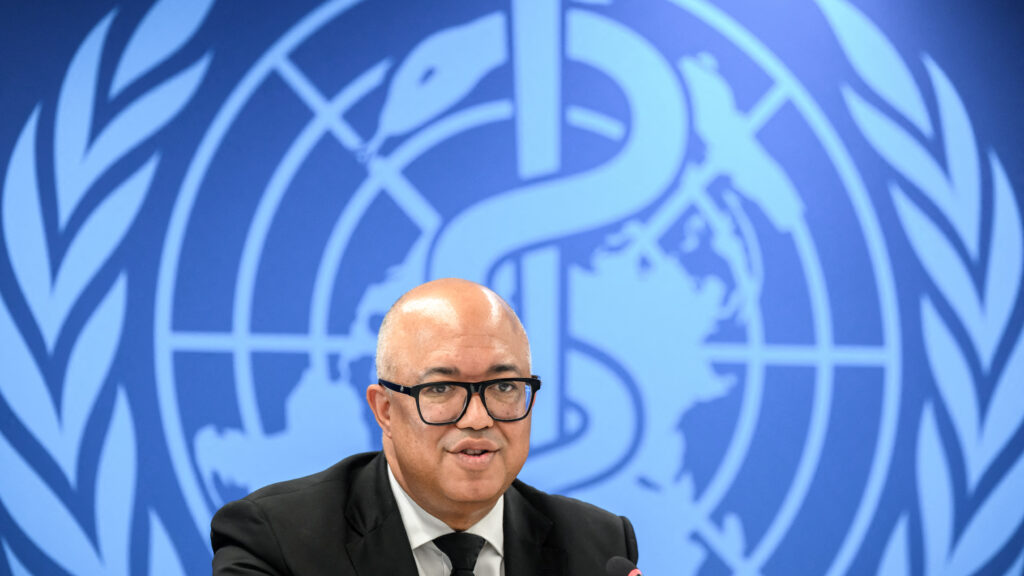
“We’ve sent several additional requests for information, and we’re still waiting to hear from them specifically on the outcomes of the investigation that we know that they’re carrying out,” Chikwe Ihekweazu, executive director of the Geneva-based agency’s Health Emergencies Program, said during a new conference.
Ihekweazu said the WHO has formally filed a request for updates through the International Health Regulations, a treaty that requires countries to inform each other, through the WHO, of disease threats that could cross borders.
“We’ve sent frequent and repeated requests to the government of Uganda, and we’re waiting on them to respond to the IHR request that we’ve sent to them,” he said.
Marburg is a viral hemorrhagic fever caused by a virus that is related to the family of Ebola viruses. It causes disease that is similar to Ebola, and can have an equally high case fatality rate, though Marburg outbreaks have never reached the scale — thousands of cases — of the largest Ebola epidemics. The largest on record was in Angola in 2004-2005, when 252 cases were recorded, 227 of them fatal.
The spread of Marburg in Central Africa at the same time the region is battling a massive Ebola outbreak in the neighboring Democratic Republic of the Congo would make the response to both even more challenging — though Uganda has substantial experience in and success at containing these kinds of diseases.
The Marburg outbreak came to light in late June via unusual channels, when the U.S. embassy in the Ugandan capital, Kampala, issued an alert saying it had been made aware of reports of a Marburg case in Western Uganda. The country’s ministry of health subsequently confirmed to the WHO that it had diagnosed a case in a baby who reportedly lived in a displaced person’s camp.
A well-placed source, who spoke on condition their identity and place of work would not be revealed, told STAT that two cases had actually been confirmed at the start of the outbreak.
It would be very uncommon for an infant to be the first — or the last — case in such an outbreak. People who cared for an infected baby would be at very high risk of contracting the virus.
But to date, no confirmation of the second case or any additional information has been forthcoming from Uganda.
In related news, WHO Director-General Tedros Adhanom Ghebreyesus said that the final case of Ebola that had been diagnosed in Uganda had been released from hospital on Thursday, starting the 42-day countdown to declare the country Ebola free. (An Ebola outbreak is declared over when two full incubation periods of 21 days have elapsed without new cases coming to light.)
In the current outbreak, Uganda has reported 20 cases, either in people from the DRC who entered the country infected, or people they infected once they arrived.
But efforts to contain the outbreak in DRC are faring far less well, with the confirmed case count now approaching 2,100 cases, nearly 800 of whom have died. The outbreak, which was declared underway only two months ago, is the third largest on record and has grown at a faster rate than previous outbreaks.
Though efforts to scale up treatment facilities have made significant gains, people continue to refuse to seek care — a dynamic fuelled by long-standing political instability and violence in the region, a large number of displaced people, and deep-seated distrust within the communities.
Tedros said two-thirds of Ebola deaths so far have occurred in the community among people who never sought care for the illness. That not only substantially lowers their chances of survival, but it perpetuates spread of the virus.
“So all the efforts by all the partners right now, to get ahead of this, is really focused on bringing patients into care as quickly as possible,” Ihekweazu said. “And that’s the most important message that we have.”