

One June afternoon, JD received a phone call from Mount Sinai Health System, informing him that his teenage daughter’s medical records were being requested by the Justice Department, part of a larger criminal probe into the New York medical institution’s program for transgender youth.
JD’s 16-year-old daughter Winter was a patient at Mount Sinai’s youth gender center before switching to a different provider in New York City two years ago. (JD, who is also trans, asked that his family only be identified by their first names to protect their privacy.) But still, her medical records — along with those of thousands of other adolescents across the country — were part of the DOJ request, as the Trump administration leveraged an arsenal of federal agencies to try to restrict gender-affirming care for trans youth.
“Getting a call like that, it was chilling,” JD told JS. “It felt like intimidation.”
Donald Trump and a broad coalition of conservatives have cast transgender identity as both a fiction and a threat — and baselessly claimed that doctors who provide gender-affirming care are carrying out insurance fraud, and only doing so to turn a profit. In Trump’s second term, his administration has exercised unprecedented power to investigate transgender health associations, threatened to pull federal funding from hospitals that provide gender-affirming care to trans minors, and issued a rule to end coverage of such care under the Affordable Care Act.
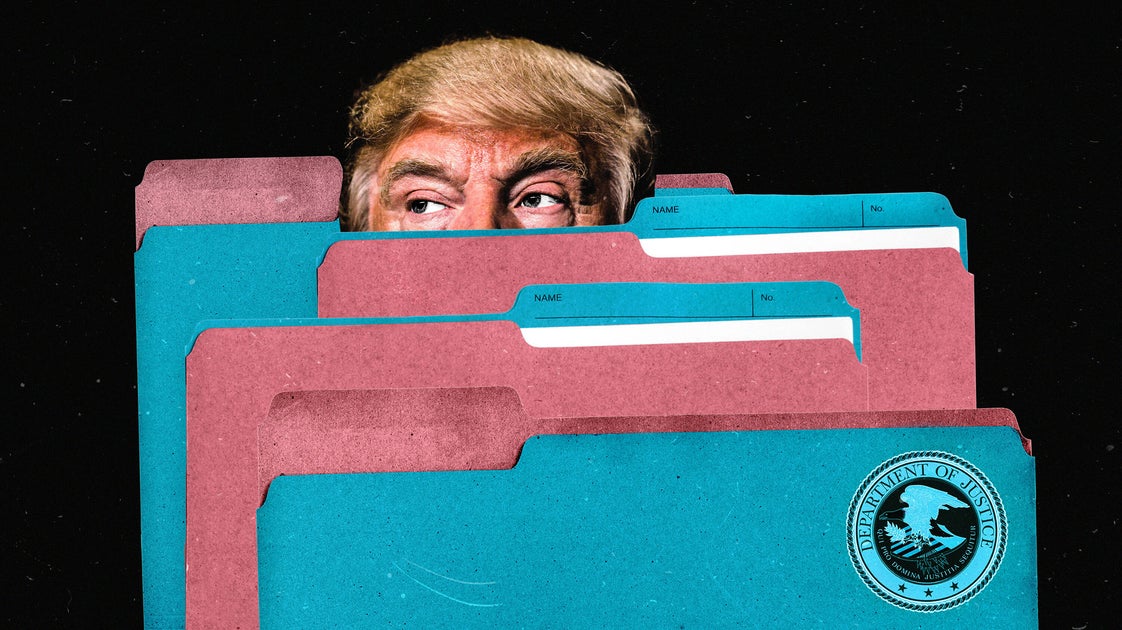
Then, last summer, the DOJ escalated its tactics when it issued more than 20 civil subpoenas to children’s hospitals in an effort to compel them to turn over six years of data about adolescent gender-affirming care. The data demanded includes insurance billing, diagnostic codes, internal communications between doctors, and even information that could identify each minor patient. But in May, after federal courts blocked the DOJ’s subpoenas, the agency took things one step further: sending criminal subpoenas to hospitals for the same type of information — only now with the threat of criminal charges over their care for trans kids.
The subpoenas have created a legal mess for healthcare providers and an existential crisis for the patients that rely on them.
Dozens of hospitals, including Mount Sinai, have stopped providing care for transgender youth, even though many are protected by state laws. Trans youth and their families, meanwhile, have been forced to find other providers or forgo care altogether, and weather the uncertainty of government intrusion into their private medical information.
“This is not just about trans people getting healthcare. It’s about patient privacy and your right to a private therapeutic experience with your provider,” said Crystal Beale, a board-certified family medicine doctor and the founder of Queer Doc, the only publicly identified telehealth provider of gender-affirming care to receive a subpoena.
Beale emphasized that the subpoenas have created a culture of fear for both trans youth and doctors.
“One day your job is legal, and the next day it is a felony,” they said.
Jennifer Levi, the senior director of transgender and queer rights at GLBTQ Legal Advocates & Defenders, sees this collection of cases as a broader “test case” for the justice department for how much power it can wield to probe not only hospitals and medical associations, but anyone it views as a political opponent.
“The effects of what is allowed to happen here has such broad implications far beyond transgender healthcare,” Levi said. “The same tools that the DOJ is using in this context can be used for reproductive care, mental health treatment, addiction treatment, HIV status, political dissidence and therapy records. It’s so vast in terms of the communities that are potentially impacted by the outcome in these cases.”
BRYAN DOZIER via Getty Images
A Culture Of Fear
Two hospitals in New York City, Mount Sinai and New York University Langone Hospitals, and one in California, Lucile Packard Children’s Hospital at Stanford, have received criminal subpoenas, according to legal filings and disclosures from the hospitals. Both states have what are called “shield” laws, which protect healthcare providers against prosecution simply for providing gender-affirming care. In each instance, the criminal subpoena was issued from the office of a sympathetic federal judge in Texas thousands of miles away: North Texas Chief District Judge Reed O’Connor, who has a history of ruling against LGBTQ+ inclusive policies.
Federal judges have largely criticized the DOJ for not clearly articulating the merits, or legitimate legal reasons, for these wide-sweeping subpoenas. At least eight federal district courts have blocked the DOJ’s efforts to obtain sensitive medical information through civil subpoenas — including minor patients’ diagnoses and prescriptions, insurance claims, and communications between healthcare providers.
U.S. District Judge Katherine Polk Failla blocked the criminal subpoena into NYU Langone in June, protecting all minor patients receiving gender-affirming care in New York while the case continues. Judge Failla chided the DOJ’s attempts to judge-shop the subpoena to Judge O’Connor for a more favorable outcome, giving him “some undefined role in the…criminal investigation.” The government’s behavior, she said, “rises to the level of the most egregious official conduct.”
Failla also expressed concern that the disclosure of records could be used to target patients’ parents or providers.
“I’m hard pressed for reasons to rely on the government’s representations that even the patients would not be prosecuted, especially given the inability to comment on any aspect of the alleged investigation or the subpoena,” she said, according to a transcript of the hearing.
But last week, the DOJ appealed Failla’s ruling to the Second Circuit.
“When providers misrepresent the truth to children, parents, insurers, or federal health care programs to promote or obtain payment for interventions that can permanently harm children, that is not care — it is unlawful deception,” Kiersten Pels, a spokesperson for the Justice Department, told JS regarding the subpoenas.
She said the DOJ will continue “using every available tool to protect children, parents, taxpayers, and the integrity of our healthcare system.”
“Even if in the end everyone won every single case, that fear and vulnerability is still going to be felt.”
– Adrien Leavitt, ACLU
Even though federal courts have, so far, largely protected patient records from being handed over to the government, Alex Sheldon, the executive director of GLMA: Health Professionals Advancing LGBTQ Equity, said the DOJ’s strategy amounts to an “extralegal intimidation” campaign that erodes trust between patients and hospitals.
“The subpoena itself has become a form of punishment even if no wrongdoing is found. Institutions are spending an enormous amount of time, money, and attention responding to these instead of caring for patients,” Sheldon said. “The goal is to make every provider wonder whether or not they’re going to be next.”
So far two hospitals have reached settlements with the DOJ. Texas Children’s Hospital announced in May it will establish the nation’s first clinic for detransitioners, or people who sought gender-affirming care and then wanted to stop or reverse parts of it, and will pay $10 million in penalties over allegations of false insurance billing. Ohio’s Cleveland Clinic agreed to pay $308,000 to resolve similar allegations and pledged to halt transgender care for minors for 20 years.
Even those who have pushed back have not always won in court. Rhode Island Hospital, despite challenging a civil subpoena out of Judge O’Connor’s office, was compelled to release medical records to his court in Texas in May of this year.
But it is difficult to know if any other institutions settled or released patient records without a paper trail. Grand jury proceedings, which issue the criminal subpoenas, are typically held in secret.
“We know that some other [hospital] entities negotiated subpoenas,” Adrien Leavitt, an attorney at the American Civil Liberties Union in Washington, told JS. “We think some entities produced documents.”
In The Dark
It is unclear how exactly the DOJ crafted the list of providers targeted for adolescent gender-affirming care. But buried in testimony from a lawsuit between the DOJ and the Children’s Hospital of Colorado over a civil subpoena, a DOJ employee named Lisa Hsiao left one small clue. In her statement, Hsiao said the DOJ’s evidence for the supposed fraud relied on a combination of whistleblower testimony, recordings from national healthcare conferences, and a database of hospitals with programs for trans youth released by right-wing organization Do No Harm in 2024.
Do No Harm, a lobbying group founded in 2022, pushes anti-LGBTQ+ legislation and initiates lawsuits against DEI practices in medical schools. Hsiao, the acting director of Enforcement and Affirmative Litigation Branch in the DOJ, specifically cited Do No Harms’ database of children’s hospitals that offer gender-affirming care in her statement within a lawsuit. By aggregating diagnostic codes and insurance data, Do No Harm claims to already know the number of patients that received hormone therapy or puberty blockers, and how much providers have billed insurance companies at more than a dozen hospitals across the country.
So far, at least 13 hospitals that have received either grand jury or civil subpoenas from the DOJ also appear on Do No Harm’s list of providers, according to an analysis from JS.
The group has strong ties to both the Trump administration and right-wing money networks. Until a few months ago, Scott Centorino, Do No Harm’s former vice president of policy and programs, was an employee in the Trump administration, working as a special assistant to the White House on domestic policy, according to financial disclosures. Last year the group received $75,000 from The Heritage Foundation, the right-wing policy organization that drafted Project 2025. Do No Harm has also been supported by influential conservative donor Leonard Leo, who has helped Trump shape the current conservative majority on the Supreme Court. Over the last two years, the group’s budget has ballooned from $2 million to $10 million.
Stanley Goldfarb, the chairman of Do No Harm, told JS in a statement that the database exists to help policymakers and to “quantify the magnitude of the pediatric gender epidemic.”
“Do No Harm and Do No Harm Action are proud to be the leading resources for this administration and lawmakers at the state and federal level who are interested in evidence-based research that supports efforts to eliminate identity politics from the study and practice of medicine,” Goldfarb said through a spokesperson from CRC Advisors, Leo’s public relations and advocacy firm. Do No Harm Action is the organization’s lobbying arm.
Even if federal judges continue to strike down these subpoenas, Leavitt worries about the long-term implications for trans young people.
“Regardless of the outcome in all of this litigation, even if in the end everyone won every single case, that fear and vulnerability is still going to be felt,” Leavitt said. “That impacts young people in a really profound way.”
For JD and Winter, the mere news of the subpoena at Mount Sinai was enough to reaffirm their difficult choice to leave New York City — and the United States. In early July, the family left behind a community of friends and family, an elderly cat and the luxury of air conditioning, and moved to the Netherlands. JD’s grandparents, Dutch Jews, had fled the country during Nazi occupation in the 1940s.
Winter is currently waiting to access the Dutch medical system so she can continue routine hormone therapy without fear of retaliation. In the meantime, the family has stockpiled her medication.
Winter finished high school classes early and plans to study biology at a Dutch university. She called moving “upsetting,” but is excited for a change of scenery. And in some ways, she isn’t surprised this is the path she had to take — after all, Trump has been a political figure since she was 5 years old.
“It’s been clear since before Trump got elected in his second term that he intended to go after trans people,” Winter said. “I am frankly surprised it took him this long.”