

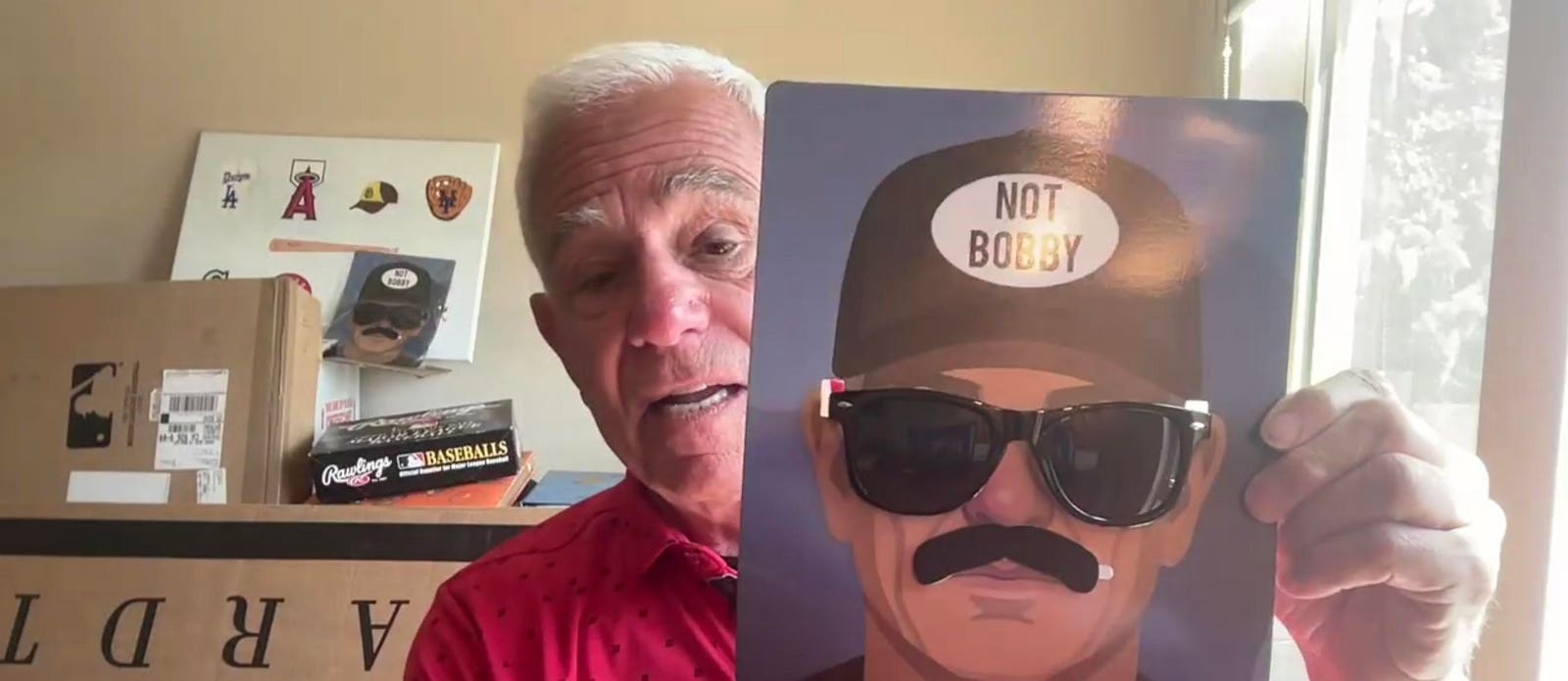
Baseball’s Bobby Valentine is using his notoriety to promote public health.
Sachin Jain
When Bobby Valentine and I spoke this week, I expected to hear a former baseball manager talk about heart disease.
Instead, I heard a citizen talking about responsibility.
Three years ago, Valentine’s brother walked outside after a Connecticut snowstorm to start his snowblower. A Ring camera captured him collapsing into the snow. He never got up.
Valentine believes his brother’s death might have been prevented with something remarkably ordinary: a routine medical evaluation.
That loss has transformed him into an advocate for cardiovascular health. His message is refreshingly uncomplicated. Know your numbers. See your physician. Exercise. Eat better. Don’t wait until symptoms force your hand.
It struck me that this is exactly the kind of public service we should want from our athletes and celebrities.
For years, we have debated whether sports figures should “stick to sports.” I have always found that to be the wrong question. The better question is: What obligations accompany extraordinary public influence?
The answer, I believe, is that influence creates responsibility.
Athletes and actors occupy a unique place in American life. They enter homes and conversations in ways that physicians, scientists, and public health leaders rarely do. Millions of people who cannot name their governor or their local hospital’s CEO can immediately tell you who manages their favorite baseball team or quarterbacks their favorite football team.
That attention is valuable. The question is how it is used.
Some of the most important advances in public awareness have come because public figures were willing to become vulnerable. Magic Johnson changed how America understood HIV. Katie Couric transformed public understanding of colon cancer screening. Michael J. Fox accelerated research and awareness of Parkinson’s disease. Joe Torre’s openness about prostate cancer—and his family’s experience with cardiovascular disease—encouraged countless men to seek preventive care they otherwise might have delayed.
These stories matter because they accomplish something statistics alone rarely can. They transform disease from an abstraction into a human story.
Healthcare desperately needs more storytellers.
The challenge today is that celebrity influence has become both more powerful and more dangerous. Social media has given virtually anyone the ability to shape public opinion on health. Sometimes that influence is used responsibly. Too often it is not.
During our conversation, I asked Valentine about this tension. His answer was remarkably simple.
“If you’re going to get the attention of those who want to see what you’re doing,” he told me, “let them know that you give a darn about them.”
That may be the most important qualification for health advocacy. Not a medical degree. Not scientific expertise. Genuine concern for other people.
Of course, concern alone isn’t enough. Celebrity does not confer expertise. Public figures have an obligation to stay in their lane, partner with credible experts, and resist the temptation to amplify sensational claims simply because they attract attention. The loudest health advice is not always the best health advice.
But the solution to misinformation isn’t for responsible voices to become silent. It is for more responsible voices to speak.
One moment from our conversation particularly stayed with me. We discussed baseball’s steroid era and the uncomfortable reality that many people suspected something was wrong long before the full truth emerged. Valentine acknowledged that many in leadership—including himself—did not fully appreciate what was happening, while others likely knew more than they admitted.
Healthcare has lived through similar moments. So has society more broadly. Information is often incomplete. Incentives become distorted. Silence becomes easier than speaking up.
That is precisely why trusted public figures matter.
When an admired athlete says, “I ignored my cholesterol until it became personal,” someone listening schedules an appointment. When a cancer survivor talks openly about screening, someone finally gets tested. When a coach shares a story about mental health, someone asks for help.
These are not small effects. They are public health interventions.
As physicians, we often overestimate the influence of medical journals and underestimate the influence of people whom the public already knows and trusts. Scientific evidence changes practice. Human stories change behavior.
Those two forces should work together—not compete with one another.
Years ago, I wrote that athletes and the journalists who cover them make valuable assists to physicians. I believe that even more strongly today. In an era when trust is fragmented and misinformation travels faster than evidence, we need every credible messenger we can find.
The greatest contribution an athlete can make may never appear in a box score.
Sometimes it is simply convincing one person to schedule the doctor’s appointment that saves a life.