

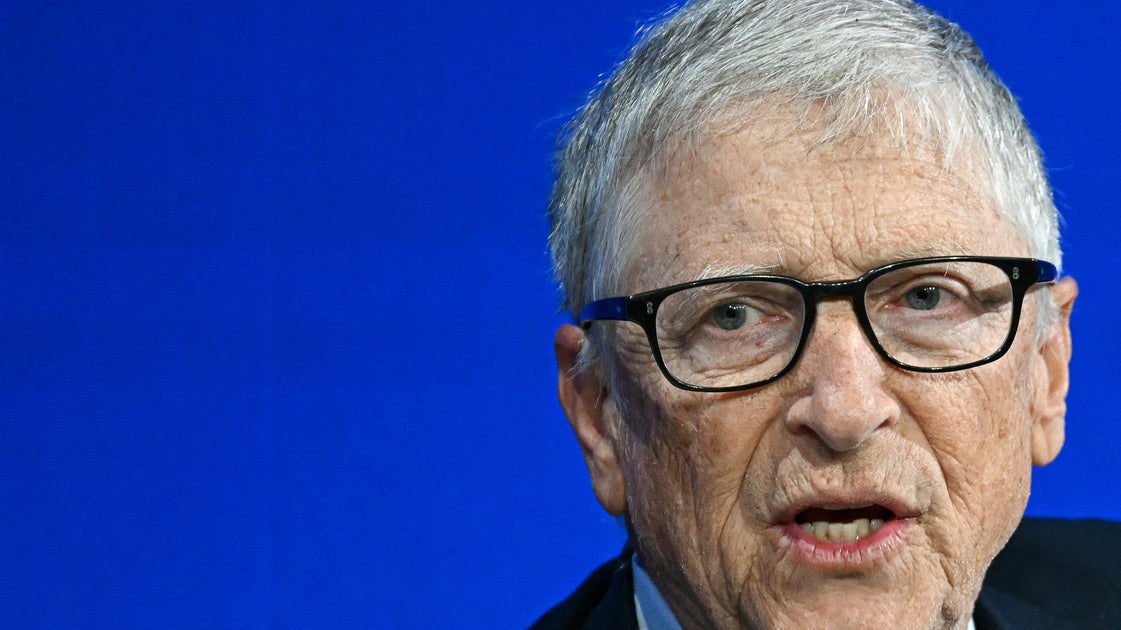
Bill Gates has issued a stunning warning about the rise of artificial intelligence, arguing the world is “not preparing” for the massive upheaval ahead and that even the best-case transition will be “one of the most turbulent times in human history.”
On Wednesday, the Microsoft co-founder published a lengthy essay on his personal website, outlining how AI is “continuing to improve at a mind-blowing rate.”
He lays out a future where many jobs disappear forever, criminals are empowered by the technology, and the development of children is stunted.
But the billionaire also believes AI can help tackle “the world’s toughest technical challenges,” and proposes solutions such as preserving certain jobs for humans and reforming the tax system.
“In terms of equity, AI will either be the greatest equalizer ever invented, or the worst source of injustice. The challenge is monumental,” Gates wrote. “Even under the best circumstances, the transition to this new AI era will be one of the most turbulent times in human history.”
He added that responding to the questions posed by AI “should be the world’s top priority.”
His clarion call is in stark contrast to a warning in a 2023 essay in which he said the AI “risks are real, but I am optimistic that they can be managed.”
But his position appears to have shifted markedly in just three years. In one of a series of interviews with the tech leader published Wednesday, he told Semafor: “I am in a state of shock that I’m sort of the first one saying, ‘This is crazy. This is insane.’”
FABRICE COFFRINI via Getty Images
In his latest essay, Gates said he believes the pace of change will be far quicker than previous shifts in technology, hitting industries “over the course of a decade rather than a few generations.”
Gates paid particular attention to the seismic shift in work, warning “blue-collar jobs will be affected as well,” despite claims that manual labor is AI-proof.
“I think ‘smart’ robots will begin to compete with people on some physical tasks — in the construction and hospitality industries, for example — by the end of the decade,” he wrote.
He is “especially worried” about young people and said now is the time to act.
“Waiting until people are already displaced or underemployed will be too late,” Gates wrote.
On the nefarious uses of AI, Gates claimed that “even criminals with very limited skills will be able to target victims at every scale,” and “the smartest cybersecurity experts I know are scared about the next few years.”
Another of his fears is how AI could “stunt our kids’ development and replace human relationships.”
But he was not a complete doomsayer, highlighting how AI will be vital to “providing reliable clean energy for everyone, combating climate change, growing enough food, eradicating diseases, and more.”
Gates offered three ways to harness the benefits of AI, including “a new global organization for AI” akin to how international bodies oversee nuclear weapons and aviation.
He also said he believes certain jobs should be “set aside” for people, calling this “human reserved” work.
His closing suggestion was higher taxes on companies using robots, as the current tax system “nudges you toward replacing people with machines.”