

STAT is co-publishing this article by KFF Health News.
Every state is receiving opioid settlement payouts from companies accused of flooding the nation with prescription painkillers and fueling overdose deaths. But only one state is directing 20% of those payouts to sheriffs — the largest carve-out for law enforcement nationwide.
In Louisiana, sheriffs are elected, do not serve at the pleasure of another local official, and have independent budgets. They’re also not required to proactively report to the public or another authority how they spend billions in opioid settlement cash.
Short of filing public records requests or waiting for official audits, that has made it difficult for the average person to track the windfall. Many consider the dollars to be “blood money” and believe the spirit of the settlements is to spend it all on abating the addiction crisis.
KFF Health News worked with three Louisiana news outlets — The Current, Gulf States Newsroom, and Verite News — to track those dollars. The newsrooms contacted all 64 Louisiana sheriffs over five months, often filing public records requests, to produce the first detailed accounting of millions spent.
The findings include:
- Thirty-eight sheriffs reported spending more than $8.1 million total. Much of it went to crime-fighting equipment, such as surveillance cameras and drug detection products, though smaller amounts funded mobile apps, addiction treatment in jails, and educational programs for youth.
- $5.4 million, about 66% of reported spending, was deemed inappropriate by a three-person review panel. The panel, assembled by KFF Health News and its partners, included a Louisiana resident in recovery who lost his son to a fentanyl overdose, an addiction medicine doctor, and a public health policy analyst who has been tracking settlement dollars since 2022. They judged the expenditures using their professional and personal expertise. Expenditures the panel disapproved of included salaries and overtime pay for homicide detectives and officers conducting jail shakedowns to find contraband.
- $4.7 million, nearly 60% of reported spending, went to items or services that other states say should not be purchased with opioid cash. Six states have lists of “unallowable” expenditures, such as technology to extract data from cellphones and automated external defibrillators, which are rarely needed in opioid overdoses. Although Louisiana does not have its own “unallowable” list, the state’s Opioid Abatement Task Force — a five-member body that advises sheriffs and parishes but does not control the money — said it has shared the guidance from other states.
- Nine sheriffs stood out for promising uses: All of their expenditures, totaling nearly $1.8 million, were deemed appropriate by the review panel and allowable in other states. These included providing addiction treatment in jail, training officers to respond to overdoses, and increasing public awareness of addiction resources.
- Twenty sheriffs did not provide their expenditures, leaving roughly $10.7 million that those offices have been allotted hidden from public view. The Jefferson Parish Sheriff’s Office, which covers an area just outside New Orleans and was allotted the highest amount — nearly $4 million through 2025 — did not respond to more than a dozen calls and emails.
Nationwide, debates over law enforcement’s role with opioid settlement money have been underway since the funds began flowing significantly in 2022 and have continued as the pool of money has grown. Purdue Pharma, maker of OxyContin, finalized its $7.4 billion bankruptcy this year, and various settlements are set to pay out for an additional decade-plus.
Since the earliest days, these dollars have been viewed across government agencies and the private sector as a pot of gold for which many are vying.
Law enforcement agencies are part of this scrum. They say seizing drugs and arresting dealers save lives, but that costs money and the addiction crisis has burdened their budgets. However, many recovery advocates staunchly oppose any opioid cash flowing to what they see as the failed war on drugs.
Since there are few guardrails on how the money is spent, decisions often come down to how local politicians and residents see addiction and what type of approach they believe will be effective in combating it.
Louisiana provides a natural experiment to see which priorities prevail when money is handed directly to sheriffs.
The state’s agreement with parishes and sheriffs receiving settlement cash contains broad categories for allowable spending, including “law enforcement expenditures relating to the opioid epidemic.”
But even if the sheriffs’ spending is legal, that doesn’t mean it’s appropriate or effective, addiction and public health experts say.
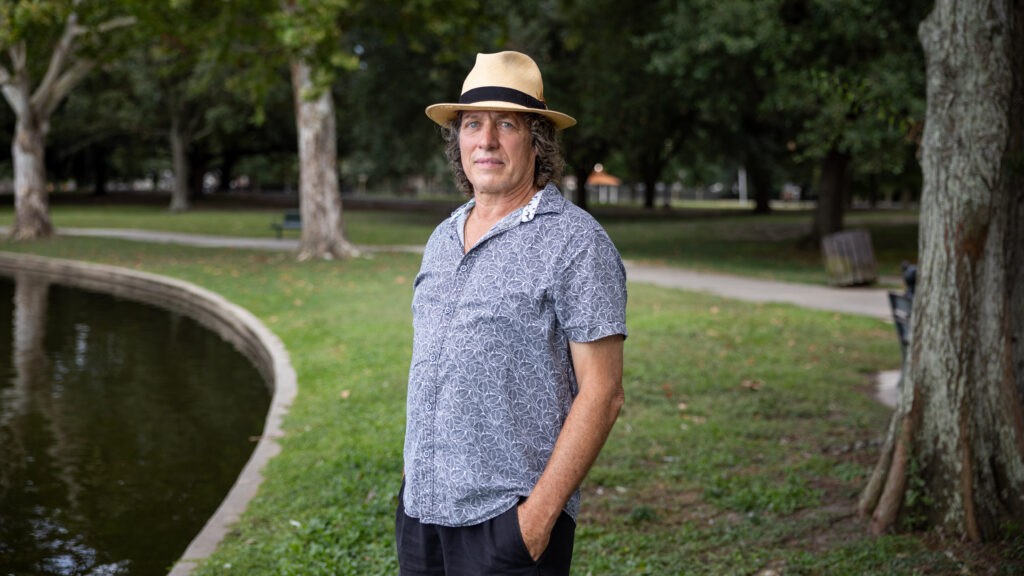
“What’s happening here is they have a lot of money, and they want to distribute it to all the wrong places,” said Danny Bolner Jr., a Jefferson Parish resident who has been in recovery from addiction for more than two decades and lost his 28-year-old son to a fentanyl overdose in 2016. On the panel that reviewed expenditures, Bolner represented the view of families who have lost loved ones to the crisis.
The purchase of drones and vehicles struck a nerve for him. He’d prefer for opioid cash to support programs that educate youth about healthy ways to process emotions, provide job training to people in recovery, and distribute overdose reversal medications.
“This money is what we have to save lives,” he said. If sheriffs use it in other ways, the finite pot “is going to be gone and then they won’t have nothing to help.”
A safe, a scanner, and surveillance cameras
For Tricia Christensen, a public health policy analyst and national opioid settlement expert who was a member of the review panel, determining if expenditures fit the spirit of the settlements often centered on whether they facilitated arrests or prevented overdoses.
“The impetus of this opioid settlement money is to spend on innovative ways to not let this happen again,” she said, referring to the overdose crisis that has claimed more than 1 million lives since 2000. She said sheriffs should be asking, “How could we use this to reinvest in the community, not just build up our office?”
Many of the sheriffs’ equipment purchases didn’t meet her bar.
For example, the East Baton Rouge Sheriff’s Office bought a safe to store evidence from opioid investigations and a scanner for their traffic division to identify narcotics in hidden compartments. The Terrebonne Parish Sheriff’s Office spent $465,000 on Flock cameras, which are automated license plate readers that capture data about passing vehicles and share them with law enforcement agencies nationwide. The Bossier Parish Sheriff’s Office purchased 130 body cameras and 50 dash cameras.
Sheriffs already receive taxpayer dollars and federal grants to buy law enforcement tools, Christensen said. Opioid cash, which is finite and has a specific purpose, should not be used for that, she and the other reviewers said. In fact, some states don’t allow it.
But taxpayer money may not cover everything sheriffs need, said Kevin Cobb, executive director of the Louisiana Sheriffs’ Association. “Our budgets are overloaded,” he said.
Complex investigations to dismantle drug trafficking syndicates can require advanced equipment, Casey Rayborn Hicks, a spokesperson for the East Baton Rouge Sheriff’s Office, wrote in a statement.
“While treatment and recovery services are indispensable components of addressing opioid addiction, they address the consequences of addiction after these drugs have already reached our community,” she wrote. “Law enforcement has a different, but equally essential, responsibility: preventing those deadly drugs from reaching potential victims in the first place.”
First Lt. Blake Tabor, a spokesperson for the Terrebonne sheriff’s office, similarly wrote, “Our role as a law enforcement agency is primarily focused on disrupting the criminal activity that fuels addiction in our community.” That effort complements other entities’ work in prevention, treatment, and recovery, he added.
The Bossier Parish Sheriff’s Office declined to comment.
Where public health meets public safety
Not all sheriffs spent the money on enforcement.
Acadia Parish Sheriff K.P. Gibson directed all his settlement cash to provide treatment in jail. He said he hopes to break cycles of addiction and crime.
“I want people back into society, being productive,” he said.
Research shows providing medications for opioid use disorder behind bars reduces recidivism and overdose deaths.
In St. Martin Parish, settlement funds helped launch a special team of officers that connects people with substance use disorders or related mental illness to treatment, said Chester Cedars, chief legal counsel for its sheriff’s office. Officers also try to coordinate support services for family members and assist with questions around paying for care.
“We’re not clinicians,” Cedars said, but we “serve as a broker” between people who need services and those who provide them.
Stephen Loyd, an addiction medicine doctor and the West Virginia drug czar, who was the third member of the review panel, said he loved the comprehensive nature of the program. Addiction “is a family issue,” he said. “Every time that phone rings, it’s a potential family crisis.”
It’s not a coincidence that these parishes earned top marks from the reviewers. Cedars is the former chair of the Louisiana Opioid Abatement Task Force, and Gibson is the current chair. That’s the body meant to guide others on priority uses of settlement cash.
Cedars was clear that the St. Martin sheriff’s office was not using “one penny for any enforcement activity,” because that’s not what the settlement “intended to accomplish.”
Gibson was more hesitant, saying the legal guidelines are broad and “I’m not here to criticize anybody.”
He has advised about a dozen sheriffs who have reached out with questions, but he knows they’re not required to heed his guidance.
A 2025 report from the Louisiana Legislative Auditor found that the task force has no teeth to enforce its recommendations.
If people want stronger guardrails on the opioid cash, state lawmakers need to enact new rules, Gibson said.
Stepping up oversight
The Louisiana state legislature passed a resolution in May calling for the legislative auditor to review how all parishes and sheriffs are handling their opioid settlement money and report to lawmakers prior to the 2027 legislative session.
State Sen. Brach Myers, a Republican who co-wrote the resolution, said the goal is to shed light on where dollars are flowing, if jurisdictions are spending them at all, and which funded programs are effective.
With that information, Myers said, he and others could “absolutely” introduce bills “to tighten up how funding is spent.”
Meanwhile, the Louisiana Opioid Abatement Task Force is trying to strengthen its oversight.
Curtis Nelson is executive counsel for the Louisiana Opioid Abatement Administration Corporation, a nonprofit that supports the task force. He said the body is seeking quotes from accountants to conduct ongoing forensic audits of parishes and sheriffs. The goal is to audit 10 to 15 entities annually, starting with those receiving the most money. If the audits turn up misuse, the task force could withhold future payments from those parishes or sheriffs, Nelson said.
The task force is also exploring creating its own unallowable list, like those in other states, Nelson said.
Louisiana Gov. Jeff Landry and Attorney General Liz Murrill did not respond to questions about whether they’d support an unallowable list or take other actions to address opioid settlement spending.
But many advocates are hopeful that an unallowable list could curb spending they found concerning.
“You’re keeping them on the track when you tell them what they can’t use it for,” said Bolner, the Jefferson Parish resident who lost his son to overdose and is raising his son’s daughter.
While he awaits greater oversight for sheriffs, Bolner plans to continue the work he’s been doing for years: distributing overdose reversal medications at schools, hospitals, and bars; participating in grief support groups with other families; and showing up at community events to raise awareness about addiction. He said he’ll keep speaking with sheriffs and parishes about what he considers the best use of settlement money.
“If I save one life, it’s accomplished,” he said.
Methodology
Reporters from KFF Health News, The Current, Gulf States Newsroom, and Verite News worked together to contact all 64 sheriffs’ offices in Louisiana and ask how they’d spent opioid settlement funds. The outreach involved dozens of emails and phone calls from March to July.
If a sheriff’s office did not respond or did not provide specific dollar amounts spent on programs or services, it was labeled “Did not provide expenditures.” All other responses were summarized in a data table.
The amount of settlement money each sheriff’s office received through 2025 was obtained from the Louisiana Opioid Abatement Task Force’s public spreadsheet. Allocations for years 1 through 5 were summed, representing 2021 through 2025.
In the few cases in which a sheriff’s office reported spending more money than the task force said it had been allocated, it was often because the sheriff’s office had combined its share of opioid settlement dollars with the share received by the parish government or another funding source. Some sheriffs may have also reported money spent from their 2026 allocation.
Once all the data was collected, the reporters used two methods to analyze the results.
For the first, the reporters created an unduplicated list of expenditures and de-identified them by removing the sheriffs’ offices names. That list was shared with three reviewers: Tricia Christensen, a public health policy expert who has been tracking opioid settlement spending since 2022; Stephen Loyd, an addiction medicine doctor and a person in recovery who previously served as chair of Tennessee’s Opioid Abatement Council and is currently West Virginia’s drug czar; and Danny Bolner Jr., a person in recovery from addiction who lost his son to a fentanyl overdose and is raising his son’s daughter in Jefferson Parish, Louisiana.
Each reviewer voted on each expenditure description as an appropriate or inappropriate use of opioid settlement money. The majority vote determined the final designation.
Reporters calculated how much of the money spent by each sheriff’s office went to expenditures the review panel deemed inappropriate. This value was divided by the total spent to determine the percentage of expenditures deemed inappropriate by the panel.
The second approach to analyzing the sheriffs’ spending was as follows: Six states (California, Indiana, Kansas, Michigan, South Carolina, and Virginia) have created lists of items and services that they say opioid settlement funds should not be spent on, often known as “unallowable lists.” KFF Health News calculated how much money spent by each Louisiana sheriff’s office went to expenditures on one of these lists. This value was divided by the total spent to determine the percentage of expenditures that would have been unallowable or not recommended in one or more of these states.
The Current’s Alena Maschke, Gulf States Newsroom’s Drew Hawkins, and Verite News’ Katie Jane Fernelius contributed to the database featured in this article.
Aneri Pattani is a senior correspondent at KFF Health News, a national newsroom that produces in-depth journalism about health issues. KFF Health News is one of the core operating programs at KFF — the independent source for health policy research, polling, and journalism.