

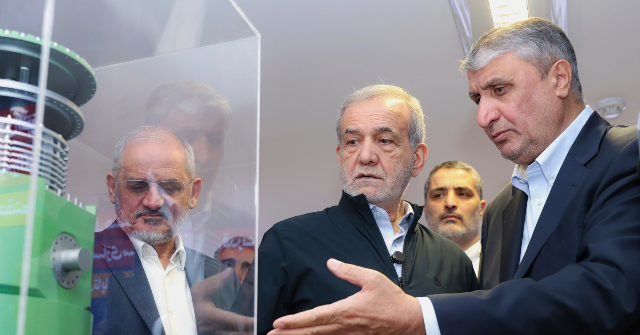
Mohammad Eslami, head of the Atomic Energy Organization of Iran (AEOI), boasted on Tuesday that Iran has “reached the level of developed countries in nuclear science and technology.”
Eslami praised the “scientific talent, creativity, and managerial capacity” that made this putative leap forward in nuclear technology possible, and said attacks by Israel and the United States would not be able to halt Iran’s relentless nuclear progress.
In fact, Eslami claimed the war that began in February only made Iran’s nuclear program stronger because foreign suppliers were unwilling or unable to help repair the damage inflicted by Israeli and U.S. airstrikes, so the AEOI was forced to “develop and manufacture domestic alternatives.”
The AEOI chief repeated the Iranian regime’s standard line that it seeks nuclear power only for peaceful purposes, including “improving lives, strengthening national capabilities, and advancing development.”
At the same time Eslami was boasting of Iran’s amazing strides in ostensibly peaceful nuclear technology, former Iranian foreign minister and vice president Mohammad Javad Zarif was getting in trouble with regime “hardliners” by wondering if obtaining nuclear weapons — the goal Iran keeps insisting it does not have — was worth all of the trouble.
“If anyone thinks nuclear weapons can provide deterrence, just look at Israel,” Zarif said.
This seems like an odd point to make on many levels, not least of which is that no one thinks nuclear weapons are a deterrent against terrorists. The entire point of terrorism is to strike from behind civilian populations and launch attacks that would be unthinkable for a legitimate nation-state.
The Iranian hardliners were not so nuanced in their criticisms of Zarif, who also expressed some reservations about Iran’s policy of developing terrorist proxies across the Middle East, to give Tehran leverage against other nations. Regime loyalists all but accused Zarif of treason, and took the occasion to renew their criticism of current Foreign Minister Abbas Araghchi, whom they have blasted for being too eager to negotiate with the United States.
Thirty-five Iranian lawmakers have reportedly signed a motion to impeach Araghchi for his “recent mistake in New York,” in which he met with American officials “without authorization from the Supreme Leader.” Araghchi met with U.S. Special Envoy Steve Witkoff on the sidelines of the U.N. General Assembly in September to discuss reopening the Strait of Hormuz.