

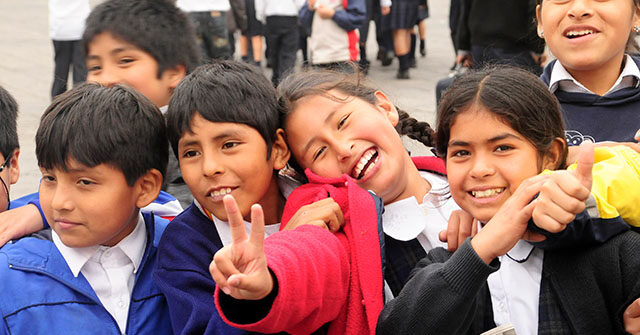
Conservative President of Peru Keiko Fujimori on Monday announced sweeping changes to the nation’s school system seeking to restore order and discipline in the nation’s classrooms.
The policies, known as “Guidelines for School Discipline Management,” reintroduce the possibility to sanction students with disciplinary actions and expel those who commit serious and repeated offenses for the first time years. Fujimori warned that the “most misbehaving” students will not be allowed in classrooms. According to the Peruvian Education Ministry, the guidelines will apply to all public and private schools in Peru.
Per the Peruvian state-owned newspaper El Peruano, President Fujimori made the announcement during an official event at the Felipe Santiago Estenos school in Chaclacayo. Fujimori explained that violence among students, attacks against school community members, and behaviors that endanger the wellbeing of students will not be tolerated and require a “firm, timely, and responsible response.”
“That is why these guidelines provide for proportional sanctions and reprimands based on a gradual principle,” Fujimori said.
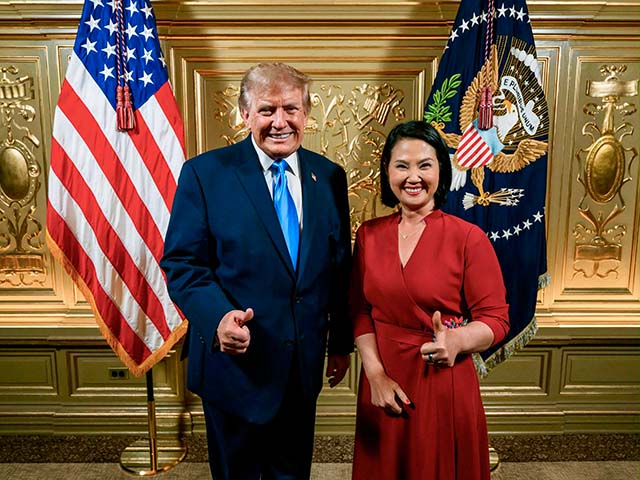
U.S President Donald Trump poses with Peru’s President Keiko Fujimori at the United Nations General Assembly in New York in September 2026. (@KeikoFujimori)
“We’re not going to let a few misbehaving students disrupt the peace and quiet of the vast majority of students who come here to learn and get an education,” she added. “That’s why we’re once again reinstating permanent suspensions. The worst offenders won’t be in the classrooms.”
Fujimori stressed that her administration will not tolerate bullying, violence, or sexual harassment in schools, urging students to denounce any and all cases before their schools’ authorities. The conservative president warned that offenders will be put at the disposal of the competent authorities.
“I tell the students: Tell your teachers, notify the principal, because that individual will immediately be turned over to the Public Prosecutor’s Office and the National Police,” Fujimori said. “What will not happen is that we remain silent or indifferent. And what cannot happen is that the victim ends up leaving school while the aggressor stays here, safe and sound.”
The idea of the measures, Fujimori said, is not just to sanction misbehaving students, but to apply said punitive measures in a gradual way to give the student a chance to correct his or her course while ensuring a good education for all students. The new guidelines reinstate Peruvian teachers’ ability to add notes of conduct on offending students’ records. Students will first receive a verbal reprimand or warning, with subsequent sanctions increasing as required, leading to the suspension of the student from school.
“Teachers deserve respect. As the [school] principal told me: they couldn’t discipline students. they were sidelined,” Fujimori said. “With these new regulations, they’ll once again be able to correct, guide, and help students, and assign a conduct note.”
Education Minister José Antonio Chang reportedly explained during the event that the system will contemplate a “three-strike” suspension rule. A student that accumulates three separate suspensions during a given school year may be subject to his or her definitive expulsion from the school.
Per El Peruano, Fujimori, speaking not just as the president of the Republic but also as a mother, stressed upon students the importance of maintaining proper hygiene and the good presentation of students, noting that these habits are part of their preparation for life. Fujimori reminded those present that her administration recently forbade the use of cellphones and other electronic devices in schools without the explicit authorization of a teacher.
Fujimori detailed that, as part of the new rules, students are forbidden from wearing makeup or dying their hair, and boys must abstain from sporting long hair. The conservative president said the rules might seem “strict” for the students, but emphasized, “believe me, these will be very important throughout your life.”
“We have to understand that there are limits. There are rights, but there are also obligations, and you have to come to school prepared in the morning and comb your hair,” she said. “For the boys, coming with short hair. It is strictly forbidden to dye your hair or put on makeup.”
“All of these rules will help establish discipline at school. And discipline also means following these instructions,” she added.
The Peruvian president said parents, teachers, and school principals will have to play their role in students’ compliance with the rules.
A preliminary version of the new guidelines was published by the Peruvian Education Ministry on Monday, opening a 15-day consultation period for public and private academic entities to evaluate the text’s criteria and conditions required to impose academic sanctions on students and present recommendations or observations.
Peruvian outlets noted the policies were announced just a few weeks after authorities launched an investigation into Navy Admiral Guise high school in Lima in mid-September. At the time, a sixteen-year-old teenager accused a group of fellow minor classmates of sexually abusing her while on a school bus that transported them back from an inter-school sports competition. Since then, Peru’s Education Ministry reportedly began working on a proposal to reintroduce the expelling of students from schools.
Christian K. Caruzo is a Venezuelan writer and documents life under socialism. You can follow him on Twitter here.