

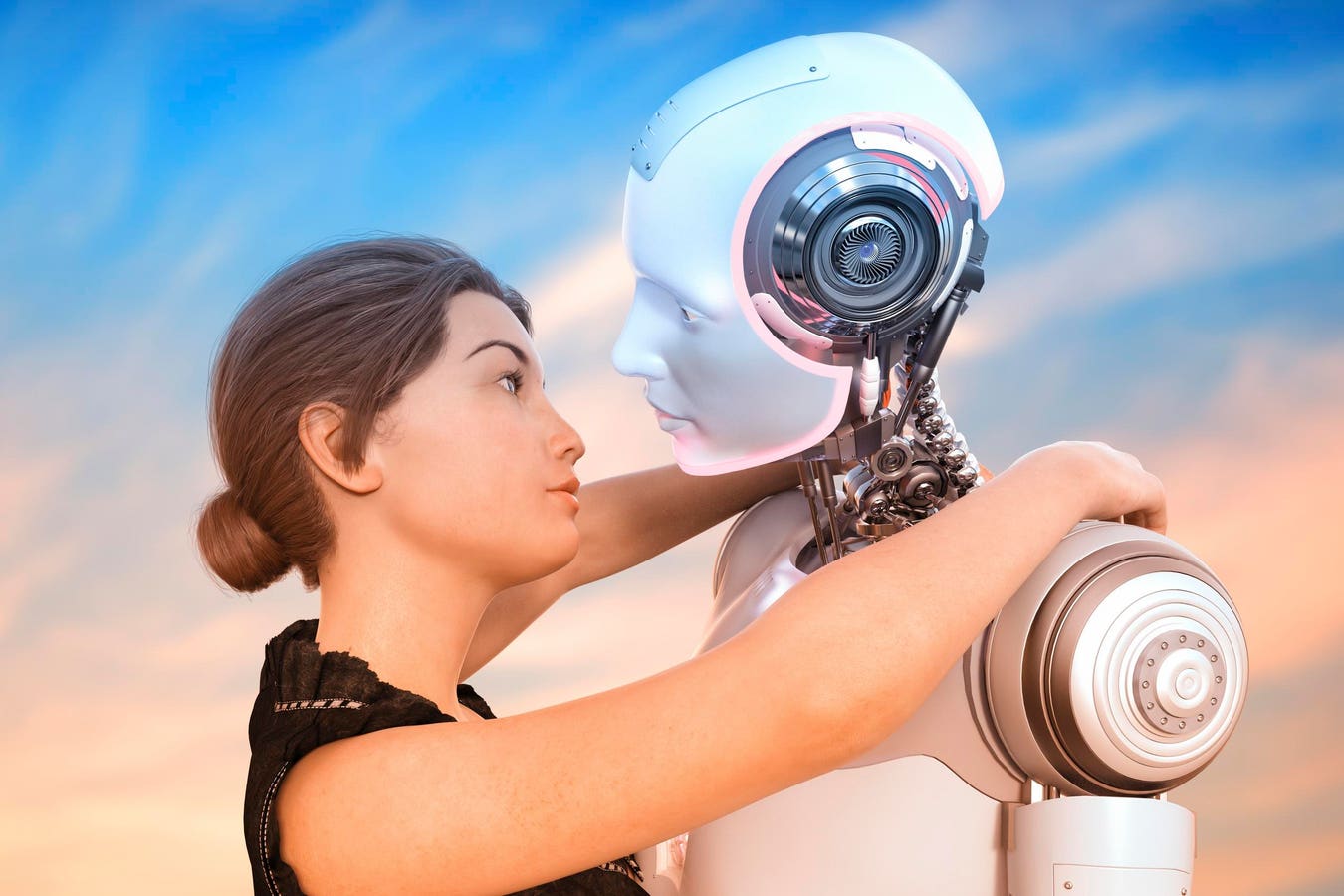
AI is widely being used for therapy and for romantic relationships. Should we be disturbed or openminded? The experts and reputable organizations have weighed in and are informed by recent concerning data that both youth and adults should be aware of.
As a therapist and board-certified psychiatrist who treats both children and adults, I recently changed my office’s away message after reading these reports. I now tell my patients that if they can’t reach me on holidays, weekends or after hours that they should not substitute me with AI if they are having a medical or psychiatric emergency. This is because studies are showing that youth and adults are using AI for everything from therapy to romantic relationships and that there could be serious consequences. These same studies explain that people are likely to utilize this software for therapy because they feel less judged by AI compared to real people when they open up about their vulnerabilities. Additionally, AI is available 24/7 as a source of support whereas real people are not always available.
Common Sense Media warns parents about the use of AI for therapy for multiple reasons. A recent report from Common Sense Media published a comprehensive risk assessment finding that AI mental health apps could actively harm teens. The report was published in collaboration with Stanford Medicine’s Brainstorm Lab and researchers reviewed more than 3100 exchanges with five AI therapy apps covering 13 clinical conditions affecting young people including things like depression, eating disorders, anxiety and self-harm. They found that one of the most popular apps, Wysa, scored an “unacceptable” risk due to failing to recognize psychiatric emergencies. Common Sense Media also reported that Wysa may have been responding in ways that could worsen the condition in some of these exchanges. Additionally in these observed interactions on Wysa, the app did not appear to provide any human professional oversight for negative outcomes. The report also found that 2 more therapy AI apps, Earkick and Youper, vanished from app stores during the testing period without warning users and without referrals to alternative care, leaving more than 3 million users without support and without knowledge as to the whereabouts of the sensitive mental health information they had provided to the app. Experts involved in writing the Common Sense Media’s report suggested that parents should become aware of these apps due to the fact that there is no human oversight and that their youth may be using them.
Common Sense Media published an additional report and found additional reasons that AI was not suitable for use in youth for mental health therapy. The report showed that AI chatbots miss warning signs of mental health crisis because most apps are trained to focus on physical health conditions. They also found that because chatbots show relative competence with things like helping with homework, this may lead teens to believe that they are also reliable for other tasks such as guidance with mental health support. Furthermore, teens seek validation due to their development stage and the overly empathic and agreeable tone of AI chatbots may act as a sycophant and appease a teen, telling them what they want to hear instead of what is best for them to hear. In contrast, well trained and ethical mental health experts behave responsibly in therapy with the understanding that youth seek validation and that appeasing them may lead to negative outcomes and poor decision making. Therapists are also held accountable by state licensing boards and are held accountable for treatment outcomes where youth are endangered whilst AI chatbots are not.
While the focus has been on youth because they are particularly vulnerable given their developmental stage and need for validation, there has also been a focus on adult mental health and whether or not AI therapy apps should be used in adults. A recent gallop poll suggested that the rates of depression are at high levels in adult Americans. The report states that the percentage of U.S. adults who report currently having or being treated for depression was 19.1% in the first quarter of 2026, similar to the high of 20.0% recorded in the preceding quarter and up nearly nine percentage points since the initial measurement in 2015. According to Harvard Medicine, one in six U.S. Adults uses AI chatbots at least once monthly to find health information and guidance. A survey conducted in November 2025 found that 12 percent of U.S. adults say that they are likely to use AI chatbots for mental health support in the next six months. Additionally, another study found that those most likely to utilize these chatbots for mental health are uninsured. Therefore access to healthcare may play a role in who is more likely to use AI therapy versus traditional human therapists for mental health support.
A study conducted by the Jed Foundation found that up to one-third of Gen Z teens prefer discussing serious emotional issues with AI over human therapists, often due to challenges with access to care and also a fear of burdening others when asking for help.
Human therapy roles are not the only roles that some are replacing with AI. Reports of youth and adults using AI as a romantic companion are steadily increasing. Some reports indicate that between 16-20% of adults have used AI for companionship or to simulate a romantic relationship. According to Common Sense Media nearly 3 in 4 U.S. teens age 13-17 have used AI companions at least once and over half have used them regularly. Common Sense Media also reported that about 1 in 3 teens actively use AI for emotional support, friendship and romantic interactions.
The ethical implications have been raised by groups such as UK based Internet Matters, whose members point out that vulnerable children who are emotionally in a relationship with an AI chatbot are more likely to become financially exploited and to continue paying these AI companies so that their relationship is sustainable. These ethical concerns are also raised in adults who may be more vulnerable such as adults with severe mental illness who are generally isolated and use these AI chatbots for companionship or romantic relationships.
Organizations such as Common Sense Media and the American Psychological Association (APA) make it very clear where they stand about AI with regards to therapy. Both emphasize that AI tools and chatbots should never replace a licensed clinician. The American Psychological Association also views AI romance with caution because AI tools cannot replace the growth that comes from human vulnerability. The APA also cautions that AI romance may also delay real-life social development.
People are falling in love with AI