

Arriving in the isolation ward of a biocontainment hospital is an unsettling, scary experience. In 2014, I spent 19 days in one while being treated for Ebola, watching the news cycle churn around me as my world receded to a small window, a phone, and the handful of providers in protective suits who came into my room every day.
More than a dozen Americans are living some version of that right now in a Nebraska quarantine facility — passengers from the MV Hondius, the cruise ship that is at the center of a small but instructive outbreak of Andes hantavirus.
Although the passengers’ plight has captured our attention, I’m not worried about this outbreak becoming the next pandemic. The virus doesn’t spread well, and like Ebola, it kills too many of its hosts to travel efficiently.
But this episode has already shown us where our ability to respond to emerging threats is strong — and where it is lacking.
Let me start with what worked, because it is the part of the story most Americans do not know. The Nebraska biocontainment unit now holding our returning passengers is a Level 1 Regional Emerging Special Pathogen Treatment Center — an RESPTC — the highest tier of a national network built specifically for moments like this.
The facility itself is more than two decades old. After the 2014 Ebola epidemic, the U.S. expanded it into something more comprehensive: the National Special Pathogen System of Care (NSPS), a tiered network of hospitals across the country, from highly specialized RESPTCs capable of caring for patients with the most dangerous pathogens for the duration of their illness, to Level 3 assessment centers able to identify, isolate, and arrange transfer. Coordinating it all is the National Emerging Special Pathogens Training and Education Center (NETEC), which sets the clinical standards, runs the training, and keeps the network in a constant state of readiness.
That network has survived three administrations and shifting political winds. It is a rare American success story in public health: something that we built when we were scared and sustained when we weren’t, and that is functioning right now exactly as it was designed to.
NETEC isn’t the only long-term U.S. investment that has proven itself in this outbreak. The South African National Institute for Communicable Diseases, using next-generation metagenomic sequencing, identified Andes hantavirus within 24 hours of receiving samples — a virus not endemic to South Africa and not a likely first suspect in a shipboard respiratory outbreak.
That speed was made possible by specialized capacity built from decades of U.S. investment, much of it routed through PEPFAR and the CDC’s Global Disease Detection program, which helped strengthen that country’s genomic surveillance infrastructure.
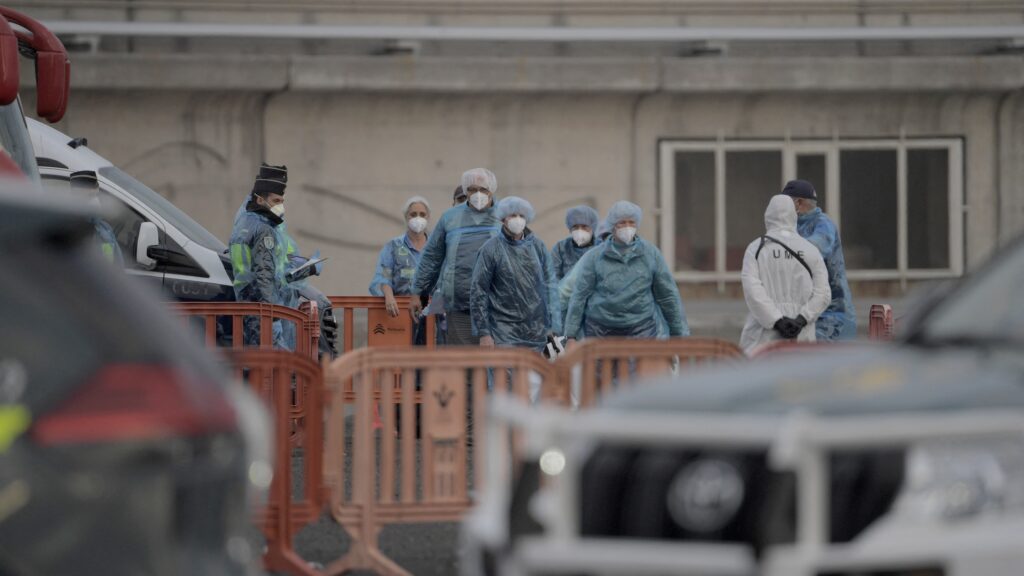
The World Health Organization, too, has proven itself exceptional. On the ground in the Canary Islands, where the cruise ship docked this past weekend to evacuate the passengers still onboard, it has coordinated across half a dozen countries, communicated directly with the global community, and done the unglamorous logistical work that turns chaos into containment. If we needed another timely reminder of why the WHO is valuable to a nation’s biosecurity, this is it.
Despite these bright spots, this outbreak has clearly revealed the impact of outright dismantling much of our preparedness infrastructure in the U.S. over the past year. Normally, the U.S. would be two steps ahead on an outbreak like this. Instead, it feels as though we’re two weeks behind.
Start with surveillance: U.S. Agency for International Development programs and its personnel — which supported much of the infrastructure underwriting America’s investment in detecting disease threats before they reach our shores — have all been gutted or defunded.
Most Americans don’t know that in 2023, a CDC-trained community health worker in Tanzania identified an outbreak of Marburg — a filovirus from the same family as Ebola — early enough that it never spread widely. That is what these investments abroad bought us: outbreaks contained where they begin, before they hitch a ride on a ship or a plane.
Research has taken a similar hit. The U.S. cut hundreds of millions of dollars in research for mRNA vaccines, hobbling the platform best suited to rapidly producing countermeasures for novel pathogens and cancer as well.
And last year, NIH cut a grant supporting one of the few American labs studying Andes hantavirus. That cut probably wouldn’t have changed this outbreak’s trajectory, but the symbolism is hard to miss.
The CDC, our preeminent agency built to respond to threats like hantavirus, has been hollowed out alongside the research and our global footprint. Up to a quarter of CDC’s staff is gone. The Epidemic Intelligence Service — the “disease detectives” we would normally send to an event exactly like this one — spent the past year unsure if they were being fired or rehired. Most CDC center directorships are vacant or filled by people new to their roles — the directorship of the National Center for Emerging and Zoonotic Infectious Diseases, the specific center that would lead CDC’s hantavirus response, is among those that has a new acting director.
The CDC hasn’t had a permanent director for 15 of the last 17 months. And the acting CDC director, Jay Bhattacharya, is also the director of the NIH, a workload no human can carry well, and certainly not while a novel hantavirus cluster moves across continents.
The strains have been apparent in how this is all being communicated to an anxious American public, or in some cases, not being communicated at all.
CDC did not issue a Health Alert Network notice to American clinicians until late last week, a critical and previously uncharacteristic lag for the providers who needed to know what to look for. Referring to one of the passengers being brought back to the U.S. for observation, Health and Human Services tweeted about a “mildly positive” PCR test, phrasing that reflects either an incomplete grasp of the science or a struggle to communicate clearly when clarity matters most.
This work is hard. It is humbling on a good day. Doing it without the dedicated resources and leadership it requires makes it much harder still.
And in the most telling detail: CDC staff now require approval to work with the WHO, requiring a slow and bureaucratic process. Bhattacharya said in a CBS News interview that no approval is necessary, but on-the-ground employees disagree. They have shared with me that in this outbreak, this has limited the agency’s ability to rapidly share epidemiological data, engage WHO technical leads, and deploy personnel through standard multinational response channels.
It’s mind-boggling that American experts have to find a workaround just to do the basic work of talking to the global agency the U.S. itself helped build. Whatever one thinks of the broader politics around the WHO, the operational consequence is that we have been on the back foot of an event we would normally have helped direct.
There is a path back, and it doesn’t require a wholesale reversal of any administration’s posture. It requires a few clear-eyed commitments.
Even if the Trump administration refuses to rejoin the WHO — a position it reiterated in the last few days — it should ensure that CDC is able to coordinate with the WHO without asking permission. Operational engagement shouldn’t be a political favor, but a basic function of competent disease response.
The White House must also build back up the Office of Pandemic Preparedness and Response Policy (OPPR). Created in 2022 by congressional mandate as a central hub for pandemic readiness, it helped coordinate across departments and led the U.S. response to multiple outbreaks. However, the office is now effectively empty and without leadership. The administration should appoint a director to show its serious about responding to similar threats, and provide the resources needed to fulfill the office’s mission.
The same applies to the agencies it can help coordinate. Rebuilding CDC means more than restoring headcount — it means stable leadership at every level, a clear mandate for EIS officers to investigate and deploy when threats emerge at home and abroad, and the operational independence for its experts to do what one texted me this week: “just let us do our f@#$ing jobs!”
The research pipeline for medical countermeasures urgently needs the same attention. HHS’ decision last August to terminate 22 mRNA vaccine development contracts — nearly $500 million in research wound down in a single announcement — should be revisited. For hantavirus, a pathogen with no approved treatment and no vaccine, mRNA platforms represent the fastest route to a countermeasure; abandoning that infrastructure now leaves us measurably slower when the next novel threat arrives.
Similarly, our partnerships abroad need to be rebuilt on terms other countries can accept; the bilateral health deals the U.S. has been pushing are being rejected in places that used to be our partners over legitimate concerns about lopsided demands. Zambia, Zimbabwe, and Ghana have rejected deals with the U.S., citing unacceptable demands over access to sensitive health data. If we cannot work alongside the countries where these viruses emerge, we will keep finding ourselves in the dark.
It is hard not to see all of this through the lens of Covid, a pandemic that for many Americans, also came home on a cruise ship six years ago. Some of the country’s first Covid patients were transported to the same Nebraska facility now holding MV Hondius passengers. The anger and exhaustion wrought by the pandemic is part of why we have allowed so much of this infrastructure to be torn down.
But the lesson of Covid was never that public health doesn’t work. It was that public health is hard.
I think often about my own 19 days, and about the people in Nebraska right now. They didn’t expect to become the center of an outbreak. They expected a vacation, cameras trailing birds on remote islands in the Atlantic. But now the cameras have been turned back on them. Pathogens do not respect the walls we pretend exist between ourselves and the rest of the world; they exploit every plane, every cruise ship, every border crossing.
The Americans in that Nebraska unit are isolated and frightened. They are also, whether they know it or not, the beneficiaries of a decision made a decade ago to build and maintain something that wasn’t particularly urgent on any given day. That choice is part of what makes this outbreak survivable. If this virus were worse, sustained commitments like these would be the only thing between us and another catastrophe.
In the coming weeks, hantavirus is likely to fade from the media and the public eye. But the gaps this outbreak revealed in our ability to respond, and our immense susceptibility to a virus more capable and catastrophic, will remain. We learned that lesson once. We should not have to learn it again.
Craig Spencer is a public health professor and emergency medicine physician at Brown University.