

On August 13, China’s State Council released a 24-point list of guidelines designed to “improve the business environment for foreign investment.” Notably, one industry specifically highlighted by the guidelines was biomedicine, where authorities intend to encourage foreign-invested enterprises to carry out new clinical trials of overseas drugs in China, “fast track” data transmission procedures for compliant foreign firms, and prioritize overseas drugs’ listing and registration.
While the recent push for biopharmaceutical investment by way of the foreign guidelines has thus far received a cautious welcome from foreign chambers of commerce in China, it comes amid shifting headwinds for both the Chinese biomedical industry and Western attitudes toward outbound investment into and cooperation with the Chinese economy. These factors may drive investors and corporates to hesitate on doubling down investment into Chinese biopharma. As such, China’s biopharma and healthcare sectors may not be as investable as the government would advertise.
This story is different in a domestic context. While the Chinese government is encouraging foreign investment into the biopharma sector with one voice, it is prosecuting a sweeping crackdown in the healthcare industry with another. According to Caixin, as of mid-August, more than 150 hospital executives across China had been placed under anti-corruption investigations and 10 different provinces had initiated public, year-long crackdowns in the sector. The leading motivator of such heightened scrutiny is an intent to uncover bribery incidents and kickbacks systemic to hospital governance in China.
Observers note that the campaign amounts to a serious obstacle to hospitals taking on new partnerships, notwithstanding overwhelming support among China’s medical community and general public. Recent reports suggest doctors are increasingly reluctant to prescribe imported drugs or attend industry conferences in the face of government probes. This says nothing of the industry-wide crackdowns impacts’ on foreign firms in the past. In the last iteration of tightening regulation on the healthcare sector, major pharmaceutical firms like GlaxoSmithKline and AstraZeneca were handed record fines for their own illicit practices.
Further, two State Council action plans on the development of pharmaceutical and medical equipment unexpectedly released at the end of August encourage indigenous innovation and domestic talent cultivation, suggesting that the pharma sector will soon be a target of additional government reform. Some researchers believe the plans’ motivations are to “break the monopoly of foreign pharmaceutical groups.”
Also on the policymaking level, the pace of China’s genetic securitization has only quickened over recent months. The finalized Implementing Rules on the Administration of Human Genetic Resources (HGR) went into effect this July, which trigger potential Ministry of Science and Technology security reviews for projects involving specific gene families, geographic areas, or genome sequencing with over 500 subjects.
Although the measures no longer apply as strictly to clinical trials – a positive development for firms focused on drug discovery – genetic data provisions in the measures are further codified under the purview of national security. Meanwhile, as foreign access to genetic data tightens, a new national genetic survey seeks to centralize and standardize domestic HGR, asserting government oversight. These domestic actions suggest that the Chinese biopharma and healthcare sectors may be growing increasingly unsuitable for investment, especially from foreign entities.
Overseas, pressure is mounting on U.S.-based pharmaceutical multinationals to avoid risky investments and cooperation agreements with China. Biotechnology was left off the Biden administration’s recent executive order restricting U.S. outbound investment into Chinese critical technologies like semiconductors, AI, and quantum computing, but several prominent U.S. lawmakers immediately raised the sector as a necessary area for future regulation. Senator Marco Rubio (R-FL) plans this month to introduce new outbound investment legislation that will presumably tackle biotechnology and other “industries China deems critical.”
Moreover, Biden’s decision to extend the decades-long U.S.-China Science and Technology Agreement for only a six-month term reflects the growing pressure to limit research partnerships with China, or at least to amend such partnerships on terms more favorable to the United States. With prior examples of joint research projects being exploited for military end use, the Commerce Department’s Bureau of Industry and Security has also taken a more active role in analyzing potential Chinese biotechnology corporate partners, including sanctioning several entities of genetics giant BGI Group this past spring.
Between diminished talent flows, concerns over technology transfer rights, and increasing mutual skepticism when it comes to the ultimate aims of biotech research coordination, the political viability of bilateral science and technology cooperation is weaker than ever between the United States and China, particularly in the biopharmaceutical sector. Previously seen as a bright spot to China-U.S. relations, biotech cooperation, particularly on drug development and cancer trials, has been recently described as an “urban legend.”
This new environment is increasingly challenging for foreign pharmaceutical firms to operate in. While “compliant firms” may face bureaucratic easing for drug development and clinical trials, those firms whose research or manufacturing infringes on any broadly defined national security concern face unprecedented risk. It has become harder to vet both the operations and intentions of potential Chinese partners, with an additional regulatory clampdown on the due diligence and consulting sectors. Increasing political risk at home may also damage the reputation of multinational companies seeking to invest in China, especially those with significant U.S.-based operations.
Taken together, these developments have shaped mixed approaches for foreign investors and firms when it comes to expanding their footprint in the Chinese biopharma market. As per Reuters, through the end of August, China’s CSI Medical Service Index is down nearly 20 percent this year, including an approximate 5 percent drop in August alone. At the same time, Wall Street investors are thinking twice about their cross-border ventures – global asset managers dumped an aggregate of $12 billion in Chinese onshore stocks in August, representing the greatest capital flight since such metrics were first recorded in 2016. According to one China financial services expert, domestic healthcare crackdowns have reshaped the industry as “principally [in] state hands… creating a more limited sandbox for the private sector to play in.”
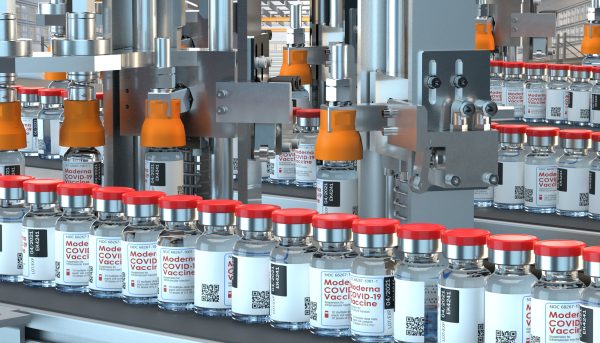
Yet, capital market firms and independent investors’ doubts aside, several major U.S. and other foreign pharmaceutical companies have committed to new joint ventures with China in recent months. After having their COVID-19 therapies blocked from sale in China for the entirety of the pandemic, Moderna struck a MoU with local officials to research and develop mRNA medicines in China, potentially valued at up to $1 billion. Eli Lilly also partnered this past May with a Sequoia China-backed AI startup on a $250 million novel drug project. Last year, Merck poured over $175 million into a collaboration agreement with Chinese partner Kelun-Biotech to develop seven different antibody-drug conjugates for cancer treatments.
Multinational firms and predominantly U.S.-based investors have clearly not made up their mind on the future of foreign investment into China’s biopharma market. Despite painstaking regulatory processes, growing state control over information flows, overseas investment restrictions, and the securitization of the healthcare industry writ large, the Chinese biopharmaceutical and healthcare markets still hold massive potential for companies pursuing cutting-edge research initiatives, in addition to strong manufacturing capacity and healthy profits.
Although the recent guidelines on foreign investment represent a half-step forward for China’s biopharmaceutical and healthcare sectors, new tensions across these industries may just drive innovation and openness two steps back. Looking forward, innovation and investment in the sector is likely to lean further into joint partnerships and globalized R&D, moving away from foreign product sales into the Chinese market.