

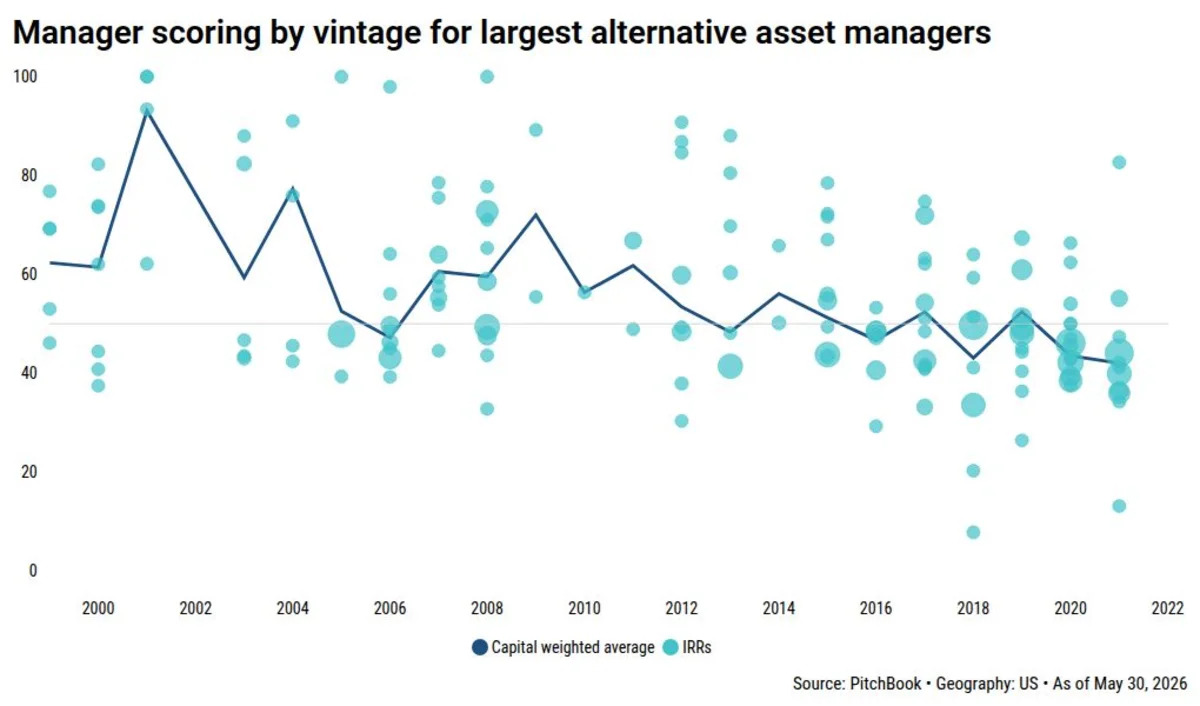
New data from PitchBook confirms what many have long suspected: The largest allocators are stuck writing big checks to managers that underperform their smaller peers.
The IRRs of the largest alternative asset managers have consistently underperformed those of their smaller peers since around 2015, according to an analyst note published last week.
That underperformance rarely turns into outright losses, but it rarely turns into groundbreaking returns either.

This is partly just a downside of growing big. The largest LPs in the market have to write larger checks for individual investments to have an impact on their overall returns. This inevitably leads them toward name-brand managers and investments in larger, more mature businesses with less growth potential.
Since 2000, US buyout funds in the top quartile by size have grown an average of $50 million annually, PitchBook data shows. Meanwhile, the size of funds in the 25th percentile has remained roughly the same.
It is widely accepted that the key to a strong return on investment is buying low and selling high. But large asset managers shopping deals at the top end of the market often pay top dollar at entry, in part because bidding wars drive up prices.
Asset managers with over $6 billion in AUM bought companies with an average EBITDA margin of 23.3% at entry, over 230 basis points above the median middle-market target, according to an analysis of StepStone Group’s SPI database, now available on the PitchBook platform.
“Even if a manager gets into a company at below-average multiple, there isn’t much room left to grow for mature companies at the top of the market,” said Taylor Criswell, a senior quantitative research analyst at PitchBook and author of the note. The lever of improving operations, repricing products, expanding into different markets and cutting the workforce isn’t there to pull.
Criswell compared today’s mega-fund managers to the macro-driven hedge fund managers of the late 2000s.
Sign up for Capital Pool
Weekly commentary on what’s driving LP decision-making, with senior funds columnist Jessica Hamlin.
“They build these massive portfolios that are incredibly concentrated on some key themes, and if they’re right, they’re going to ride those themes out. That’s how they make their money,” he said.
It’s not just the size of an asset manager that leads to muted returns; it is also a product of the incentives of a publicly traded asset manager compared to a private one.
Fund performance began to soften in the years following the IPOs of Blackstone (2007), KKR (2010), Apollo Global Management (2011) and The Carlyle Group (2012), Criswell said.