

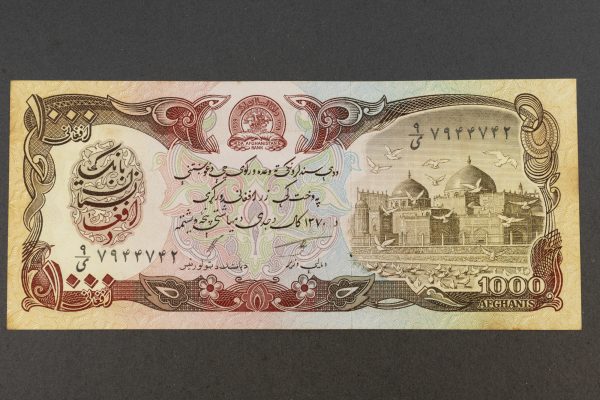
The evolving political landscapes and priorities of the United States and other donor nations may pose a threat to the ongoing provision of humanitarian aid funds, particularly in the form of regular dollar shipments, to Afghanistan. If aid is halted or diminished, it could have a severe impact on the country’s economy and its impoverished populace. The Interim Taliban Administration (ITA) will be required to assume the responsibility of catering to the needs of the population, potentially depleting the existing fiscal buffer that is currently allocated towards their own objectives.
It is imperative for the ITA to enact appropriate measures preemptively to prevent Afghanistan from facing another abrupt cessation or reduction in aid.
An estimated 23.7 million people, more than half of Afghanistan’s population, will need humanitarian assistance in 2024, as reported by the United Nations Office for the Coordination of Humanitarian Affairs (OCHA) in January of this year. The same report also stated that millions of people who have received assistance, including Afghans returning from Pakistan, will require ongoing support for basic needs such as food, cash, healthcare, education, suitable shelter, and access to water in the coming months. OCHA cautioned that the need for humanitarian assistance is increasing while donor funding is decreasing.
To support humanitarian aid efforts, the United Nations transfers millions of U.S. dollars to Afghanistan each month, totaling approximately $3.8 billion as of July 2024, as reported by the Special Inspector General for Afghanistan Reconstruction (SIGAR) on July 24. The U.S. dollars, shipped on a biweekly basis, have had a positive impact on the Afghan currency, the afghani, while also providing crucial support to millions in need.
The upcoming elections in the United States in November of this year may lead to a shift in political perspectives regarding aid to Afghanistan, potentially resulting in the cessation of dollar shipments. This action could exacerbate the existing poverty levels among the Afghan population and further constrict the country’s already fragile economy.
Feeding the population is not possible without a functioning and growing economy. While international sanctions may present some limitations, the ITA can implement measures on the domestic front to stimulate relative economic growth, creating jobs and opportunities.
The ITA must acknowledge the potential loss of international aid and cash shipments next year, and therefore focus on identifying alternative ways to support livelihoods and provide for the people. The ITA should develop a strategy with specific goals supported by action plans and fiscal and monetary measures aimed at achieving those goals. Ideally, the goals should focus on revitalizing and expanding the economy by leveraging the limited resources and options available in the face of international sanction.
Development Projects
To this end, the ITA has successfully implemented some relatively large-scale development projects in water management and roads. However, development programs without a comprehensive, integrated, focused, and effective strategy may not yield results at an aggregate level. While large projects are crucial, small-scale development projects scattered throughout the country are equally, if not more, important. A multitude of smaller projects can generate jobs at the local level, enhancing living standards in rural areas and contributing to the national economy.
The implementation of development projects and programs should primarily occur in partnership with the private sector or be entirely outsourced to the private sector through a competitive procurement process. The private sector can serve as a potent catalyst for economic revitalization in Afghanistan. An active and expanding private sector can significantly boost investment, consumption, job creation, and net exports. However, the private sector necessitates supportive government policies that foster a business-friendly environment.
On the fiscal side, it is crucial for the ITA to allocate more resources to development projects and increase spending in its operating budget. Higher government spending will inject more money into the economy, stimulating demand and helping to combat deflation. While the ITA has increased spending in the security sector, little has been done to boost the development budget. The last known development budget was 45 billion afghanis ($634 million), which is insufficient for long-term economic growth. The goal should be for economic growth to exceed population growth, which can be achieved by allocating maximum funds to the development budget.
A development budget should encompass projects and programs of varying sizes across the country. These initiatives will not only generate employment and enhance people’s income but also lead to sustained future revenues for the government. All revenues from natural resources, as well as others, should be earmarked for the development budget and invested solely in development projects.
Given that a significant portion of Afghans derive their livelihood from agricultural products, the ITA’s programs for water management are a positive step. It is crucial to also focus on the irrigation system in parallel. While constructing large water dams and reservoirs is important, the absence of an efficient water distribution system renders these structures ineffective. Ensuring the distribution of water to farmlands where farmers can benefit from it is essential.
While agriculture is indispensable and Afghanistan has significant potential in this sector, the development of industry can lead to faster economic growth. A robust industry in Afghanistan can improve the terms of trade and enable the production of high-value products that can enhance exports. Furthermore, the experiences of some developed countries suggest that industrial growth can foster national unity and greatly contribute to nation-building efforts. Afghanistan not only requires economic development but also nation-building initiatives.
Financial Policy
The ITA should also work in collaboration with banks to enhance access to finance. A strong partnership between banks and the private sector, bolstered by supportive government policies, will prove advantageous for both parties. The Da Afghanistan Bank (DAB), Afghanistan’s central bank, must collaborate with struggling banks to facilitate the provision of accessible loans to the private sector.
Above all, it is also crucial for the ITA to address deflation. The ITA must recognize that prolonged deflation can stagnate the economy and impede growth. There is a relatively larger amount of U.S. dollars in circulation compared to the Afghan afghani due to the conversion of humanitarian aid dollars into afghanis. Additionally, there may be illicit and unaccounted dollars entering the country. Furthermore, the ITA has appropriately prohibited all domestic transactions in dollars, leading to an increased demand for afghanis.
The DAB should consider reducing the frequency of dollar auctions, lowering interest rates on capital notes, decreasing reserve ratios, and implementing other monetary easing policies to boost the supply of afghanis and ensure the flow of credit to the economy. The ITA should assess the correct amount of dollars in the economy and adopt a balanced monetary policy to manage the afghani, taking into account the short-term benefits of a deflated currency for consumers while also considering the negative impact on exports and economic growth.
Well-functioning financial markets and intermediaries are crucial for economic health. International sanctions have played a significant role in weakening the Afghan banking sector. However, the hasty decrees issued by the ITA restricting withdrawals and sudden announcements to convert the sector to an Islamic one have also contributed to the declining confidence in the banking sector, a stepping-stone for the banking business. When confidence is lost, no amount of money can save a banking system.
While the ITA does not have control over sanctions on the banks, it must refrain from actions that weaken the banking system. The ITA must take steps to restore confidence and provide assurance to people that their money is secure in the banks. Removing the current decrees, refraining from new ones, and implementing a government-sponsored deposit insurance scheme may significantly help in restoring lost confidence and reviving the sector.
Increased Domestic Demand
The ITA must explore international markets for Afghan products by engaging with countries that have established relationships with the interim government. Trade barriers constantly created by Pakistan must be addressed, and further trade with the eager Central Asian countries must be facilitated.
In the meantime, it is crucial to recognize that a business cannot thrive internationally without first succeeding domestically. Therefore, stimulating domestic demand for Afghan products is imperative before focusing on the international front.
The Afghan economy is grappling with a decrease in demand for goods, supplies, and services, which is impeding the growth of the private sector. Inadequate overall demand could lead to extended periods of elevated unemployment. Therefore, enhancing overall demand should be a primary objective of economic policies. Measures such as implementing deficit spending, augmenting the development budget, and improving transparency by disclosing public revenue and expenditure information can have a positive effect on demand. Considering the existing deflationary concerns, reports indicating an uptick in government spending can stimulate economic expansion, mitigate deflationary pressures, and enhance transparency.
Furthermore, demand can be increased when people work and have income. An estimated 47 percent of Afghans are unemployed or underemployed, including women who face heavy restrictions on activities outside the home. Data shows that for every 1-point increase in unemployment, there is a 2-point decline in GDP. Programs to increase employment must be a key priority.
Capital, land (including raw materials and resources), skilled labor, and entrepreneurs are fundamental factors necessary for an economy to operate and expand. Many young Afghans are disillusioned and lack hope for their future and that of their country, leading them to seek ways to leave Afghanistan. This results in the country losing out on two crucial economic elements: human resources and entrepreneurial talent.
The ITA must take immediate action to prevent further brain drain from the country. Young Afghans should be provided with opportunities and incentives to encourage them to stay in Afghanistan. While machinery and equipment can be acquired, developing a productive workforce may take years. Therefore, preventing further brain drain should be a top priority for the country.
Finally, the Taliban must come to terms with the realities of the country and not dwell in delusions. It was former President Ashraf Ghani’s delusional approach to governance and detachment from the realities on the ground that led to the downfall of the hard-won Republic.
The Taliban must engage with ordinary Afghans to understand that the entire nation is on the brink of severe poverty. Depriving a nation’s young men and women of modern education and subjecting them to prolonged extreme poverty can have existential repercussions for the nation.
Similarly, the changing priorities of donor nations and the upcoming United States elections may lead to policy changes resulting in the cutting or reduction of aid and the ending of dollar shipments. The ITA must urgently prepare to deal with the negative impact of the potential reduction in aid.
This article is the second of a two-part series. The previous article evaluated the Taliban government’s economic policies to date.