

The decisive Republican victory in the 2024 U.S. election has handed President Donald Trump a full mandate to implement his economic agenda. His plans for punitive global tariffs and extended corporate tax cuts are clear. However, the future of Biden-era policies, such as the CHIPS and Science Act (often shortened to the CHIPS Act) and the Inflation Reduction Act (IRA), remains uncertain.
Taiwanese firms face two key concerns under the second Trump administration. The first is the sustainability of U.S. commitments to support Taiwanese manufacturing under the CHIPS Act and related incentives. Will federal and state-level agreements reached in the Biden era be honored? If new subsidies arise, Taiwanese firms need a level playing field with U.S. competitors. Taiwanese companies must stress their critical role in bolstering the U.S. supply chain – a network vital for allied countries. Favoring U.S. manufacturers alone risks inefficiency, higher costs for U.S. customers, and misallocation of resources essential for competing with China.
The second issue involves potential tariffs and trade barriers targeting Taiwanese semiconductor and electronics supply chains. Trump’s past suggestion that he would use tariffs to coerce investments remains salient. Historical precedent from the Japan-U.S. trade conflict shows this strategy could pressure Taiwanese firms, especially in sectors with U.S. competitors. Preemptive investment in the U.S. may mitigate this risk while expanding business opportunities.
The Carrots: The CHIPS Act and the Taiwanese Supply Chain in the U.S.
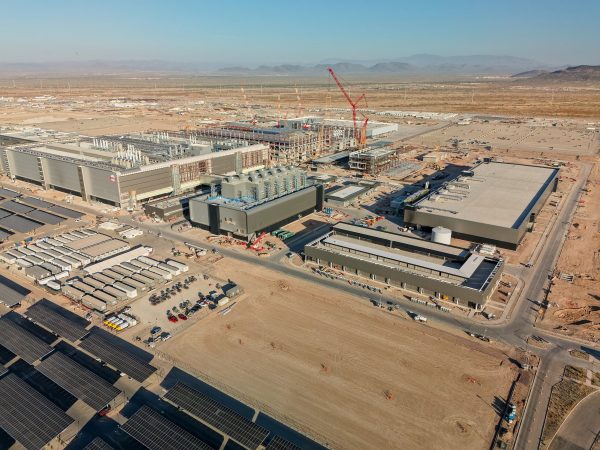
Taiwanese supply chains are already on the move to the United States. TSMC’s 4nm fab in Arizona began production last month, with related packaging, testing, and assembly supply chains expanding in the U.S. and Mexico. To make TSMC Arizona’s chips fully U.S.-made, CoWoS advanced packaging capacity is expected to follow, drawing investments from Taiwanese equipment manufacturers. On the materials front, Global Wafers is constructing the first U.S. 300mm silicon wafer plant in Texas and a Silicon-on-Insulator wafer plant in Missouri.
Further down the supply chain, Foxconn, Quanta, Wistron, and Inventec operate server assembly facilities in the U.S. and Mexico. While their largest plants remain in Mexico and Southeast Asia, these firms can scale up U.S. capacity if new tariffs or incentives arise. Foxconn leads with AI server and data center facilities in Wisconsin and Texas and is expanding EV production in Ohio. After the fiasco surrounding its Wisconsin investment in the first Trump administration, Foxconn has an opportunity to improve its reputation by expanding U.S. manufacturing jobs.
The new Trump administration inherits a growing electronics supply chain capable of producing AI servers and traditional electronics on U.S. soil, with Taiwanese firms playing a critical role. Much of this progress stems from Biden’s CHIPS Act, though Trump could claim credit for securing TSMC investment in Arizona and introducing Foxconn to Wisconsin. Trump’s return creates uncertainty around the CHIPS Act, prompting firms to finalize agreements quickly. Republicans may revise terms tied to socioeconomic provisions like childcare and union communication, a change welcomed by cost-conscious Taiwanese firms as long as subsidies remain timely.
Revised CHIPS Act guardrails prohibiting non-legacy semiconductor expansion in China won’t impact TSMC, as its Nanjing fab produces legacy chips under a permanent equipment import license. However, Taiwanese firms must expand local employment. Relying on Taiwanese engineers and supply chains in the United States may face pushback from an anti-immigration administration. Firms should recruit local talent, offer competitive pay, and enhance visibility to attract top U.S. workers. Training U.S. employees to meet Taiwanese manufacturing standards while adapting to local expectations remains a challenge. Trump’s remarks on favorable immigration policies for foreign graduates, supported by allies like Elon Musk, offer an opportunity.
A bigger concern is whether Taiwanese firms can compete with U.S. companies for future subsidies. A second CHIPS Act of similar scale is crucial for significant semiconductor expansion. With advanced chip demand outpacing supply and China poised to dominate mature nodes, the U.S. urgently needs to boost capacity. Intel’s high costs and low yields make TSMC indispensable for advanced logic chips. TSMC’s delays in Arizona and workforce challenges highlight the need for increased subsidies to ensure sufficient capacity. In addition to the three planned Phoenix fabs, TSMC is rumored to be eyeing an expansion into Texas. Leading Taiwanese firms in other supply chain segments, such as Global Wafers, ASE/SPIL, and Foxconn, will also seek incentives for growth.
The U.S. government’s focus on supporting domestic firms could divert resources. As CHIPS Act negotiations continue, Washington is discussing a rescue package for Intel, with options like merging with IC design competitors or spinning off its unprofitable manufacturing unit. Text messages between ex-Intel CEO Pat Gelsinger and Vice President-elect J.D. Vance reveal Gelsinger’s lobbying to position Intel as the administration’s champion, leveraging its Ohio investments. Gelsinger has criticized CHIPS Act subsidies for foreign firms like TSMC, echoing Trump’s view that tariffs could replace subsidies to attract foreign investment. Other Taiwanese firms in the U.S. also face domestic competitors lobbying for preferential treatment.
Intel’s attempts to leapfrog TSMC with massive investments in high-NA EUVs and the 18A process will exacerbate short-term losses. Low yields cannot improve without more customer orders, mirroring Samsung’s struggles with its 3nm GAA process. Intel’s competitiveness in semiconductor manufacturing is increasingly uncertain, especially after its product-focused board forced Gelsinger’s retirement. Saving Intel and other struggling U.S. firms with taxpayer money undermines fabless giants like Nvidia and Apple, which rely on TSMC’s advanced capacity. Intel’s capacity, used by some cloud service providers (CSPs), mainly serves as a backup in case of a Taiwan Strait crisis.
Fabless and CSP firms are the crown jewels of U.S. tech competitiveness. The government should prioritize them to win the tech race with China. Taiwanese firms must emphasize their contributions to the U.S. economy and tech leadership. Subsidizing Taiwanese firms benefits U.S. fabless and CSP firms, similar to the success of Japanese auto investments in the U.S. A stronger Taiwan lobby in Washington could shift the administration’s focus from narrow corporate interests to broader national and strategic goals.
The Stick: How Tariffs Could Shape Taiwanese Investments
Focused on efficiency and U.S. interests, the Trump administration may resist subsidizing foreign firms. Instead, Trump has proposed using tariffs to make U.S. production more attractive. History supports this approach.
In the 1980s, Japan-U.S. trade tensions led Japanese automakers like Toyota to invest in U.S. plants after import quotas restricted Japanese car exports. Rising Japanese competitiveness in autos and semiconductors pushed U.S. producers to lobby the Reagan administration for trade restrictions. Japan’s reliance on the U.S. security guarantee compelled it to agree to “voluntary export restraints.” Simultaneously, Washington encouraged Japanese automakers to build plants in the U.S. to avoid the quotas and create jobs for American workers.
Japanese automakers, including Toyota, Honda, and Nissan, opened plants in the Midwest, creating 35,000 direct jobs and over 337,000 indirect jobs. No significant federal subsidies were used, and Japanese firms remain major employers in the U.S. By contrast, U.S. automakers like Chrysler and GM required massive bailouts during the Great Recession, exceeding the cost of the CHIPS Act. If Intel and other U.S. IT firms lobby for similar trade protections, the Taiwanese supply chain, which heavily exports to the U.S., could face risks.
TSMC’s dominance in FinFET logic processes and advanced packaging makes it better positioned to handle tariffs during periods of high demand. Its 60 percent gross margins and ability to raise prices without reducing demand mean U.S. customers like Nvidia and Apple would bear some tariff costs. However, TSMC’s pricing power does not extend across the entire supply chain. Tariffs on imported AI servers, for example, could benefit U.S.-based OEMs like Dell and HP, prompting Taiwanese OEMs to accelerate U.S. investments.
There is growing pressure for TSMC to bring advanced process node manufacturing to the United States, but Taiwan’s restrictions on outbound investment in bleeding-edge nodes complicate this. The Trump administration may use tariffs and other tools to push for more investments in advanced processes and packaging. However, keeping R&D and leading-edge processes in Taiwan benefits the U.S. by maintaining the alliance’s technological edge over China. The high costs and long timelines of building U.S. fabs, combined with the fact that most AI servers do not require the most advanced nodes, should also be considered.
The Trump administration should prioritize smoothing the learning curve for TSMC’s Arizona fabs, integrating Taiwanese expertise with local conditions to achieve better yields and lower costs. Taiwanese firms and the government must tread carefully to avoid scrutiny from U.S. regulators. Past incidents, like Toshiba’s export control violations in the 1980s and TSMC’s potential Huawei-related breaches, should serve as warnings.
Another risk to address is Taiwan’s structural trade surplus with the U.S. The Taiwanese central bank should avoid currency management practices that could result in a “currency manipulator” label. Trade concessions in agriculture, energy, and military goods could help ease tensions. Taiwan’s interest in advanced U.S. military equipment aligns with Trump’s goal of shifting regional defense responsibilities to allies. Collaboration in shipbuilding, drones, and intelligent weapons offers a win-win scenario, bolstering the Taiwan-U.S. IT supply chain’s competitiveness while satisfying Trump’s protectionist economic agenda.
Looking Ahead: Taiwan’s Historical Opportunity
The United States’ IT manufacturing base is a joint legacy of two administrations. Trump’s tariffs and sanctions against China prompted supply chains to shift to Southeast Asia and Mexico, while Foxconn’s Wisconsin investment and TSMC’s Arizona fab signaled change. Biden’s industrial policies, including the IRA and CHIPS Act, embraced incentives for both U.S. and foreign firms. Together, these policies reshaped supply chains and laid the foundation for U.S. manufacturing. The second Trump administration will now decide its direction.
The Trump administration must choose whether allied supply chains, including Taiwan’s, receive a fair share of opportunities. Isolationist policies with tariffs and trade barriers risk encouraging U.S. corporations to prioritize lobbying over innovation. Meanwhile, China fosters intensive competition among emerging domestic firms to develop national champions. Supporting unprofitable U.S. firms without market-driven incentives will harm the U.S. and its allies. Instead, Trump should ensure a level playing field, rewarding firms that contribute to U.S. manufacturing and competitiveness, regardless of origin. This approach benefits U.S. consumers and downstream firms seeking affordable, high-quality technology and strengthens the U.S. position in the AI race.
For Taiwan, this is a historic opportunity. A stronger Taiwanese manufacturing presence in the U.S. deepens American stakes in cross-strait affairs and raises Taiwan’s influence on U.S. public opinion. Investments and lobbying efforts in Washington could make the U.S. more committed to Taiwan’s defense. U.S. advanced manufacturing relies on Taiwan’s R&D and talent. Greater economic integration fortifies the “Silicon Shield.”
Countering Trump’s protectionist instincts should be Taiwan’s top priority. Taiwanese firms must strengthen lobbying efforts, following the lead of TSMC. Smaller firms lacking resources need government support to form a trade association. This group could provide legal advice, resolve disputes, set policy priorities, and advocate collectively in Washington. A unified voice will counter protectionist forces and secure Taiwanese competitiveness.
Republicans’ and Trump’s preference for tax cuts over subsidies presents an opportunity. Taiwanese firms should advocate for tax policies tied to construction, production, and employment milestones. Uniform tax credits, applicable to all investors, promote fairness and market efficiency while aligning with Republican priorities.
Taiwan must also build alliances with U.S. stakeholders. Partnering with Silicon Valley leaders like Elon Musk and China hawks in the Republican Party is key to swaying Trump from protectionist policies. Highlighting shared interests between the U.S. and Taiwan will strengthen bilateral cooperation and support a prosperous Taiwanese economy.