

It didn’t have to be this way.
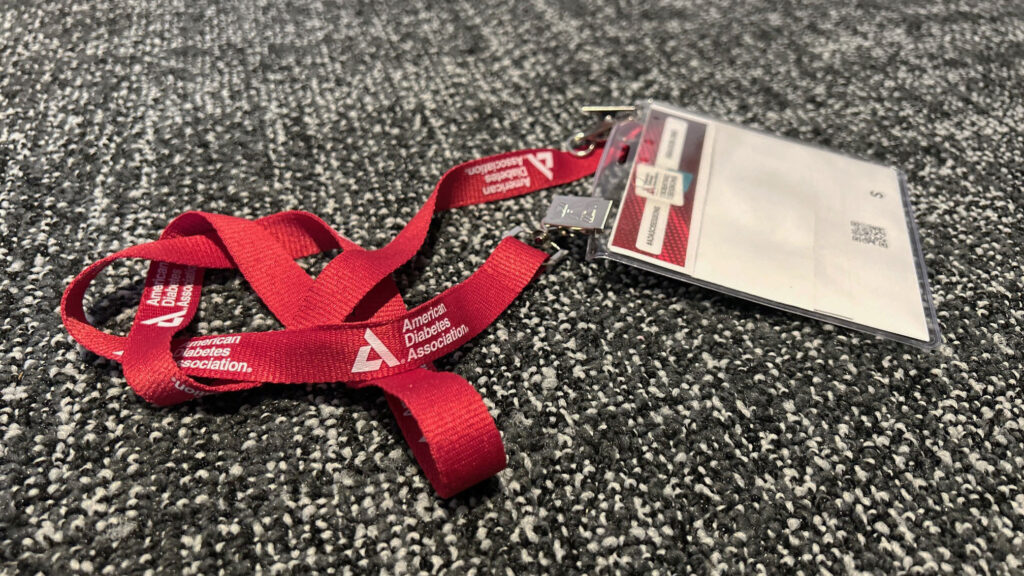
The condemnations keep coming four days after security officers escorted five diabetes experts out of the American Diabetes Association meeting in New Orleans for handing out copies of an editorial criticizing federal cuts to biomedical research. Expelling the doctors and scientists has shocked people in the field, and the ADA’s communications explaining it have only made matters worse, leaders in diabetes research and practice told STAT.
The organization’s aggressive response to members protesting policies espoused by the Trump administration and Jay Bhattacharya, the National Institutes of Health director who was originally the conference’s keynote speaker before backing out, alarmed longtime ADA members who fear for not just the organization’s integrity, but also for diabetes care and science.
“To me, it was inconceivable,” John Buse, a former ADA president, co-author of the editorial, and editor of ADA’s journal Diabetes Care, where it was published. “Now, it wasn’t inconceivable that somebody from the ADA might have approached and said, ‘This is not cool, please don’t do this,’ but it was shocking to me that they deployed the police.”
ADA issued a series of statements over the next two days that defended its actions, but they only made matters worse, Buse and other long-term ADA members said.
“Doubling down on that and saying this was a good decision because they weren’t following the code of conduct because they were distributing materials without authorization, sounds like bullshit,” Buse said.
On Sunday, the ADA issued a second statement citing IRS rules governing 501(c)(3) organization, saying “the ADA has safeguards in place to ensure that it complies with all IRS regulations. This includes maintaining a strictly nonpartisan environment at all organizational events and functions.”
The IRS prohibits 501(c)(3) nonprofits from political activity, and leaders of these organizations are not allowed to “make partisan comments in official organization publications or at official functions of the organization.” However, leaders are not barred from expressing their views on political issues when speaking as individuals, the Internal Revenue Service says on its website. The editorial in question clearly stated that it represented the personal views of the authors and not those of the ADA.
STAT has made repeated requests for comment from ADA officials but had not received a statement by the time of publication. The NIH issued a statement Monday referring questions to law enforcement authorities, and noting that it was not involved in decisions about Friday’s actions.
Jeffrey Flier, former dean of Harvard Medical School and an ADA member who has been attending the group’s scientific session for 50 years, called it going from “bad to worse” when the editorial writers and other ADA attendees were removed and told they couldn’t come back in.
“You would think 99.9% of all professional diabetes people, whether they be clinicians, researchers, or anything else, would view that as a horrifying mistake,” Flier told STAT. “And then the ADA leadership had the opportunity to correct it, to apologize, to say that that’s not what was intended, we’re sorry, but they just did not do that.”
Buse, Flier, and other members who spoke to STAT anonymously said they thought it was likely that the ADA was prepared for some form of dissent related to Bhattacharya’s speech. The day before the keynote was to be delivered, Bhattacharya canceled, citing a meeting with President Trump. Senior adviser Richard Woychik spoke instead to an audience that applauded when criticisms of funding cuts to NIH were aired.
Flier was not there, so he only surmised that the ADA was on guard and able to act quickly when the groups began distributing printouts of the editorial before private security officers expelled them.
“I don’t know this, I’m just imagining that it would not have occurred had there not been Jay Bhattacharya agreeing to come and there were certain assurances given about heightened reaction to disruption,” said Flier, who has also written commentary pieces about NIH funding in danger. “Somebody on the ground there made the mistaken conclusion that this was a disruption that would qualify for being shut down.”
Jay Skyler, an endocrinologist at the University of Miami Miller School of Medicine, said when the association announced it had asked the NIH director to give the opening address, ADA members asked for the opportunity to have someone talk about what NIH has been doing related to funding diabetes and other medical research, which ADA declined. He wasn’t surprised that the late addition to the conference schedule was not made, but he was shocked by what transpired outside the hall where Woychik was speaking, and by ADA’s explanations.
Skyler read to STAT from an email he sent to ADA President Charles Henderson and Mark Atkinson, scientific sessions planning committee chair:
“You should be embarrassed by your disgusting email defending the actions of security. The police and security would have no way of knowing the alleged long-standing policy against distribution of materials unless the ADA told them to act,” the email said. “This is my 55th ADA meeting and I’ve never heard of such a policy. … You both should resign.”
The next day Atkinson did resign, along with President-Elect Jennifer Green, a professor of medicine in the Duke Clinical Research Institute, which Skyler called a serious loss for the ADA. These moves and the original events were first reported by MedPage Today. The reasons for the resignations have not been disclosed.
Skyler was among 45 former ADA presidents and board chairs who wrote to the current board to express their shock and disapproval of ADA’s actions to stifle those who handed out the editorial.
“To the contrary, the Association should have applauded the effort to advocate for appropriate and greater scientific and medical research funding,” the letter, sent Tuesday, said. “This unforced error threatens the future of Scientific Sessions, the ADA’s journals and the organization itself.”
If ADA hoped to defuse the editorial’s statements, it failed, Buse said.
“If they hadn’t done anything, no one would have seen the article. I think there had been something like 300 page views before this happened,” he said. “It’s gone from being completely unknown to, as of last night, the 50th-most cited, most-viewed paper in the entire world among 300,000 papers published in the last month.”
A change.org open letter, launched by prominent diabetes physician-scientist David Nathan, has garnered 5,900 signatures.
What’s next?
“My bottom line, my personal view is that there either has to be an abject apology officially made by the leadership of the ADA for mistakes that were not intended but got out of control,” Flier said. “Or they need to remove the current leadership and replace it.”
Buse said professional organizations are not alone in taking politics into account, but that shouldn’t preclude discussions that include alternative views.
“I think everybody in the United States is worried about reprisals of the Trump administration,” he said. “It’s about standing up for what’s right.”