

Get your daily dose of health and medicine every weekday with STAT’s free newsletter Morning Rounds. Sign up here.
Another Morning Rounds, another double feature from STAT’s Helen Branswell. Theresa and I do not track this, but I’m almost positive Helen holds the record for newsletters in which she has two or more stories.
As Ebola outbreak grows, the U.S. retreats from the global health leadership
Any Americans who contract Ebola will not be brought to the United States for treatment, Trump administration officials confirmed on Thursday. Instead, they will be evacuated to as-yet-undetermined locations in Europe — despite the existing network of facilities in the U.S. for just this purpose.
Officials said transporting infected individuals to Europe would help them receive care faster, but health experts criticized the move as another signal of the broader retreat from intervening and stopping the disaster, already the third-largest Ebola outbreak on record. The priority appears to be on insulating the U.S. from the disease, despite the millions of dollars in federal funding spent to handle such situations.
Read more from STAT’s Helen Branswell.
One added note: This morning, there was a twist in the U.S. plan to build a quarantine facility in Kenya, with a Kenyan court putting a hold on such an effort until petitions against it can be heard next week. More here via the AP.
Which vaccines will curb the Ebola outbreak? WHO debates
The WHO disclosed its thoughts yesterday about what drugs and vaccines should be tested in response to the Ebola Bundibugyo outbreak that has engulfed Ituri province in the Democratic Republic of the Congo, with some spillover into Uganda. There are no approved vaccines or therapeutics to prevent or treat the Bundibugyo species, so experts suggest anything used in the outbreak also should get a clinical trial to determine if they work against this form of Ebola.
In terms of therapeutics, it suggested prioritizing Gilead’s antiviral drug remdesivir and two monoclonal antibodies — MBP134, made by Mapp Biopharmaceutical, and Regeneron’s Maftivimab, which has been licensed to treat Zaire ebolavirus. The panel suggested testing Gilead’s antiviral obeldesivir as a priority to see if it prevents disease development in people who may have been exposed to the virus. Bundibugyo-specific vaccines aren’t currently available, and it will take several months for them to be made.
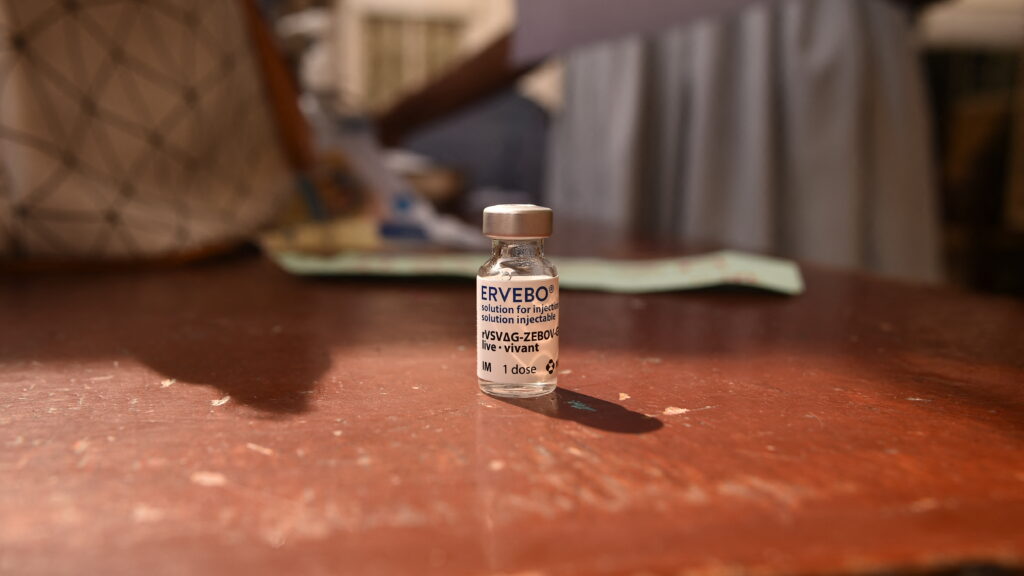
There has been some interest in trying to determine whether Merck’s Zaire ebolavirus vaccine, Ervebo, would offer some cross-protection — something that has been seen in primate testing — but WHO said it should not be used outside carefully designed clinical trials. — Helen Branswell
The woman behind the world’s biggest longevity competition
Can a $101 million prize spur the development of therapeutic treatments that can restore muscle, cognition, and immune function in older adults? Jamie Justice bets it can. The academic-turned-longevity-crusader has launched a competition with 10 finalists to test their therapies in year-long randomized clinical control trials before the winner of the grand prize is announced in 2030.
Justice’s superhero name and grand mission are not out of place in the longevity field, which attracts colorful characters with far-out theories. But her approach — which includes the dismissal of “purely scammy” companies that give longevity science a bad reputation — is turning heads. Read more to find out what Justice told STAT’s Sarah Todd during the longevity conference Vitalist Bay.
Nature installs safeguard against data manipulation
Yesterday, the journal Nature announced that it will accept “registered reports” for every field it publishes. Until now, registered reports have been used mostly in cognitive neuroscience and the behavioral and social sciences, and largely for confirmatory research.
These study proposals lay out the hypothesis, methods, and planned analyses for a given research project. Researchers submit them to the journal before doing the experiments, and if granted “in-principle acceptance,” the journal will publish the paper regardless of whether the findings were statistically significant (pending verification of adherence to the protocol and reasonable interpretation of the findings).
Because the pre-registered protocols are published in a repository, it ensures that researchers can’t bend or chop up the results to fit a different narrative. It also encourages the publication of negative or inconclusive results, which are notably missing from the literature.
Want to learn more? Read this edition of AI Prognosis, which explains why scientific literature needs more negative and non-significant results. — Brittany Trang
The unknowns of microdosing GLP-1s
Everyone’s asking me whether they should microdose GLP-1s for cosmetic weight loss, writes Jody Dushay, an assistant professor of medicine at Harvard Medical School. But microdosing GLP-1s is not real, nor is there legitimate long-term data to support it.
Direct-to-consumer companies that sell compounded products have popularized the idea of microdosing GLP-1 therapies that are not FDA-approved at doses that are not based on the landmark trials that have demonstrated the efficacy of semaglutide and tirzepatide for weight loss. The long-term cost of a small jab is unknown, and there is no way to convert dosing of a compounded product to a real GLP-1, says the self-described weight-loss doctor.
Read more from Dushay to understand why scientists need to study the effects of small amounts of these drugs before TV advertisements can make big claims about their results.
What we’re reading
- An HHS official’s stock trading is raising flags, NOTUS
- The form asked my permission to share my health data. Then it wouldn’t let me say no, The Markup
- The World Cup is a petri dish, Bloomberg