

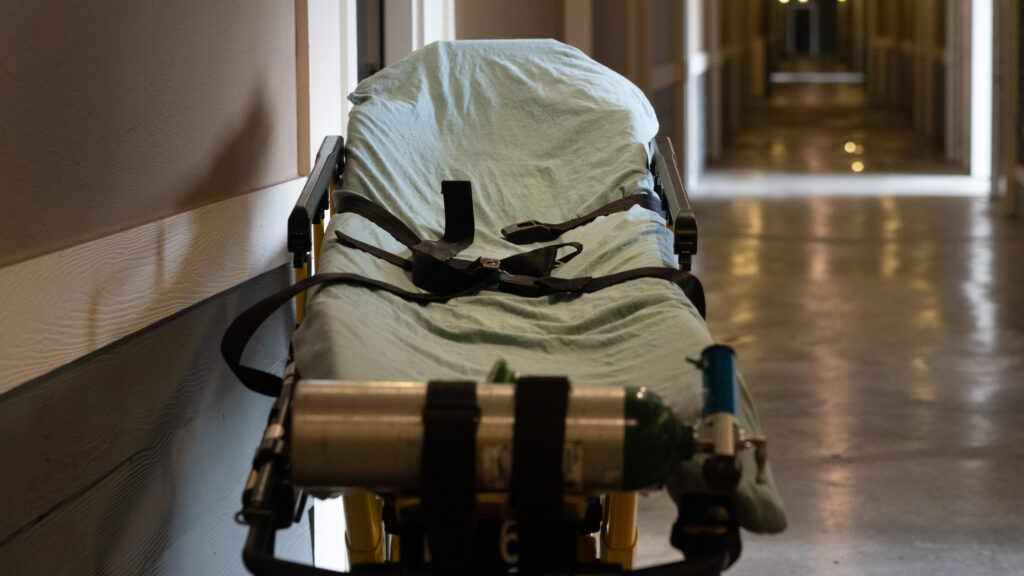
In the world of stroke care, time is everything. At stroke onset, a clot or ruptured blood vessel interrupts blood flow to the brain. Within minutes, brain cells starved of oxygen and nutrients begin to die. Every additional second that passes without blood flow increases the chance that the brain suffers irreparable damage, leading to permanent disability. With enough time, strokes become fatal, and sadly this is not uncommon. Nearly 800,000 Americans die from stroke every year nationwide, making it the fifth leading cause of death in the United States.
Surgical intervention is becoming increasingly common in stroke treatment, so many stroke patients that come to the emergency room will need to be transferred to another hospital with a specialized stroke facility for treatment. One study found that, of nearly 40,000 patients who received a surgery to treat ischemic stroke from 2012 to 2017, close to half required inter-hospital transfer. Guidelines from the Joint Commission and the Brain Attack Coalition recommend that the so-called door-in-door-out time for these patients — the time between presenting to the ER and departing for the next hospital — remains under 120 minutes.
But a new study published Tuesday in the Journal of the American Medical Association analyzing the average door-in-door-out times for stroke patients across nearly 2,000 hospitals nationwide revealed that America’s emergency departments are missing that mark by nearly an hour.
“Our regional and anecdotal experience is that this has been a very challenging issue for hospitals. And so this [study] confirmed some of our hypotheses … that this was a national problem, not just our local experience,” said Shyam Prabhakaran, chair of neurology at University of Chicago Medicine and lead author of the study.
The study also found that Black, Hispanic, and female patients, as well as people above 80 years old, all experienced longer door-in-door-out times. The extent of the disparities varied depending on the type of stroke — ischemic versus hemorrhagic — and whether or not patients were eligible for surgical intervention.
There are some caveats. First, this retrospective study analyzed patient stroke records between 2019 and 2021, during which the Covid-19 pandemic began. Pre- and post-Covid era analyses revealed that Covid increased door-in-door-out times by roughly 16 minutes overall, but the authors note that this binary assessment may not address the multilayered effects Covid-19 has on emergency medical services, hospital capacity, and bed availability.
Second, all patient records were collected from hospitals participating in the Get with the Guidelines Stroke Program. This is a “voluntary quality improvement program” which includes hospitals that have the resources to participate, said Deborah Levine, a neurology professor at the University of Michigan who was not involved in the study. “The United States has over 6,100 hospitals. Two-thirds of them do not participate in [this] program, so they might not have care that’s as good,” she said.
Korilyn Zachrison, an associate professor of emergency medicine at Massachusetts General Hospital who was not involved in the study, believes this dataset “probably biases [hospitals] toward having better times than if we were to look at all sites” nationwide.
Finally, some factors that may contribute to door-in-door-out times, like bed availability of the receiving hospital and the technological capabilities of each emergency department, were not included in the analysis as they are more difficult to quantify at the individual hospital level.
Fortunately, Levine doesn’t believe “that these factors would have a major impact on the findings or conclusions,” she said. “This is a well-done, comprehensive study using the best available data we have.”
The median door-in-door-out time of almost 109,000 stroke patients between 2019 and 2021 was 174 minutes, 54 minutes above consensus guidelines. Hemorrhagic stroke patients averaged 178 minutes; ischemic stroke patients averaged 132 minutes if eligible for surgery, 201 minutes if not eligible. Patients with more severe strokes were processed over an hour faster than patients with mild strokes.
Ischemic strokes make up 87% of all stroke cases, and are caused when a clot obstructs blood supply to the brain. Hemorrhagic strokes happen when a blood vessel in the brain ruptures, leading to excessive bleeding. Both strokes are ideally treated via surgery: In ischemic stroke, a catheter is threaded through the clot to quickly restore blood flow, while in hemorrhagic stroke, the ruptured blood vessel is sealed or clamped to minimize bleeding.
Compared to white non-Hispanic patients, ER staff took 12.36 minutes longer to transfer Black patients with ischemic stroke eligible for surgery. Similarly, it took 11.2 minutes longer to transfer Hispanic patients, 4.16 minutes longer to transfer female patients, and 12.29 minutes longer to transfer people above 80 years old. Concerns around the invasiveness of brain surgery may contribute to the delays experienced by increasingly older populations.
In a health emergency where time is so critical, these minutes could have profound impacts on patient outcomes. According to one meta-analysis, the chances of a favorable stroke outcome decline by 16% for every hour that passes without treatment.
On top of this, marginalized groups “have elevated stroke risk, making interventions to optimize door-in-door-out times even more urgent,” Levine told STAT. Studies have shown that some racial groups in the United States face higher heart disease risk and have less access to healthy food, contributing to higher rates of elevated blood pressure and increasing risk of stroke.
According to Zachrison, a patient’s door-in-door-out time could be impacted by a myriad of factors, including whether “a patient walks in the front door themselves or if they come by ambulance,” she said.
Patients who arrive by ambulance have the potential benefit of EMS prenotification, Zachrison said, in which the ambulance notifies the hospital of an incoming stroke patient before they arrive. In Prabhakaran’s study, EMS prenotification heavily influenced door-in-door-out times, shortening them by over 20 minutes on average.
But an ambulance ride in the U.S. is expensive and not covered by some insurance policies. This cost could be prohibitive for some low-income people of color, contributing to the disparities in door-in-door-out times observed among Black and Hispanic groups.
Once a patient arrives at the emergency room, a slew of other variables could prolong processing time. First, patients must be evaluated by emergency room doctors to diagnose a stroke, which often requires imaging. “There may be procedural or operational challenges in getting imaging done in a timely manner in a small emergency room,” Prabhakaran said. “Maybe they are short-staffed. Maybe the scanner is down. Maybe it’s backed up because other patients are using it,” he said. Additionally, not all strokes show up in imaging scans. In these cases, doctors must rely on a patient’s symptoms to make a clinical diagnosis, which can be more difficult.
Prabhakaran believes there may be many explanations behind racial and ethnic disparities in diagnosis. Presentations of stroke in some racial groups may be slightly different than textbook symptoms, which have historically referenced white males. There may be subtle variations in “how their symptoms are described, and how the symptoms look, that [make] physicians less certain about what’s going on,” he said. But “you worry, of course… [of] actual bias in the system and the doctors, and [that] patients are treated differently based on different categories.”
After diagnosis comes the arrangement of transfer and transport. While there are hopefully existing relationships between hospitals to streamline this process, “there’s some manual work done by emergency physicians, call center nurses and coordinators, to get someone on the phone at another hospital to accept,” Prabhakaran said.
“Our system is just really stretched,” Zachrison said. “Hospitals are increasingly crowded and beyond capacity,” making it harder for them to accept patients. Bed availability and hospital capacity were not considered in the current study’s analysis.
Finally, another ambulance must be arranged to transfer the patient to the accepting hospital. On top of transfer paperwork and insurance headaches, “there’s a really critical shortage of emergency medical services in the workforce right now,” Zachrison said, prolonging door-in-door-out times.
Patients in marginalized groups could face additional disadvantages “insofar as accessing the types of resources that you need to be able to go from one hospital to another quickly,” Prabhakaran said. Controlling for “insurance did play a role in accounting for some of those disparities … so clearly that was part of it,” he said.
It’s “a lot of steps. And any one of those things could break down,” Prabhakaran said. “Our data suggest that we have a long way to go to get door-in-door-out times to a level that [is] acceptable.”
But Prabhakaran is hopeful that, in the future, door-in-door-out times may see the level of improvement that other aspects of stroke care have seen. For instance, door-to-needle times, or the time that elapses before a drug is delivered intravenously, have “come down dramatically in the last 10 to 20 years,” he said. “It used to be that 60 minutes was the ambition. Now 30 minutes is the norm for a lot of hospitals … door-in-door-out is something that we now need to focus on.”
Though overall door-in-door-out times need to be reduced to improve patient outcomes at large, Levine stressed how more work needs to focus on the factors that disproportionately affect marginalized groups.
“These delays put older, Black, and Hispanic patients with stroke at risk of not receiving effective treatments … that improve functional outcomes,” she said. “It is critical we understand and reduce these inequities, so all stroke patients get the care they need and deserve, and ultimately have the best quality of life possible.”