

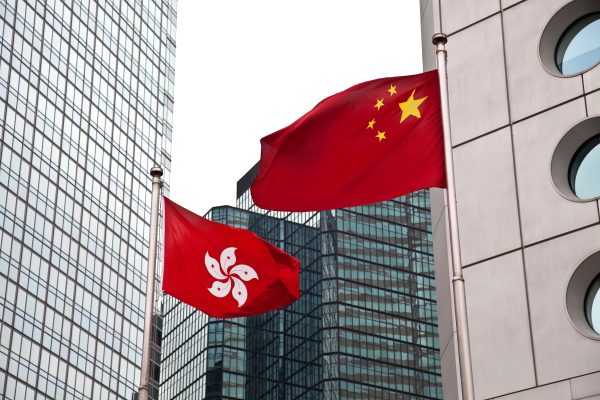
As the geopolitical landscape becomes increasingly fraught, Hong Kong is positioning itself as a pivotal player in China’s national strategy and the semiconductor development, particularly in circumventing U.S. export controls and driving technological innovation. The recent developments in Hong Kong’s investments in third-generation semiconductors highlight a deliberate strategy to align with China’s objectives while exploiting gaps in U.S. regulations.
Hong Kong’s Latest Investment in Semiconductors
In May 2024, the Legislative Council’s Finance Committee discussed a significant investment of 2.83 billion Hong Kong dollars (HK$) to establish the “Hong Kong Microelectronics R&D Institute,” focused on third-generation semiconductors. This initiative includes setting up a pilot production line equipped with essential tools such as I-line lithography equipment, photoresist development tools, high-temperature ion implanters, high-temperature annealing furnaces, and thin film tools. The rapid approval of this funding, in just 84 minutes, came under the urging of Hong Kong Technology and Innovation Secretary Sun Dong.
When asked by pro-Beijing lawmakers whether the technology in question is banned by the U.S. government, Sun emphasized that I-line lithography tools required for third-generation semiconductor manufacturing are fortunately not restricted under U.S. export controls yet. Therefore, the funding should be approved rapidly before this loophole is closed.
In other words, Hong Kong is seeking to develop technologies that are not yet under stringent scrutiny, aligning with China’s broader strategy to achieve technological self-sufficiency amid increasing tensions with the United States.
Understanding Third-Generation Semiconductors and I-line Lithography Tools
I-line lithography tools are a type of photolithography equipment used in the semiconductor manufacturing process. These tools utilize ultraviolet light with a wavelength of 365 nanometers to pattern intricate designs onto silicon wafers. While I-line lithography is an older technology compared to deep ultraviolet (DUV) and extreme ultraviolet (EUV) lithography, it remains significant in manufacturing certain types of chips. These include third-generation semiconductors like silicon carbide (SiC) and gallium nitride (GaN), which are used in high-performance applications but do not always require the extremely fine resolution provided by newer lithography technologies.
These third-generation semiconductors, primarily composed of wide-bandgap materials such as SiC and GaN, offer significant advantages over their first-generation (silicon-based) and second-generation (compound semiconductors) counterparts. These materials boast higher efficiency, greater thermal stability, and higher power density, making them ideal for applications in electric vehicles, renewable energy systems, and high-frequency communication devices.
The choice to focus on third-generation semiconductors is a strategic move for China and Hong Kong to sidestep existing U.S. export controls. By investing heavily in less advanced technologies and equipment that are not yet subject to U.S. restrictions, Hong Kong is effectively creating a buffer against potential future sanctions.
Sun emphasized the necessity for rapid funding approval and procurement before it was too late, reflecting an acute awareness of the volatile export control landscape and policies of the Bureau of Industry and Security under the U.S. Department of Commerce. There is a palpable sense of urgency to establish these capabilities before any further restrictions can be imposed.
Hong Kong’s Technological Blueprint and Its Strategic Implications
This strategy is not new. As far back as 2022, the Hong Kong Applied Science and Technology Research Institute (ASTRI) advocated for increased resources to attract Chinese American scientific talent to Hong Kong, thus contributing to China’s semiconductor development. ASTRI CEO Ye Chenghui stated, “Mainland chip companies may find it difficult to recruit American Chinese at present. If American Chinese are willing to settle in Hong Kong, these technologies can be brought to the country, representing the most advanced and superior fields, ultimately driving the entire national semiconductor development.”
This reflects a long-standing operational model where China leverages nationalistic and united front strategies to recruit overseas Chinese talent to further its technological ambitions. In Hong Kong’s case, the hope is that its society and economy – which, while much-constricted under the 2020 National Security Law, are still freer than mainland China’s – will prove more attractive to the Chinese diaspora.
Furthermore, the establishment of the National Engineering Research Center for Application Specific Integrated Circuit System (Hong Kong Branch) in 2012, endorsed by China’s Ministry of Science and Technology, highlights a decade-long collaboration on semiconductors specifically. This center focuses on research in areas like 3D integrated chips, third-generation semiconductors, and low-power wireless connectivity chips.
Hong Kong’s latest 2024/2025 policy address further cements its grand strategy to become an international innovation and technology hub. The city has outlined a comprehensive plan to boost its innovation infrastructure, research capabilities, and talent pool. The establishment of the Hong Kong Microelectronics R&D Institute is a significant component of this strategy, aimed at fostering collaboration between universities, research centers, and industry to advance third-generation semiconductor technologies.
A key pillar of this strategy is the Hong Kong-Shenzhen Innovation and Technology Park, located in the Lok Ma Chau Loop. This park is designed to integrate Hong Kong more deeply into the Greater Bay Area, thereby aligning with China’s national development strategy while connecting more closely with global markets. The park’s first buildings will be operational by the end of this year, with efforts already underway to attract investment and talent. The government’s ongoing support for the park’s development, including the drafting of a development white paper, underscores its strategic importance.
In addition to the park, Cyberport is establishing an AI Supercomputing Center to meet the computational needs of research institutions and industries. The first phase of this facility is expected to be operational by the end of this year, with the center projected to provide up to 300 petaflops of computing power by early 2026, equivalent to processing nearly 10 billion images per hour. This initiative is part of a broader HK$30 billion funding scheme to support AI development in Hong Kong, attracting global AI experts and enterprises.
A notable aspect of Hong Kong’s strategy involves leveraging its universities’ technology transfer offices. From the 2024/2025 fiscal year, each of the eight subsidized universities will receive up to HK$16 million annually to enhance their technology transfer and market expansion services. This approach suggests a dual-use strategy where academic institutions act as conduits for transferring advanced technologies, potentially benefiting China’s broader strategic objectives. The minimal oversight and collaboration with international institutions raise concerns about these technologies eventually falling into the hands of Chinese authorities, aligning with the Chinese Communist Party’s military-civil fusion goals.
Conclusion
Currently, China significantly lags in producing first and second-generation chips, primarily silicon-based, which are crucial for artificial intelligence (AI) and graphics processing units (GPUs). These chips are the backbone of modern computing, driving innovations in AI, big data, and high-performance computing. China’s inability to domestically produce these advanced chips leaves it dependent on foreign technology, creating a strategic vulnerability. While third-generation chips offer potential growth, their ability to elevate China’s position in the global semiconductor industry remains uncertain and requires careful observation.
Despite this, Hong Kong’s strategic investments in third-generation semiconductors and AI are noteworthy. These investments are a calculated response to the evolving geopolitical and economic landscape. By focusing on technologies not yet heavily regulated by international controls, Hong Kong is positioning itself as a critical player in China’s national strategy for technological self-reliance. This approach helps circumvent U.S. export controls and drives innovation in high-impact areas, aligning with China’s long-term goals. The situation in Hong Kong should be closely watched by the U.S. authorities and relevant stakeholders.