

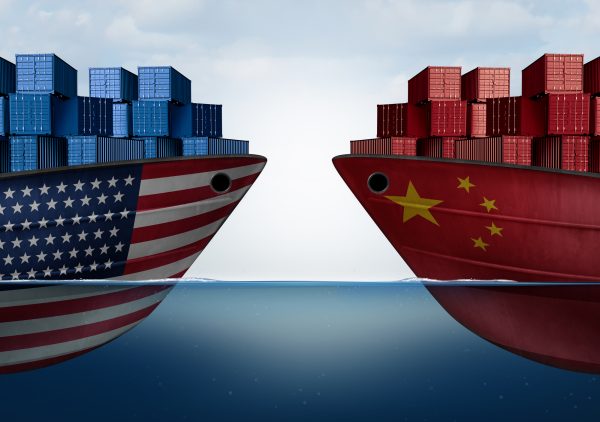
The great rapprochement between China and the United States in the 1970s was driven by geopolitical calculations: The Nixon administration’s gambit to form a united front with Mao’s China against the Soviet Union. But in the long run, the biggest outcome may have been economic. The reopening of China-U.S. trade lines would eventually rewire the entire global economy, turning China into the “world’s factory” while hollowing out manufacturing employment in the United States.
Elizabeth O’Brien Ingleson delves into this seismic transformation in her new book, “Made in China: When US-China Interests Converged to Transform Global Trade.” In this interview with The Diplomat, Ingleson, an assistant professor of international history at the London School of Economics, explores how the shift toward neoliberal capitalism in the 1970s and 1980s rewrote the dynamics of China-U.S. trade – and ultimately China-U.S. relations.
“In order for China to converge with global capitalism, the United States – the largest and most powerful player in the capitalist system – needed to accommodate China’s needs,” she explained. And that is story that unfolded in boardrooms and factory floors on both sides of the Pacific Ocean.
Overviews of the China-U.S. trade relationship often focus on the shifts in China’s economic policy, particularly the “reform and opening” approach introduced in 1978. But you argue that “transformation in the U.S. economy was critical to China’s eventual convergence with global capitalism.” How did the economic changes happening in both countries reinforce each other?
One of the big questions scholars of modern China are grappling with is how and why the country converged with the global capitalist system. An earlier debate among scholars sought to understand what Kenneth Pomeranz memorably described as the “great divergence” in industrialization between Northwest Europe and East Asia since the mid-18th century. More recently, a group of economists have put forward the notion of “convergence” as a means of understanding China’s relationship to global capitalism in the latter part of the 20th century.
I think this is a useful framework for understanding China’s transformation; what might be best be labelled the “great convergence” with global capitalism. The reform and opening Deng announced in late 1978 looms large in these accounts – and for good reason. The post-1978 changes were indeed crucial to this process. But scholars whose main focus is on China have tended to pay less attention to the capitalist system with which China began to engage. In order for China to converge with global capitalism, the United States – the largest and most powerful player in the capitalist system – needed to accommodate China’s needs.
So, my interest was in bringing these two dynamics together: the changes happening within China as well as those happening within U.S. capitalism. And I found that even before Deng’s reforms, Chinese reformers began to experiment with ways of integrating China’s own development goals with processes that were underway within the United States and accelerating in the 1970s: the internationalization of manufacturing through cheap offshore labor and emerging supply chains.
American businesspeople had already begun slowly internationalizing their manufacturing before trade with China reopened. In the 1950s and 1960s, they turned to noncommunist sources like Japan and Taiwan. In the 1970s, China’s leaders began to adapt to these emerging dynamics, and in the process they slowly transcended the Cold War divisions that had so long divided China and the United States.
In most parts of the world, the Cold War ended in the late 1980s when the Soviet Union began to collapse and the U.S.-led vision of neoliberal capitalism became the key organizing principle for social development. But in the case of U.S.-China relations, the Cold War ended without systemic collapse in either nation. Instead, Cold War divisions between these two nations fizzled out during the 1970s through a gradual convergence of interests between U.S. capitalism and Chinese communism.
The history I tell can’t be told without exploring the decisions and actions happening in both countries. I wasn’t able to make sense of the changes happening amongst U.S. business community trading with China without looking deeply and with proper consideration of what was happening in China. And the reverse is also true too. The ways that Chinese pragmatists started to integrate with the capitalist system necessitated an understanding of changes happening in the post-Bretton Woods United States. In that sense it’s very much a transnational story – one that had a wide-reaching impact on global capitalism and trade.
One of the central themes of your book is the importance of the shift in how China was imagined by U.S. businesses and economists: from a potential market for U.S. goods to a source of cheap labor. How did that change in U.S. business perceptions mesh with the goals of the Chinese state at the time?
Yes, for centuries, businesspeople had seen in China the promise of a huge consumer market, what one U.S. businessman famously described in the 1930s as “400 million customers.” To them, China trade meant expanding exports. In the 1970s, U.S. and Chinese traders together reframed the meaning of the China market. They began to nurture a new promise of outsourced manufacturing – a proverbial 800 million workers.
As Chinese pragmatists debated ways of accelerating China’s industrialization, they increasingly experimented with using the cash generated from sales of exports to fund their development efforts. By selling textiles and raw materials they hoped to buy factories, airplanes, and so on. China’s huge workforce offered the potential to create cheap manufactured goods that could be sold to the United States and elsewhere, in turn generating the money needed to buy the infrastructure to accelerate China’s industrialization.
The “mesh” happened in manufacturing. As American corporations internationalized manufacturing operations to other parts of the world, they began to see China as offering the potential to join – and assist – in this process. For most of the decade China did not permit foreign direct investment, but it did offer cheap labor. So the interests of Chinese pragmatists and U.S. capitalists began to align. The consequence of this alignment was a fundamental reconfiguration of what it meant to speak of “U.S.-China trade” – no longer a China market of 400 million customers, but one of workers instead.
It’s important to underscore, however, that these efforts were met with fierce opposition. The 1970s was a period immense social and political upheaval in China, overshadowed by Mao’s illness and eventual death in 1976. There was no certainty that these halting efforts in the 1970s would continue. It’s easy, I think, from today’s perspective to consider China’s convergence with global capitalism to be a natural or inevitable process of economic growth and development. But the opposition to the trade relationship and problems underpinning it are precisely why it was not inevitable: trade was difficult, and profit was far from certain.
You note that in the early days of China-U.S. re-engagement, “Leaders in both nations understood and used trade as a tool of diplomacy, but in very different ways.” What were the major differences in their approaches, and does this still hold true today?
The first years of U.S.-China trade developed in the strange limbo period of rapprochement. Despite the dramatic meeting between President Nixon and Chairman Mao in Beijing in 1972, it took until two new leaders came to power – Jimmy Carter and Deng Xiaoping – for the two countries to finally reestablish diplomatic relations, which they announced in December 1978. Throughout this period, leaders in both the United States and China treated trade as an incentive – but one to be offered at different points of the negotiation process. The United States used it as an incentive prior to full diplomatic normalization, as an indication of its commitment to the rapprochement process. China used trade as an incentive to be provided after improvements in geopolitical negotiations.
These diverging attitudes came to complement one another in a surprising way: Chinese exports to the United States took on diplomatic importance. One of the major economic problems that emerged in the 1970s was a trade imbalance in the United States’ favor. The total value of China’s imports was greater than its exports to the United States and, especially as diplomacy began to stall in the middle of the decade, Chinese officials wanted this redressed. In response, American diplomatic and business leaders worked to increase U.S. imports of Chinese goods. They did so precisely because of their own assumptions that good trade relations were important for assisting the parallel diplomatic efforts. But this aligned with – and helped develop – the mesh between U.S. capitalists and the Chinese state.
Today, the dynamic is more complicated, precisely because of the changes that occurred throughout the 1970s. The internationalization of manufacturing has fundamentally changed the relationship between trade and the nation state. In our post-COVID era we’re all familiar with the centrality of supply chains to global manufacturing and trade. But the politics of trade remains remarkably bound by the nation state. If “Made in China” represents a threat to American manufacturing, then “Made in America” suggests its effects can be countered, too, by the nation state.
The long history of “yellow peril” fears combined with the national pride engendered by the ameliorative “Made in America” have long been a winning combination in American politics. This is why the very first executive order President Biden passed in early 2021 was dubbed “Made in America.” It called for more federal agencies to use products produced within the United States. However, the fine-print of Biden’s executive order reveals the messiness behind country-of-origin labels today. The standard for his Made in America plan would be met if only 55 percent of components were manufactured within the United States.
So, the 1970s approach of using trade as a political tool – in today’s context that often means applying tariffs – doesn’t impact China in the way that it would have 50 years ago. Despite today’s tariffs, China-made semiconductors are entering the United States in increasing number via Mexico, for example. What this history reveals is that in order to redress the very real problems that American workers are facing, we need to focus on the factors that led us to where we are today. Most particularly: a politics that prioritized the interests of capital over labor.
Trade has been central to China-U.S. relations since the process of normalization began. Today, however, trade is increasingly viewed through a national security lens in Washington; “de-risking” is the order of the day. Were there similar concerns in the 1970s, when the pillars of China-U.S. trade relations were being built?
In the 1970s, national security concerns certainly remained in certain pockets of Washington, particularly in the Pentagon regarding sales of technology that might have military application. But these were concerns that became more and more of a minority voice rather than the rising fears we hear today. In that sense, we can see how the Cold War ended for U.S.-China relations in the 1970s: as a slow fade out of tensions.
Viewed from 2024, this history of converging interests between the United States and China reads more and more like a story of the distant past. But when I first started this research, in the early 2010s, there were still hopes that the interdependent trade relationship might help bring about positive geopolitical relations. In the space of a decade a lot has changed. But living through this period as I researched and wrote about a different decade really brought home to me how much can change in a relatively short period of time due to decisions – and shared visions – of those with more political and economic power than others.
Labor groups were among the few to accurately foresee the impact of China-U.S. economic engagement on the American economy. To what extent were labor groups specifically worried about China, versus more generally concerned about the trend of manufacturing moving overseas, regardless of destination?
China held specific concern in the sense that the size of its population dramatically amplified the broader trends happening in the U.S. manufacturing sector. There was no way of knowing in the 1970s that China would indeed become such a significant source of labor. China was extremely poor with a weak industrial base – another key reason its convergence with global capitalism was not inevitable. But signs were certainly emerging that things might be changing in China. And this came at precisely the moment U.S. manufacturing was turning towards overseas sources of cheap labor.
It was the U.S. textile industry that voiced fears about China the loudest. This was an industry whose workforce was almost entirely women of color, an important reason why they were not given the attention they were pushing for. They weren’t the hard-hat-wearing men of the auto and steel industries that played a prominent role in U.S. politics of the 1970s. But even more importantly, many of the white male leaders of the textile industry who were pursuing – on behalf of these women of color – restrictions on trade with China were calling for market order rather than fundamental reforms that would protect working Americans.
The idea of moving to cheap labor overseas was not a problem per se for many within the textile industry. Instead, they were looking for a transition toward outsourced manufacturing that would unfold steadily, giving managers time to adjust their production lines to overseas cheap labor. Their concern was with China specifically because its communist state structures made it easier for China to undercut labor costs and dump cheap goods. Dumping was disruptive; it made it harder for U.S. textile managers to slowly and steadily move to overseas labor.
Ultimately, Chinese leaders’ ability to lift their population out of poverty came at the expense of ununionized minimum-wage textile workers in the United States and later other industries as well. But that impact on U.S. workers was fundamentally enabled by the decisions of industry leaders and executives at U.S. corporations, aided by legislation in Washington. U.S. corporations and businesspeople were therefore crucial linchpins in both China’s industrialization and the United States’ deindustrialization.
In the United States this was a deindustrialization of labor. Between the late 1940s and early 2020s, manufacturing in the United States remained relatively stable as a proportion of real GDP. The United States continues to make goods. In fact, until 2010 it was the world’s largest manufacturing country, after which it remained second only to China. It was not manufacturing that went into decline in the United States in the 1970s, but its employment: a result, largely, of new technologies used in the manufacturing process, new kinds of high-tech goods being made, and the movement of labor-intensive industries to factories overseas.
The continued focus in Washington today on the threat of “Made in China” peddles the myth that the United States is no longer a manufacturing nation and, in the process, it removes accountability from corporate decisions that pursue low wages over all else. The problem at the heart of U.S. industrial policy today, then, isn’t China. It’s a politics that enables these actions by prioritizing capital over labor.