

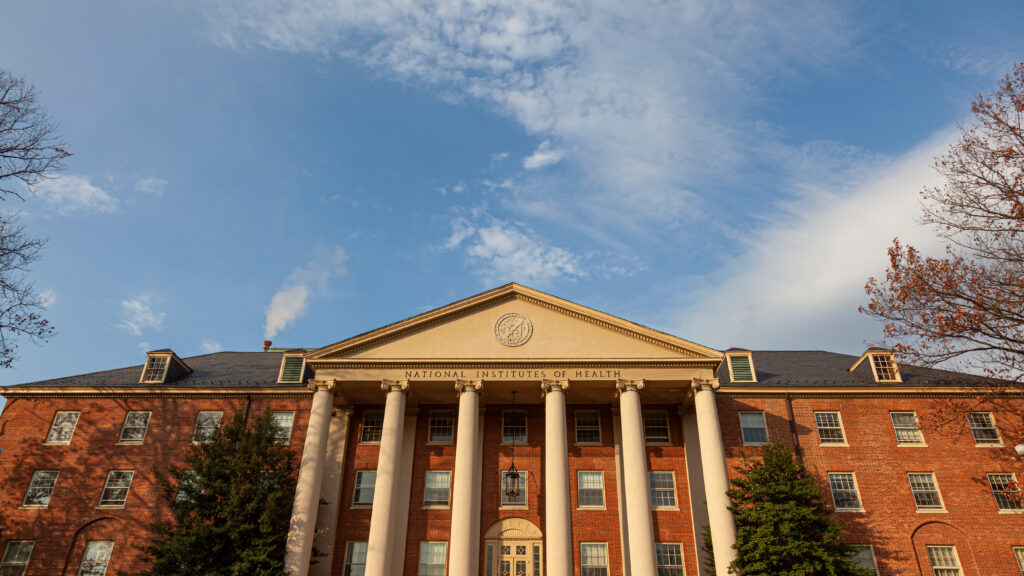
More than 2.5 years after the National Institutes of Health received a $1 billion mandate from Congress to study and treat long Covid, the agency has finally launched clinical trials for the often-debilitating condition. But both scientists who study long Covid and patients who have struggled with it say the trials are unlikely to deliver meaningful treatments, suggesting the federal government’s landmark Covid research effort may have been wasted.
Millions of Americans have suffered symptoms ranging from debilitating fatigue to heart issues, some still sick after initial coronavirus infections in the pandemic’s first wave. Congress provided the NIH with $1.15 billion to help patients in December 2020 — and the agency has now spent most of that funding, according to a detailed new budget breakdown shared with MuckRock and STAT, with the majority going towards observational research rather than clinical trials.
Among the trials announced so far, the NIH’s long Covid initiative, called RECOVER, is studying only a handful of pharmaceutical treatments, along with several behavioral options. These treatments will not address the underlying biological issues of long Covid, say scientists and patient advocates who reviewed the newly public details about the studies.
Scientists also expressed concerns about how the RECOVER studies will measure the way the treatments affect patients. Without study designs that account for unique long Covid symptoms, such as delayed fatigue after exertion, the trials may miss positive impacts — or harmful side effects — of the treatments. Potential errors in the trials could have been avoided through transparency and better engagement with patients, experts and advocates say.
“Nobody in the patient community or the research community thinks this is going to be sufficient to solve the problem,” said Charlie McCone, a long Covid advocate and patient representative for RECOVER. “And there’s been no indication that there will be funding for further trials.”
The initiative’s $1.15 billion of funding has been “almost fully obligated” to different aspects of RECOVER as of June 2023, according to a previously unpublished budget breakdown that NIH Acting Director Lawrence Tabak sent to Rep. Anna Eshoo (D-Calif.) in late June. Eshoo requested information about the NIH’s long Covid research in May, following MuckRock and STAT’s investigation into RECOVER’s wasted resources.
The new budget information details exactly how much funding the agency has sunk into observational research, rather than treatment trials that would help patients directly.
About 15% of the funding — $171.5 million — went to clinical trials, under the leadership of Duke University’s Clinical Research Institute. Meanwhile, the NIH allocated the vast majority of its funds to research aimed at better understanding long Covid symptoms, according to the budget document. This includes $537 million to set up and study patient cohorts, $149 million for studying biological samples and health records, $122 million for following patients in the future and $56 million for administrative tasks provided by consulting firms RTI International and Deloitte.
This funding “has been largely wasted,” said David Putrino, director of rehabilitation innovation at Mount Sinai and a clinician studying long Covid. RECOVER’s research findings so far, such as a paper about common symptoms published in May 2023, have not added new insights to the field, he said. Instead, the agency is following an “old rulebook of biological discovery” that may take decades to identify novel treatments.
If RECOVER’s clinical trials do fail, it would be “really a travesty” after all the time and money poured into this effort, said Julia Moore Vogel, a scientist at the Scripps Translational Institute living with long Covid. Vogel and millions of other Americans with the condition are waiting on treatments to help them get back to their pre-pandemic lives. About 6% of all U.S. adults are currently experiencing long Covid symptoms, according to estimates from the Centers for Disease Control and Prevention. Of that group, seven in ten have their activities limited by their symptoms, and one in five have “significant” limitations.
Patients feel that the NIH’s delays and limited clinical trial plans do not reflect the urgency needed to find treatments. The current trials are “too little and too late,” said patient advocate Devin Russell, who has been sick since March 2020.
In a statement to MuckRock and STAT responding to questions about the trials, the agency defended its plans by referencing an extensive review process incorporating input from scientists and patients. RECOVER leaders acknowledged that additional research will be necessary, but failed to share specific plans for funding more studies.
“The RECOVER clinical trials team has followed a highly consultative process toward clinical trials,” said a spokesperson for the Department of Health and Human Services, adding that the NIH’s “comprehensive approach is poised to yield results as quickly as possible.”
Treating symptoms, not the underlying disease
The NIH and its partners at Duke have announced five clinical trials testing about a dozen treatments in total. Each trial will target one common grouping of long Covid symptoms, including persistent coronavirus lingering in the body, neurological symptoms, problems with the autonomic nervous system, sleep challenges and fatigue.
RECOVER’s leadership selected treatments based on proposals initially sent to the NIH in May 2022, the team said in a statement. Scientists and patient representatives advising the initiative reviewed the proposals, but the NIH made final decisions about which interventions to test.
Most of the treatments on deck for testing are underwhelming, said patients and experts who reviewed the plans and spoke to MuckRock and STAT. Several patients said they are particularly disappointed to see relatively few drugs among the treatments that NIH will test: the antiviral Paxlovid, two common drugs for sleep disorders and two drugs used for autoimmune disorders.
Long Covid patients desperate for symptom relief have already self-experimented with most of these treatments and many others, ranging from over-the-counter medications to meditation and yoga, Vogel said.
“I’m really anxious to see pharmaceutical interventions because a lot of patients have tried all of the other things that you might try,” she added.
There’s an overall dearth of drug trials for long Covid, said Ursula Hofer, editor in chief of The Lancet Infectious Diseases. Hofer contributed to a recent editorial that describes the issue: among 386 clinical trials related to long Covid listed on the government registry ClinicalTrials.gov, just 12 were currently recruiting and testing pharmacological interventions, Hofer and colleagues found.
“We need pharmaceutical treatments because there’s clearly something wrong with the patients,” Hofer said. Behavioral changes and other basic therapies don’t “fix the underlying issue” of long Covid, she said.
One reason for the lack of promising treatments among RECOVER’s trials is the initiative’s overall failure to learn from past research in other chronic diseases that share symptoms with long Covid, said Todd Davenport, a professor and rehabilitation expert at University of the Pacific. Davenport has studied myalgic encephalomyelitis/chronic fatigue syndrome (ME/CFS), a condition that is now a common diagnosis for long Covid patients.
Scientists on the RECOVER team “have parachuted into post-infectious illness and are now trying these things for the first time, to them,” Davenport said. “But it’s clear they haven’t done the reading.”
Davenport and other scientists outside of RECOVER have long lists of drugs that they’d like to test, most of which are not included in the NIH study.
Top of the list for many patients is low-dose naltrexone, an addiction drug that some people with long Covid and similar conditions have found helpful for alleviating symptoms. Some smaller trials are testing the drug, but a RECOVER-sponsored trial could lead to a better understanding of its potential use and legitimize it at a larger scale, said Jaime Seltzer, director of scientific and medical outreach at the ME/CFS organization ME Action.
The current slate of trials is “truly absurd,” she said, considering the large number of people who need help and the federal money provided to RECOVER.
Concerns about adaptation, engagement
For the clinical trials that are testing pharmaceutical treatments, scientists who reviewed RECOVER study designs have concerns about how the trials are structured. The NIH has claimed to consider “extensive feedback” from patients and that its trials will adapt quickly to new findings, but experts are skeptical that the agency will follow through.
Paxlovid, for example, has been a priority for RECOVER since October 2022, when the NIH and Duke announced that a clinical trial would study the antiviral medication. In late June, a similar trial at Stanford University was stopped prematurely after an interim data analysis showed Paxlovid was not helping the trial’s participants.
RECOVER will test the drug for a longer course than the Stanford study did: 25 days, compared to 15. The RECOVER team said it “had already been planning” a longer study period when the disappointing Stanford study results were first reported, and outside researchers would like to see further changes. The 25-day study period is still “far too short” to see significant results, Seltzer said, as past studies of antiviral drugs for ME/CFS suggest that months of treatment are needed to impact symptoms. There are other antiviral drugs that could be tried as well, she added.
The NIH’s trials also may fail to correctly measure how patients respond to treatments, experts say. Lauren Stiles, a dysautonomia researcher and president of the advocacy group Dysautonomia International, is particularly worried about the trial focused on the autonomic nervous system. She serves as a patient representative within RECOVER advising this trial and has reviewed drafts of the study’s design.
The trial will test intravenous immunoglobulin (IVIG), a treatment used for people with compromised immune systems, as well as ivabradine, a drug used to treat chronic heart failure. IVIG, in particular, could help people with long Covid by boosting patients’ immune systems, but RECOVER’s trial may compare it against another drug that has similar effects for patients with autonomic symptoms — and may fail to measure its impacts with the appropriate tests, Stiles said.
In response to a question about why RECOVER may have disregarded a patient representative’s feedback in designing this trial, the initiative’s leaders said: “Patients have been at the center of RECOVER from the beginning and have provided invaluable input to help improve the program.” The autonomic trial is currently going through FDA review and will launch in the next two to three months, according to the NIH, so the design could change.
Another potential improvement would be incorporating patients’ capacity for exertion into all trials, said Davenport, the rehabilitation expert.
One of the most common long Covid symptoms is post-exertional malaise, a dramatic worsening of symptoms after physical or mental exertion. For patients, measuring whether “they’re able to do more of their activity with less symptoms” should be considered for trial results, Davenport said. Conversely, increased symptoms after a treatment could indicate a safety risk.
This type of measurement should be particularly important for RECOVER’s neurological trial, in which patients will do computer training programs intended to help with cognitive symptoms, Davenport said. Such programs could trigger post-exertional malaise, in a similar manner to the heavily criticized exercise study that RECOVER has put on hold.
“The cognitive platform and the exercise intolerance platform really have the same foundational problems,” Davenport said.
The exercise study, meanwhile, is currently “under development” as RECOVER seeks further input from scientists and patients and will launch by the end of 2023, the initiative’s leaders said. Their statement did not include further details about how RECOVER is revising this trial.
RECOVER could have avoided potential errors in its study design through direct outreach with patients, earlier in the research process, experts say. The program includes many patients serving on advisory committees, more than 30 of whom were directly involved with reviewing clinical trial proposals, according to RECOVER’s statement. But it’s unclear how this feedback was incorporated into clinical trial plans.
What’s next for NIH?
Scientists and patient advocates who spoke to MuckRock and STAT agree that the current slate of clinical trials is unlikely to find meaningful treatments for long Covid. In the meantime, millions of Americans will still be sick, some even unable to work or participate in other day-to-day activities.
At a press briefing discussing the current trials, NIH officials acknowledged they will need more funding to continue studying this disease, but it’s unclear where this money will come from as the agency faces potential budget cuts. It’s also unclear when further trials might start, as the current clinical trials are expected to run “until at least fiscal year 2027,” per Tabak’s letter to Rep. Eshoo.
RECOVER leaders pointed out that scientists can also submit long Covid projects to the NIH in the agency’s regular application cycles.
Another option might be long Covid requests in the NIH’s budget proposals for 2025, said Michael Sieverts, a member of the long Covid Patient-Led Research Collaborative who has a background in federal budgeting. But even then, “if the next trials aren’t funded until 2025, they’re not starting for 18 months” after that, he said.
Such long waits — and reliance on typical funding procedures — stand in stark contrast to the urgency that many scientists outside of RECOVER, such as Putrino at Mount Sinai, feel in studying long Covid. Patients deserve fast answers and disruptive research, not “incremental innovation,” he said. Putrino expects that scientists receiving funding from private sources will find those answers far more quickly than the NIH will.