

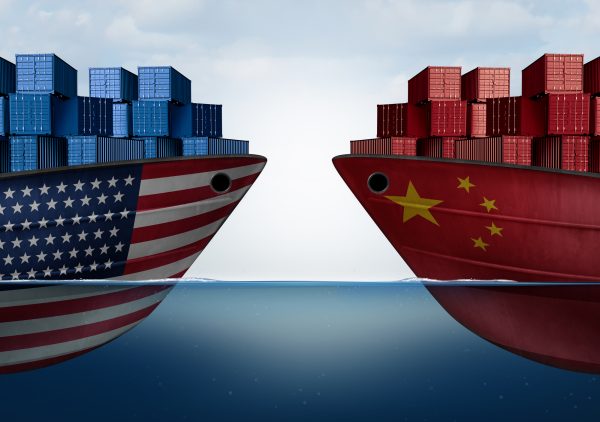
On May 14, U.S. Trade Representative Katherine Tai released a review report on the Section 301 tariffs imposed on China and issued a statement indicating that President Joe Biden had directed her to take further action. This includes imposing additional tariffs of 25 percent to 100 percent on strategic products from China, such as electric vehicles, solar cells, and medical supplies. Subsequently, the White House announced new tariffs on $18 billion worth of Chinese imports.
After a period of noticeable easing, China-U.S. relations seem to be becoming tense again. However, given the scope and scale of these new tariffs, along with the Biden administration’s strategic considerations, there is little need to worry about a new trade war between the United States and China this year – even factoring in potential Chinese countermeasures. But next year remains uncertain.
First, the newly announced tariffs have been long anticipated and involve a relatively modest total amount. Biden has decided to maintain existing tariffs on over $300 billion worth of Chinese goods. The newly added tariffs affect goods valued at $18 billion, indicating a limited impact.
The details of the new tariff list are significant. The tariffs cover seven categories, with four categories seeing increases to approximately 25 percent. The tariff on electric vehicles has been raised to 100 percent, and tariffs on semiconductors and certain medical products have increased to 50 percent. This indicates that Biden is strategically targeting key industries, particularly clean energy and semiconductors.
In the 2018 China-U.S. trade war, Washington imposed tariffs ranging from 10 percent to 25 percent on four batches of Chinese export goods. These tariffs remain in effect, with the average tariff rate on Chinese exports to the United States standing at 19 percent. Comparatively, the current tariff measures are more restrained both in scale and in the extent of adjustments.
While the previous tariffs had a broader impact, affecting a wide range of goods, the new tariffs are more targeted. The recently announced tariffs are focused on strategic sectors, particularly clean energy and semiconductors. This indicates a strategic and cautious approach by the Biden administration to address specific national security concerns without provoking a full-scale trade war. This more measured strategy balances the need to protect national interests with the desire to avoid unnecessary economic disruptions.
By maintaining pressure on critical sectors while limiting the overall economic impact, the Biden administration’s current tariff policy aims to safeguard U.S. interests while mitigating the risk of escalating tensions. Given these considerations, it is evident that the tariff strategy is designed to be less disruptive, focusing on key areas that are crucial for national security and technological leadership. This approach underscores a nuanced understanding of the complexities of international trade and the need for strategic precision in policy implementation.
Second, these tariffs are unlikely to substantially impact Chinese exports or fuel U.S. inflation. New energy products, such as batteries and electric vehicles, exported from China to the United States represent a negligible share of China’s overall exports. For instance, in 2023, solar cell exports to the U.S. amounted to $3.35 million, a mere 0.1 percent of China’s total solar cell exports. Similarly, solar panel exports were $13.15 million, just 0.03 percent of the total.
China’s medical product industry might face more significant challenges from the new tariffs. In 2022, China exported $30.9 billion worth of medical supplies to the U.S., accounting for about one-fifth of its total medical exports. This sector could therefore see more substantial disruptions.
Overall, however, the Biden administration’s approach demonstrates a strategic focus on critical industries while mitigating the broader economic impacts. This calculated move aims to address national security concerns without triggering extensive economic fallout.
For the Biden administration, the symbolic significance of these tariffs eclipses their practical impact. The tariffs on steel and aluminum fulfill Biden’s commitment to Rust Belt voters. Additionally, the increased tariffs on new energy products reflect his administration’s pledge to protect domestic green industries. Over the past six months, senior officials from the Commerce and Treasury Departments have consistently underscored this objective, signaling the use of tariffs to address China’s “overcapacity.” This tariff initiative, long in preparation, comes as no surprise.
These new tariffs are not expected to exacerbate inflationary pressures, as the U.S. does not heavily import these goods, and some tariff increases are phased over two years. This strategic move demonstrates a calculated effort to address domestic political and economic goals without triggering significant economic disruptions. By targeting specific sectors and pacing the implementation, the administration aims to balance its national security and economic interests with broader international trade dynamics.
Finally, the China-U.S. trade tensions are unlikely to escalate because both sides are inclined to manage the situation to serve their domestic policy objectives. International observers, still recalling the intensity of the trade war during the Trump era, are understandably concerned about a sudden escalation in trade relations this year. However, it is more plausible that trade tensions will remain controlled.
On the U.S. side, Biden needs a stable environment ahead of elections. While Biden has frequently emphasized the need for a tough response to China’s overcapacity issues in his campaign rhetoric, a stable external environment is crucial for his re-election campaign. Key swing states currently show uncertain electoral prospects, making stability a priority.
Additionally, to avoid severe retaliation from China, the Biden administration has deliberately moderated the severity of its tariff policies. Before implementing these measures, high-level visits by Treasury Secretary Janet Yellen and Secretary of State Antony Blinken to China facilitated policy communication, indicating an intention to manage tensions proactively.
China, for its part, had already anticipated these tariff increases. Retaliation is expected but will likely be measured. Beijing may impose reciprocal tariffs on major U.S. exports such as agricultural products, pharmaceuticals, and aircraft. However, China is unlikely to escalate trade tensions unilaterally, for several reasons.
First, China needs to weigh the risks to its domestic economic growth. Despite recent efforts to stabilize the economy, there are still significant concerns and a lack of confidence among various sectors within the country. This uncertainty stems from ongoing structural issues, such as high levels of debt and challenges in the real estate market, which continue to dampen economic optimism. Thus, China is likely to approach any escalation in trade tensions with caution, prioritizing economic stability over aggressive retaliation.
Second, escalating trade tensions now could severely restrict China’s economic policy options, particularly if former U.S. President Donald Trump returns to office in 2025. This potential scenario could limit Beijing’s flexibility in managing its economic strategies, forcing it to navigate an increasingly complex and hostile international environment with reduced options.
Notably, on April 26, China’s National People’s Congress Standing Committee passed a new Tariff Law, set to take effect on December 1, replacing the previous import and export tariff regulations. This move is widely seen as Beijing’s preparation for potential trade tensions with the United States in 2025 and beyond.
Despite these trade frictions, high-level cooperation between U.S. and Chinese officials continues in other areas. For instance, the U.S.-China Climate Action Working Group met in Washington on May 8-9, and the first U.S.-China Intergovernmental AI Dialogue took place in Geneva on May 14. Additionally, on April 16, Chinese Vice Minister of Finance Liao Min and U.S. Deputy Secretary of the Treasury Wally Adeyemo co-chaired the fourth meeting of the U.S.-China Economic Working Group in Washington. This ongoing high-level communication helps prevent further escalation of tensions.
At present, we can feel somewhat reassured about China-U.S. trade relations. However, if Trump secures the presidency in the upcoming election, this relative stability may become precarious, introducing a significant degree of uncertainty for the coming year.