Startups spend years courting brand-name investors to build credibility before they go public. Rarely does one of those investors also happen to be the company’s biggest supplier, and in a roundabout way, one of its own paying customers.
Nscale, a two-year-old British AI cloud computing firm, is negotiating to raise up to $3.5 billion ahead of a planned U.S. stock listing, according to Bloomberg.
Nvidia (NVDA) is expected to supply about $2 billion of that financing, with hedge fund Third Point leading a separate tranche of convertible notes and Goldman Sachs running the process.
The arrangement would make Nscale’s chip supplier one of its largest shareholders just weeks before the company asks public investors to back a valuation roughly double its last private round.
Nvidia investing directly in the company placing that order blurs the line between a chip sale and an equity stake, since the revenue Nscale eventually books from renting out those chips flows partly from cash Nvidia supplied in the first place.
This isn’t a new playbook. Nvidia used a similar structure with CoreWeave before that company’s 2025 IPO, taking an equity stake and placing a $250 million anchor order inside the listing itself, according to CNBC.
Critics labeled that arrangement circular financing at the time, and 24/7WallSt reported Nvidia has since applied the same approach to other infrastructure buyers including Nokia and Nebius.
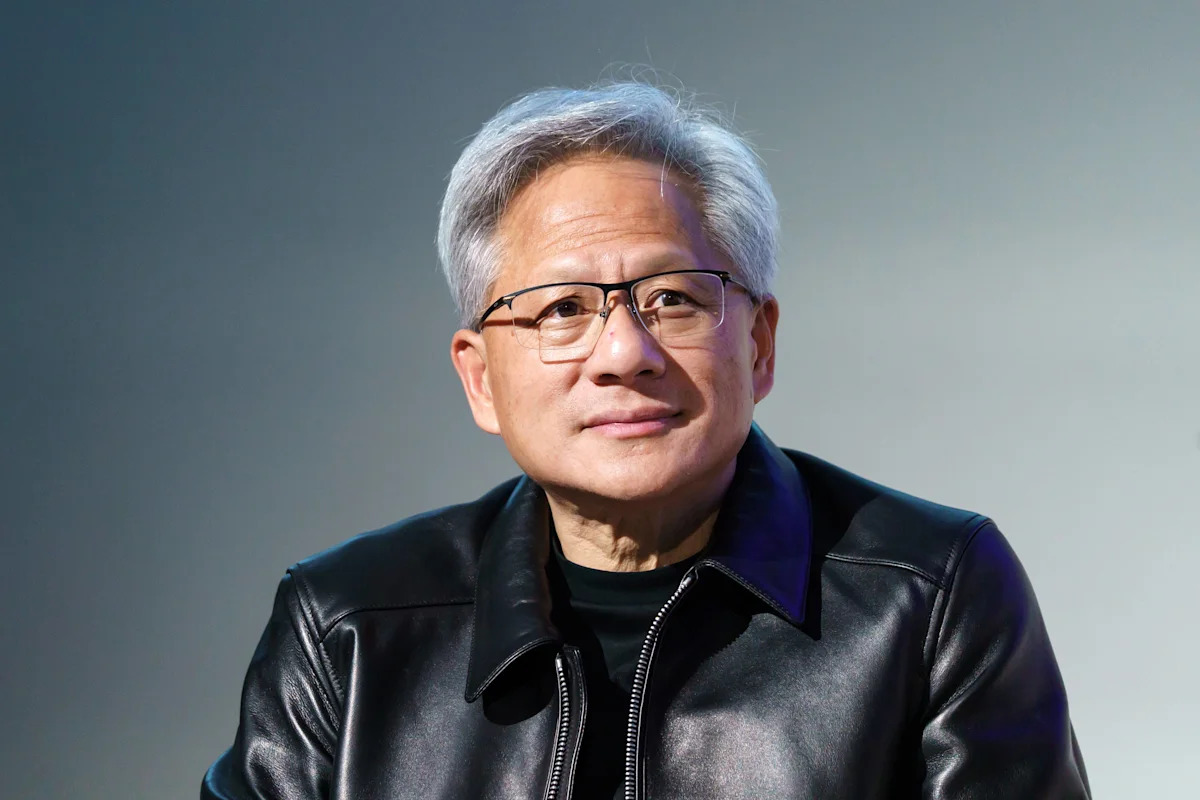
Nvidia is in talks to put roughly $2 billion into Nscale’s pre-IPO round, deepening ties between the chipmaker and the AI cloud startup.Bloomberg / Getty Images
Microsoft and Google already said no to this deal
Nscale’s biggest contract, a six-year, $45 billion deal to supply computing capacity to Anthropic, followed two earlier offers to bigger customers, according to Semafor.
Microsoft and Google were both in talks for that same capacity at Nscale’s West Virginia campus before Anthropic took it, Semafor reported.
Microsoft walked away during a review of its data center portfolio, and Google passed after reassessing its own spending plans, according to the same report.
That history matters more than the headline number. A contract that two of the world’s best-capitalized cloud companies considered and turned down is now the centerpiece of the pitch Nscale is making to public market investors, who have far less insight into Nscale’s operations than Microsoft and Google had when they walked away.
More Tech:
The contract backlog doubled in a single month
Nscale is telling prospective investors its total contracted revenue is now about $103 billion, roughly double the $51 billion figure reported a month earlier, according to Bloomberg.
Almost all of that jump traces to the Anthropic agreement signed in late August, meaning one customer more than doubled the company’s headline backlog in a matter of weeks.
For context, Nscale’s actual revenue reached just over $100 million in the second quarter of 2026, up from about $37 million the quarter before. A backlog built on multi-year contracts is not the same as revenue already collected.
Nscale was valued at $14.6 billion in March following a $2 billion Series C round, according to Reuters.
Bloomberg reported that the new convertible notes are capped at a $30 billion valuation, roughly double that March figure, a jump that leans heavily on how durable the Anthropic contract turns out to be once the data center is actually built.
Here’s more context worth knowing:
A $2 billion Series C round in March valued Nscale at $14.6 billion, according to Reuters, with backers including Dell, Nokia and Citadel alongside Nvidia.
Former Meta executives Sheryl Sandberg and Nick Clegg both sit on Nscale’s board, adding political and industry weight ahead of a planned U.S. listing.
An initial public offering could raise another $3 billion on top of the private financing, Bloomberg reported, with a listing possibly coming as soon as this month.
Chipmakers are becoming their customers’ bankers
Nvidia’s stock showed no unusual reaction to the Nscale report, a reminder that $2 billion is a rounding error for a company with a market capitalization in the trillions.
The more useful comparison is CoreWeave, whose shares surged more than 350% after its Nvidia-backed IPO before losing roughly half their value months later, according to the Motley Fool, evidence that vendor-financed listings can reverse just as sharply once the backing is no longer novel.
Nscale won’t be the last infrastructure company asking public investors to underwrite a valuation built on contracts its own suppliers helped finance.
As more of these companies line up for IPOs, vendor financing may end up mattering more to investors than any single contract number, because it changes what demand for AI chips actually measures.