

On January 5, the 2024 Ruili China and Muse Myanmar Cross-Border Marathon came to an end. This event, marked by its distinctive “One Marathon, Two States” theme, is designed to highlight the unique characteristics of the border between China’s Yunnan Province and Myanmar’s Shan State. The race once attracted nearly 10,000 participants from more than 30 countries and was declared one of the “Top Ten Outstanding Cases of China’s International Publicity” in 2019. However, this year, international participation was limited to only the United Kingdom, along with China and Myanmar. Moreover, the Myanmar segment of the race, which previously spanned up to 12 kilometers, was completely omitted, leaving participants to view Myanmar only from the Chinese side. This adjustment encapsulates the broader struggles facing the city of Ruili. Despite the global recovery from the COVID-19 pandemic, the city has yet to reattain its former vitality, and faces lingering economic and social challenges.
Located in Yunnan Province’s Dehong Dai Jingpo Autonomous Prefecture, Ruili is a trade center and transport hub for the China–Myanmar corridor. Elevated to the status of a national port in 2001, the city has witnessed remarkable economic growth, with its GDP growth rate soaring from 8 percent to an astonishing 16.9 percent at its peak in 2014. As the largest trade port with Myanmar, Ruili handles 30 percent to 40 percent of China’s trade with its neighbor, with a trade volume of 85.41 billion yuan ($11.7 billion) in 2019. By the same year, the city’s GDP reached 14.91 billion yuan (around $2 billion) and the core area’s per capita GDP stood at 79,352 yuan ($10,911), exceeding the national average, underpinned by a robust year-on-year import-export growth rate of 19.1 percent.
Policy Shifts: The End of Flexible Regulation
Ruili’s economic takeoff is inseparable from the policy support provided by higher levels of government. Over the past three decades, Ruili has benefited from various policy experimentations by the central government, such as its designation as a National Border Economic Cooperation Zone (1992), a Key Experimental Zone for Opening-Up (2010), and a subdistrict of the Yunnan Pilot Free Trade Zone (2019). These policies translated into preferential tax regulations, state assistance for upgrades to infrastructure, and most importantly, localized border-crossing arrangements for Myanmar nationals. Unlike most of China, Ruili implemented flexible border controls, allowing Myanmar migrants to work and live in the city without passports or visas. Before the COVID-19 pandemic, the border between Ruili and Myanmar was delineated primarily by bamboo fences, ditches, and earth ridges, with few man-made barriers.
The logic of this arrangement was straightforward: Myanmar’s inexpensive labor force made Ruili an appealing destination for investors seeking cost-effective operations within China’s well-developed infrastructure. To leverage this advantage, the city developed labor-intensive industrial parks focused on industries such as garment manufacturing, food processing, electronic components, and motorcycle production. At its peak, Ruili was home to over 100,000 Myanmar migrants, who formed the backbone of the city’s workforce. They filled most entry-level positions in catering, housekeeping services, and business while making up nearly the entire manufacturing labor force, apart from management roles.
The sudden outbreak of the pandemic allowed central government agencies, particularly customs and immigration authorities, to reassert control over border crossings and immigration policies. The once semi-open border was transformed, reinforced with barbed wire and surveillance cameras, signaling a dramatic shift in policy. In the middle stages of the pandemic, China’s stringent COVID-19 restrictions forced thousands of migrant workers to leave the country. Many more were unable to stay as their permits could not be renewed. By early 2023, the number of Myanmar workers in Ruili’s industrial parks had plummeted to approximately 1,000, leaving manufacturing industries struggling with labor shortages.
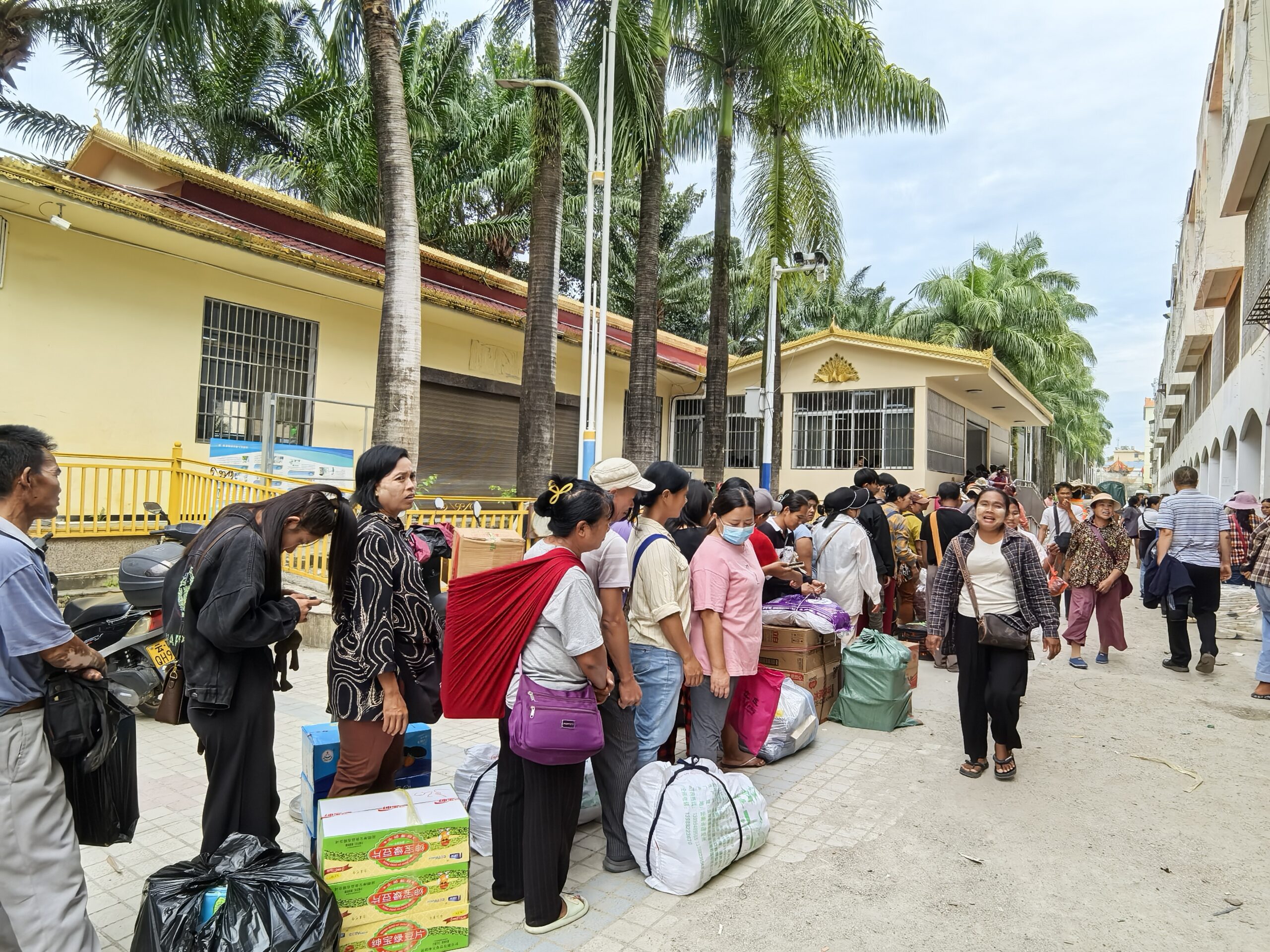
Myanmar workers line up to cross the border from Ruili to Myanmar’s Shan State with large quantities of essential goods, which have become scarce in Myanmar due to the ongoing civil war. (Photo by Yaolong Xian)
Although Ruili reopened its border crossings in 2023, the recruitment of Myanmar migrants has shifted from being merely an economic issue to a national security concern. While relaxed border management has contributed to local economic development, its drawbacks are also evident, as Chinese authorities lacked accurate data on migrant workers, their identities, and movements, posing risks like cross-border crime. Therefore, the strengthened control of immigration at the Ruili border has continued beyond the pandemic.
As a result, undocumented entry into China via informal trails has become a thing of the past. The borders are now heavily fortified with man-made barriers and surveillance systems. In addition, while Myanmar nationals have been able to enter China for work since Ruili reopened its border in 2023, they must provide strict documentation, such as Myanmar’s Blue Card or Border Crossing Permit (commonly known as the “red book”). However, inefficiencies within Myanmar’s administrative system often result in lengthy processing times. With a temporary border pass, entrants are permitted to stay for only seven days at a time, after which they must leave and re-enter the country. Those who manage to overcome these hurdles still face restrictions, including regular reporting requirements and limited mobility outside industrial parks. Some of those forcibly repatriated during the pandemic – including some who had lived in Ruili for years and formed families but lacked legal documentation – were left broken-hearted, reducing their willingness to return. As a result, even in 2024, a year after the border reopening, the Ruili government acknowledged that the number of Myanmar nationals legally permitted to work in China remained limited. Manufacturing enterprises in the city continue to struggle with labor shortages, unable to recruit enough Myanmar workers to meet their demands.
The Impact of Myanmar’s Escalating Conflicts
Between 2011 and 2021, Myanmar underwent a remarkable period of democratization, characterized by economic liberalization and growth. This transformation significantly expanded the domestic market, fueled by rising incomes and a population exceeding 55 million. Against this backdrop, Ruili emerged as a key hub for factories catering to the growing Myanmar market, particularly in industries such as vehicles and automotive components. A notable example is the Beijing Automotive Industry Corporation, which, with strong support from the local government, announced plans in 2013 to invest 3.6 billion yuan ($495 million) to establish a manufacturing plant in Ruili.
However, the situation in Myanmar changed dramatically following the 2021 military coup, which ousted the civilian government and plunged the nation into widespread conflict. The coup prompted the formation of the opposition National Unity Government and the People’s Defense Force, which launched an armed uprising against the military. Many ethnic armed organizations (EAOs) also resumed their armed struggles, either independently or in alignment with anti-coup resistance forces, further broadening the scope of the conflict.
Nearly four years after the military takeover, civilians in Myanmar face an unprecedented humanitarian crisis, with millions struggling to survive. Humanitarian needs have reached alarming levels, with an estimated 19.9 million people – more than a third of the population – in need of assistance. In addition to ground battles, the Myanmar military has increasingly relied on air strikes to target resistance-held areas, often hitting civilian infrastructure such as schools, hospitals, and religious buildings. These attacks have caused widespread destruction and further deepened the crisis, displacing countless individuals and devastating communities.
This shift has had a profound impact on industries that rely heavily on effective demand from Myanmar. Many Myanmar customers, struggling to prioritize basic survival, no longer have disposable income for non-essential purchases. A significant portion of the population has become unemployed, with many forced into internal displacement. For instance, as of January 2025, Shan State and Kachin State – both bordering Ruili – reported 238,100 and 141,100 internally displaced persons, respectively. The ongoing armed clashes have also severely disrupted the logistics of exporting Ruili’s goods to Myanmar. Muse, the border town adjacent to Ruili in Shan State, was temporarily under the control of EAOs in early 2024 and is now encircled by various non-state armed groups. The Mandalay-Lashio-Muse Road, a critical artery for trade in northern Shan State, has become a central target in the conflict, further compounding the challenges faced by industries dependent on cross-border commerce.
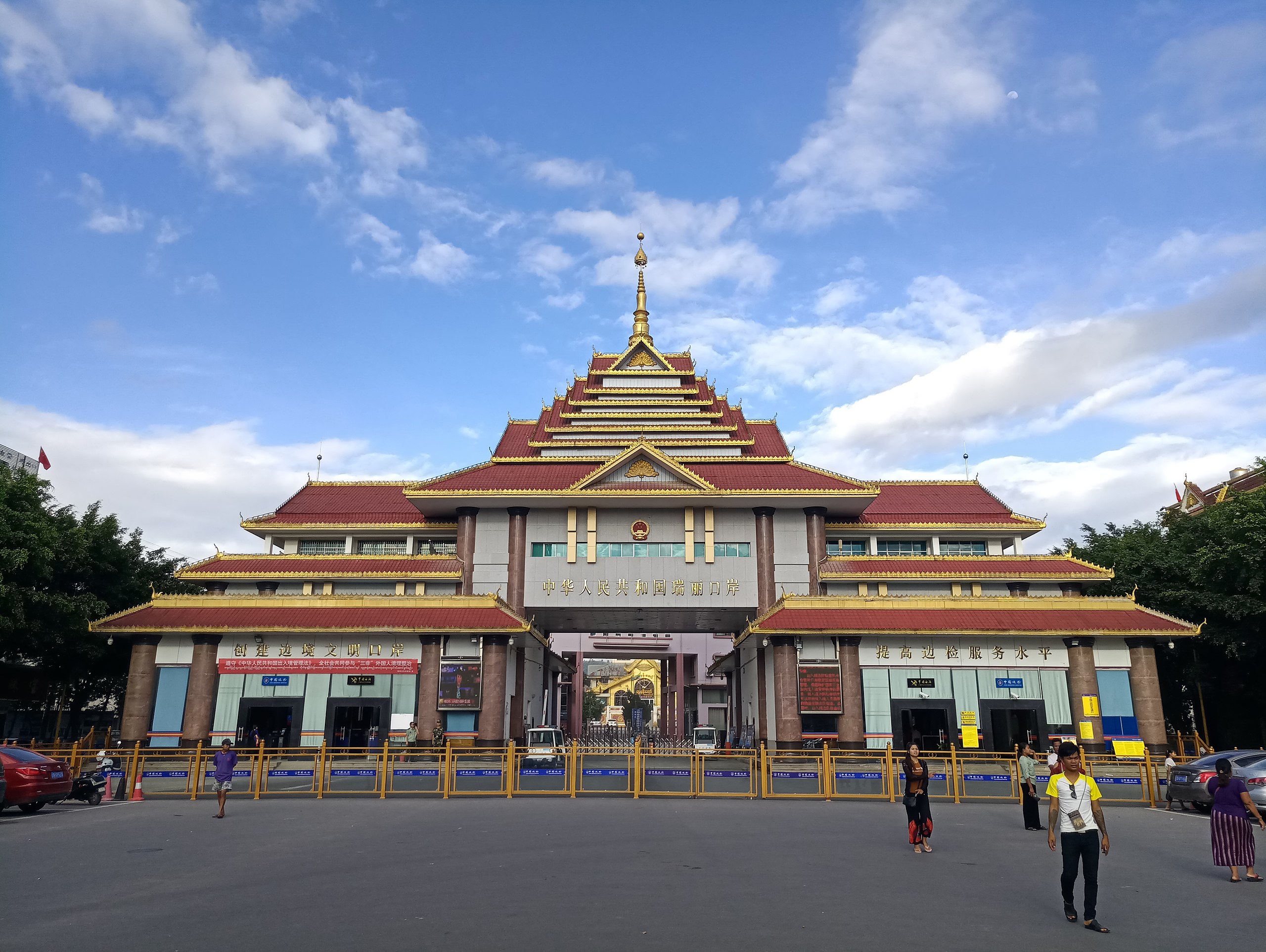
The border crossing between Ruili, China and Muse, Myanmar, as seen on June 23, 2018. (Wikimedia Commons/瑞丽江的河水)
Yinxiang, a motorcycle manufacturer based in Ruili, alone exported 540,000 motorcycles to Myanmar in 2018, but by 2024, only 23,800 motorcycles had been exported from the entire of Dehong. Worsening the situation, Ruili heavily promoted the production and export of new energy vehicles. However, power outages have been a persistent problem in Myanmar since the military takeover in 2021. The country now faces nationwide power cuts due to reduced electricity production. Even in major cities like Yangon and Mandalay, far from the direct conflict zones, the daily electricity supply lasts only a few hours. This has significantly weakened consumer interest in purchasing electric vehicles, further undermining Ruili’s export market for electric vehicles.
Anti-Fraud Campaigns: Ruili is Suffering the Stigma
In recent years, China has intensified its crackdown on telecom fraud involving Chinese nationals in Southeast Asia. Amid this effort, the narrative of a “dangerous Southeast Asia” has gained significant traction on Chinese social media. Stories warning of abduction, forced labor, and even organ trafficking for those venturing into the region are widespread. While much of this content consists of unfounded rumors, the fear of Southeast Asia – especially Myanmar, known for harboring numerous telecom fraud call centers – is palpable. This anxiety has been further amplified by the recent case of Chinese actor Wang Xing, who was taken from Thailand to Myanmar after being tricked by a scam syndicate.
Due to its proximity and deep ties with Myanmar, Ruili has also been cast as unsafe and evil in the public imagination. Chinese social media platforms, such as Xiaohongshu, WeChat, and Douyin, are rife with rumors portraying the city as a gateway to danger. Claims such as “people are deceived into going to Ruili and wake up trafficked to northern Myanmar,” “Ruili is an accomplice,” “Ruili and Myanmar are like family,” and “Ruili is a transit hub for human trafficking” have gone viral. Despite some efforts by Chinese authorities to debunk these myths, their impact has been limited.
The prevailing narratives about Ruili have not only proliferated online but have also profoundly impacted the city. Once celebrated for its vibrant border tourism, Ruili is now widely perceived as a perilous destination, deterring potential visitors who hesitate or choose alternative locations. This loss of confidence extends beyond domestic tourists to include investors. As an inland city, Ruili heavily relies on investments from other more developed provinces, making the attraction of investment a key task for local officials. Even during the pandemic in 2022, Ruili’s senior officials traveled extensively to other provinces to secure much-needed investments. However, the city’s current tarnished image has eroded investor confidence. Negotiating with investors now often requires local officials to dedicate substantial effort to repairing Ruili’s reputation and addressing widespread misconceptions. Yet these attempts must remain private and discreet, as in the current climate, they are likely to be misconstrued as defending Myanmar’s telecom fraud, leading to backlash and cyberviolence.
Ruili stands at a crossroads, grappling with complex challenges rooted in shifting domestic policies, Myanmar’s escalating conflicts, and the impact of anti-fraud campaigns. Once a thriving hub of cross-border trade, the city now struggles to recover its former vitality. Viewing these challenges from Ruili’s local perspective highlights a sobering reality: each issue exceeds the city’s capacity to address on its own.