

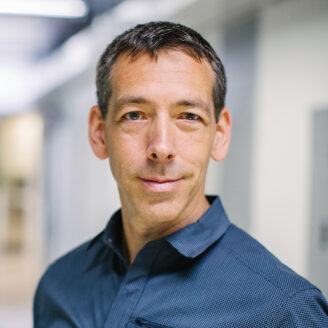
Stanford cardiologist Euan Ashley and his research team received a Guinness World Record last year for sequencing a full human genome in just over five hours. He says that’s just the beginning.
Ashley is at the forefront of a push by researchers to make more genetic information available to patients facing major health care decisions. Faster sequencing for patients with rare and deadly diseases can help their doctors decide which treatments and surgical procedures to try and which ones to avoid in life-or-death situations.
Last January, his team published a letter in the New England Journal of Medicine reporting that they had sequenced 12 seriously ill patients and diagnosed five of them in as little as seven hours and 18 minutes. In all five cases, the information led to tangible changes in how patients were treated.
Those efforts earned him a spot on the 2023 STATUS List of leaders in life sciences. STAT recently reached out to Ashley to learn what his team is working on now, his thoughts on rising competition between DNA sequencing companies, and how decoding his own genome has changed his life.
This conversation has been lightly edited for clarity and length.
Your team got a lot of attention for setting a world record by using sequencing to diagnose a genetic disease. What have you been up to since then? What’s next?
We continue to be interested in sequencing genomes faster and more accurately, for a broader range of clinical applications. We’re recruiting from intensive care units similar kinds of patients to the ones we did before, but with every aspect of the pipeline upgraded, which helps both from a speed but also from an accuracy perspective.
We also have a lot of interest from cancer doctors saying it’s really important to make a cancer diagnosis quickly. And of course, there is no person who’s ever had the specter of cancer hanging over them for a moment that didn’t want some kind of an answer faster; if you can have it in the next minute, you would take it rather than waiting several weeks. So we’ve been starting a few pilot studies in the cancer space to look at returning results faster in the same way that we were speeding up the intensive care unit with whole genome sequencing.
What’s the status of the cancer work? Have you begun any studies?
We’re in the early, early stages of the work at this point. We have two or three scenarios where there’s a clear intervention that changes [decisions]. For example, knowing if someone is positive for BRCA variant can change the surgical plan pretty much immediately. We don’t wait for a cardiac enzyme [test] if somebody’s having a heart attack; that comes back within 10 minutes to a few hours from the lab. I don’t see why you should have to wait for a test to tell you if you’re positive for BRCA variant.
Another very obvious place is acute leukemia. And there’s a number of actionable conditions where if they can be detected rapidly, then treatment can be started faster.
You’ve said your team could probably cut its record-setting diagnosis time by 50%. How close are you to doing that? And where is all that saved time going to come from?
It’s easy to throw that number around, harder to deliver on it! But I think we’re definitely on track to knock hours, not minutes, off that record. One of the easiest wins was that we had for quality reasons stuck with the standard [DNA] library prep kit from Oxford Nanopore, even though they had a fast kit, which others have used. So we’re able to cut time just by moving to an already existing, optimized kit.
And then with higher quality coming off the machine, you can actually do lower coverage. It’s actually not that hard to go faster. If you cover the genome once, you can go really fast. But nobody’s making a clinical diagnosis by covering the genome once, so there’s always this tension between optimizing accuracy and increasing speed. We’ve been working through that.
There’s a lot of talk in genomics about getting down to $100 or $200 a genome. But for the work you do, sequencing and data processing costs can still be in the $5,000 range. How do you bring that down?
It has definitely come down. In fact, by the time we ended up publishing the paper — as opposed to when we first did this calculation — the cost was already lower. And that was actually before the entry of these new companies to the market, which added downward pressure on costs of sequencing. You can buy the flow cells cheaper now.
We’re also more efficient with several of the compute steps, and so that is also reducing the cloud [computing] costs a little bit, which is important when you start to scale. And then because we can be a little bit lower on coverage, the overall sequencing is a little bit less.
You mentioned more companies entering the sequencing market. There’s been a lot of that lately, with Ultima, Element, Singular, Complete Genomics, PacBio, and others launching new instruments to compete with Illumina. What do you think of this rising competition?
There’s just never been a better time to be doing genomics. Now there are lots of choices. If you’re a genome center and you need to do half a million genomes, you’re going to be extremely price-sensitive. If you’re a clinical lab, where you get a few exomes and a few genomes every day, and what really matters to you is the highest possible accuracy for diagnosis, then you’re definitely going to make a different choice.
In the past, you didn’t really have that choice. There are definitely different applications for which these companies are focused with their technologies. I don’t think there has to necessarily be one winner. I think the competition is good for everyone.
As sequencing times and costs go down, what’s going to become the main obstacle to using genetic information in health care?
The challenge now is persuading payers to the very obvious fact that this technology makes patients’ lives better and saves them money. And that’s the amazing part. There are so many cost-effectiveness studies now for this technology and yet we are still paying people to sit on the phone all day long and debate with insurance companies. And in a world where we pay a very large amount of money for therapeutics, these diagnostics can be cost-saving and lifesaving. At some level, it’s hard to understand why it hasn’t been deployed much more readily.
Have you had your genome sequenced? If so, what did you learn?
I have, maybe more than once. I’m probably due for an update. The good news is that for most adults who’ve made it to a certain age and haven’t had any devastating diseases, it’s exceptionally rare that there’d be any large findings. On the other hand, for most people there are likely to be some findings of some importance.
In my case, I’m actually a APOE4 homozygote, so I have a risk for Alzheimer’s disease that I discovered from sequencing my genome. I’m now involved in discovery projects related to the genetics of Alzheimer’s with a colleague here at Stanford. And I’ve made lifestyle decisions as a result of that information. I exercise every day, and one of the reasons is I know I have family history risk and genetic risk embedded in my genome.