

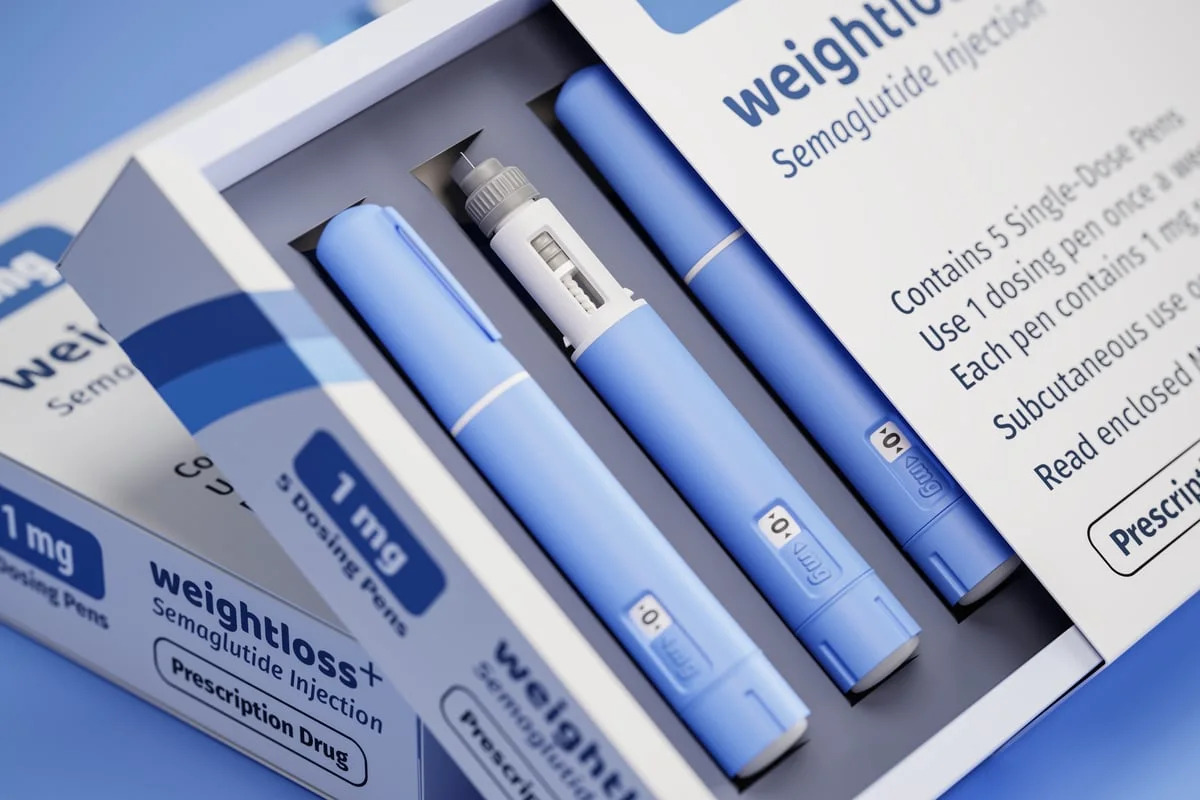
Eli Lilly (NYSE: LLY) was the second company to market a GLP-1 drug. That’s important to keep in mind as you look at the competitive landscape for this new class of weight-loss drugs. In some ways, investors do need to worry that companies like Amylyx (NASDAQ: AMLX) are developing next-generation GLP-1 drugs. New drugs are a threat to Eli Lilly’s business. But Eli Lilly isn’t ignorant of that threat. Here’s what you need to know.
Novo Nordisk drops the ball
Novo Nordisk (NYSE: NVO) was the first to market with a GLP-1 weight-loss drug. It faced production issues and, when Eli Lilly’s Mounjaro and Zepbound proved more effective, Novo Nordisk lost its early lead to Eli Lilly. Today, Eli Lilly is the industry leader, but these drugs are so popular that they accounted for nearly two-thirds of the company’s revenue in the second quarter of 2026.
Missed Nvidia in 2009? This Rare Signal Is Flashing Again. In 2009, a “Double Down” signal flashed for a little-known chipmaker called Nvidia. For the first time in years, that same “Total Conviction” signal is flashing for a company 1/100th the size of Nvidia. Continue »

The company faces material risk as other pharmaceutical companies look to bring out competing GLP-1 products. And investors are on the lookout for the next big winner, too. Notably, Amylyx’s shares surged 50% in a single day after it reported strong research results for its GLP-1 drug candidate. The drug is still working through the approval process, so it isn’t a threat to Eli Lilly just yet. But it could be at some point.
However, this isn’t the only company gunning for the industry leader. Novo Nordisk is still working hard on the GLP-1 front, recently being the first to market with a pill version of its GLP-1 drug. And Pfizer (NYSE: PFE), after an internal setback, quickly acquired a company with a more attractive GLP-1 drug candidate to get back in the game.
Eli Lilly is making the right moves
The truth is, Eli Lilly knows full well that its competitors are gunning for it. The drug sector is highly competitive, and Eli Lilly basically did to Novo Nordisk what everyone is now trying to do to Eli Lilly. Which is why it is important to note that Eli Lilly isn’t resting on its laurels. It is focused on research and development, too. For example, it now has a GLP-1 pill on the market to compete with Novo Nordisk’s pill.
However, the bigger picture is that Eli Lilly has been using its GLP-1 profits to expand into new areas. Acquisitions have played a big part here, but the takeaway is that Eli Lilly has a much broader business today than it did just a few years ago. And that means it has more ways to offset the hit when competition to its leading GLP-1 drugs heats up. Which it almost inevitably will. So investors should be worried about companies like Amylyx, but not too worried because Eli Lilly is increasingly prepared to deal with headwinds in its GLP-1 business.